TL;DR: Most Texas roofs last anywhere from 15 to 100+ years depending on material, with asphalt shingles on the shorter end and metal, clay, and concrete tile lasting decades longer. Coastal salt air, hurricane winds, and UV exposure shorten lifespans along the Gulf Coast, while San Antonio and the Hill Country see faster wear from hail and extreme heat cycling.
If you’re a homeowner in Corpus Christi, Alice, Aransas Pass, Banquete, or Beeville, you’ve probably wondered: how long is my roof actually supposed to last? The honest answer is “it depends” — but not in a vague way. It depends on the material on your roof, how it was installed, and what Texas weather throws at it every year.
This guide breaks down real lifespan expectations by roofing material, explains why South Texas conditions accelerate wear, and tells you when it’s time to start planning for a replacement instead of another repair.
Why Roof Lifespan Isn’t a Single Number
Every roofing material has a published lifespan range, but that range assumes average conditions. Coastal Texas isn’t average. Homes near Corpus Christi Bay and the Gulf deal with salt-laden air, hurricane-force wind gusts, and high humidity — all of which accelerate the breakdown mechanisms that eventually end a roof’s service life.
According to industry lifespan data compiled from NRCA (National Roofing Contractors Association) and ARMA (Asphalt Roofing Manufacturers Association) performance guidance,
roof degradation follows predictable physical mechanisms: thermal cycling causes cumulative fatigue in membrane seams and shingle tabs, UV radiation degrades polymer binders in asphalt and single-ply membranes, and moisture infiltration at laps and flashings accelerates substrate rot
. In Corpus Christi and the surrounding Coastal Bend, you get all three mechanisms working at once, plus salt.
Asphalt Shingle Roofs: 15–30 Years
Asphalt shingles are the most common roofing material in the country, and for good reason — they’re affordable and versatile. But they’re also the material most sensitive to Texas heat and coastal salt exposure.
- 3-tab shingles:
15 to 20 years under standard conditions
. - Architectural (dimensional) shingles:
25 to 30 years
.
In hot, humid coastal climates, those numbers skew toward the lower end. One industry lifespan breakdown notes that
asphalt shingles typically last 15 to 25 years, but may have a shorter lifespan in coastal areas due to high UV levels and salt exposure
. If your home sits close to Corpus Christi Bay or Aransas Pass, expect the salt-air effect to shave years off the high end of that range, especially on fasteners and flashing details.
Metal Roofing: 40–70 Years (Longer With the Right Finish)
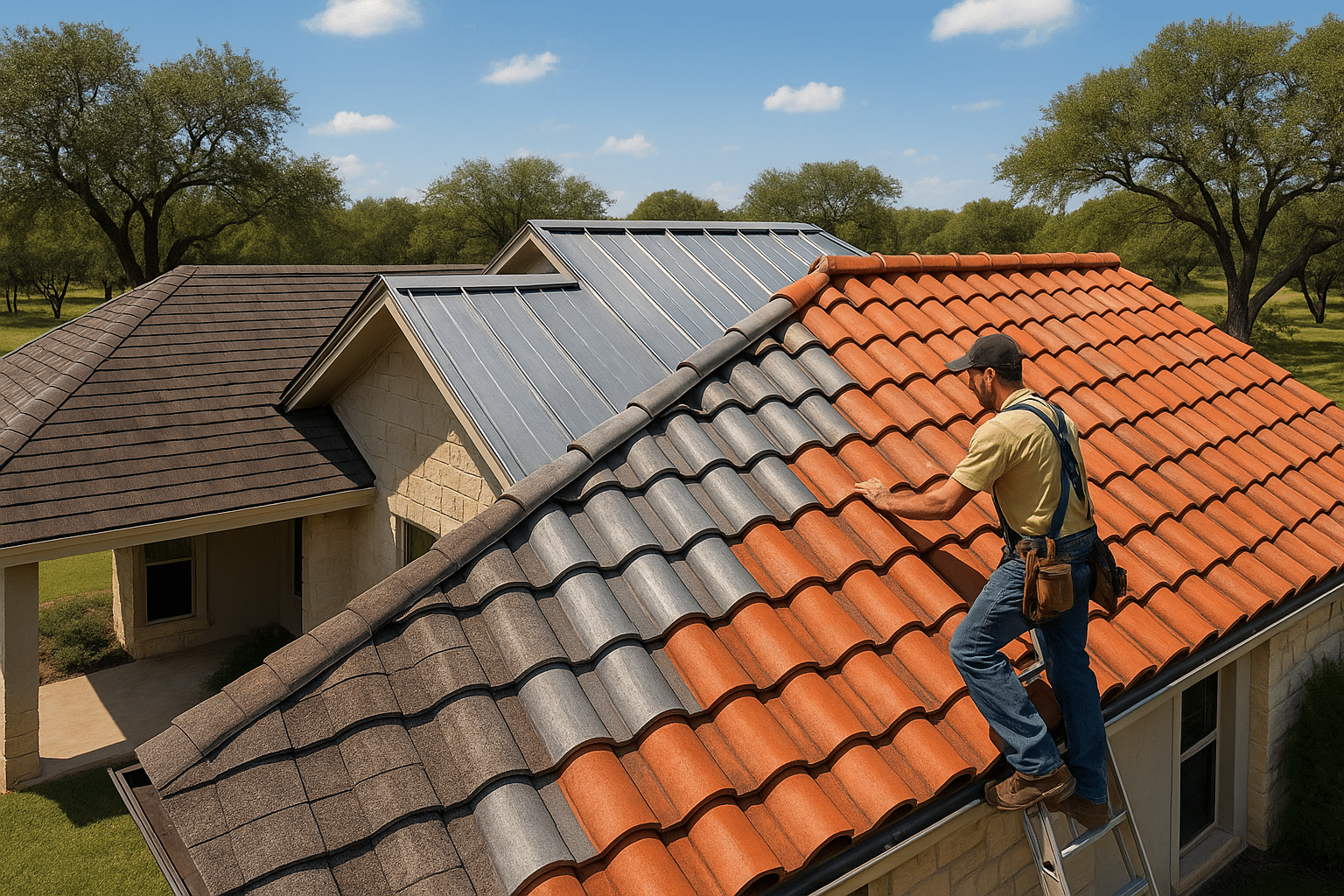
Metal is one of the best-performing materials for coastal Texas, which is exactly why it shows up so often on homes from Rockport to Port Aransas. Industry data puts standing seam steel or aluminum metal roofing at
40 to 70 years depending on gauge and coating
.
The coating matters enormously near saltwater. Coastal-grade finishes resist the corrosion that attacks fasteners, flashing, and cut edges first. Choosing the wrong grade of steel, or an exposed-fastener system with unprotected screws, can cut that lifespan down dramatically in a salt-air environment — which is why material selection near the Gulf should always account for corrosion resistance, not just upfront cost.
Clay, Spanish, and Concrete Tile: 30–100 Years
Tile roofing is a long game. It costs more upfront but can outlast two or three asphalt roofs.
- Clay and Spanish tile:
50 years or more
, with some installations performing well beyond that in favorable conditions. - Concrete tile: Generally performs in the 30–50 year range, slightly shorter than clay but still far outlasting asphalt.
One important catch for coastal homes: the tile itself may survive for decades, but
underlayment typically requires replacement at 20–25 years
. A tile roof that looks great from the street can still be failing underneath if the underlayment hasn’t been addressed. This is a common surprise during a roof inspection on older Coastal Bend homes.
TPO and Flat Roofing Systems: 15–25 Years
TPO (thermoplastic polyolefin) is a single-ply membrane roofing system commonly used on commercial buildings, additions, and low-slope sections of homes. It’s valued for being lightweight, reflective, and relatively affordable to install compared to other low-slope options.
Flat and low-slope membrane systems generally last on the shorter end compared to pitched roofing, with lifespans most often falling in the 15–25 year window depending on membrane thickness, seam quality, and UV exposure. On commercial buildings in Corpus Christi, Victoria, Harlingen, or San Antonio, regular inspections matter more for these systems because ponding water and seam failures tend to show up gradually, not all at once.
Coastal Texas: Salt Air, Humidity, and Windstorm Code Change the Math
If you’re in Corpus Christi, Aransas Pass, or anywhere along the Coastal Bend, your roof isn’t just fighting sun and rain — it’s fighting salt. Airborne salt accelerates corrosion on fasteners, flashing, and any exposed metal components, which is often what fails first, well before the main roofing material itself gives out.
Texas also has specific windstorm construction rules for coastal counties. The Texas Department of Insurance (TDI) administers Seacoast windstorm rules covering the state’s coastal counties, and
Texas does not have a statewide building code, but TDI administers Seacoast windstorm construction rules in 14 first-tier coastal counties plus a portion of Harris County
. Nueces County, home to Corpus Christi, is one of the 14 first-tier counties, along with neighboring coastal counties like Aransas and San Patricio.
If your property is in one of these designated zones, a new roof or full re-roof typically needs to pass inspection and receive a WPI-8 — a Windstorm Certificate of Compliance issued by TDI confirming your roof meets state wind-resistance building standards. This certificate is generally required to qualify for coverage through the Texas Windstorm Insurance Association (TWIA), the state’s insurer of last resort for wind and hail in coastal areas. Buffalo Roofing & Exteriors handles TDI-compliant WPI-8 windstorm certification as part of roof replacement and re-roofing projects in these coastal counties, so homeowners don’t have to coordinate a separate inspector themselves.
San Antonio and the Hill Country: Hail and Heat, Not Salt
Move inland to San Antonio and the Hill Country, and the threats to your roof change completely. There’s no salt air here, but there is intense UV exposure, extreme summer heat, and the thermal cycling that comes from big daily temperature swings — all of which fatigue asphalt shingles and membrane seams over time.
Hail is the other major factor. A single severe hailstorm can knock years off a roof’s remaining service life even if the damage isn’t visible from the ground, which is why a professional roof inspection after any significant hailstorm is worth scheduling before small issues turn into leaks.
What Actually Shortens — or Extends — Roof Life in Texas
- Installation quality: A poorly installed 30-year shingle roof can fail in half that time.
- Ventilation: Poor attic ventilation traps heat and moisture, aging shingles from underneath.
- Maintenance: Clearing debris, addressing minor repairs quickly, and scheduling periodic inspections all extend service life.
- Storm history: Hail impacts and wind uplift events create cumulative damage even when a roof doesn’t fail outright.
- Material and coating choice: On the coast, this is the single biggest lever homeowners can pull.
Roof Rejuvenation: Extending Life Without a Full Replacement
For asphalt shingle roofs that are showing age but aren’t yet leaking or structurally compromised, roof rejuvenation treatments can restore flexibility to brittle shingles and add years of service life at a fraction of replacement cost. It’s not a fix for storm damage or structural issues, but it’s a useful option for homeowners trying to stretch a mid-life roof a little further.
When to Start Planning a Replacement
As a rule of thumb, start budgeting for a roof replacement when your roof is within a few years of its material’s expected lifespan, or sooner if you’ve had recent hail or wind events. Cost varies significantly by material, roof size, and region — homeowners in Corpus Christi can get current local numbers in our roof replacement cost guide, and San Antonio homeowners have a separate pricing breakdown for that market.
If storm or hail damage is what’s pushing the timeline up, it’s worth understanding what your homeowners insurance will and won’t cover before you file a claim.
The Bottom Line
There’s no single answer to how long a roof lasts in Texas — but there is a clear pattern. Material quality and installation set the baseline; coastal salt air and windstorm exposure, or inland hail and heat, determine how much of that baseline you actually get. Knowing which forces are working against your specific roof is the first step to planning smart, whether that means a rejuvenation treatment, a repair, or a full replacement.
Buffalo Roofing & Exteriors offers free estimates for homeowners across Corpus Christi, Alice, Aransas Pass, Banquete, Beeville, and the rest of South and Central Texas, so you can get a straight answer on where your roof actually stands.
Recommended Reads
- How Much Does a Roof Replacement Cost in Corpus Christi? (2026 Price Guide)
- How Much Does a Roof Replacement Cost in San Antonio? (2026 Price Guide)
- How the Roof Insurance Claim Process Works in Texas — Step by Step