TL;DR: Hail damage on shingles often hides in plain sight — look for granule loss in gutters, dark bruised spots, and cracked or dented shingles rather than waiting for a leak. This guide walks Corpus Christi, Alice, Aransas Pass, Banquete, and Beeville homeowners through a safe, step-by-step way to check their roof and what to do next for insurance claims.
After a hailstorm rolls through the Coastal Bend, most homeowners check their car and their windows first. Their roof? Not so much. But shingles usually take the hardest hit, and the damage is often invisible from the driveway.
If you live in Corpus Christi, Alice, Aransas Pass, Banquete, or Beeville, you already know hail can show up alongside Gulf storms with little warning. Knowing exactly what to look for — and how to look safely — can be the difference between a simple repair and a roof that leaks for months before anyone notices.
Why Hail Damage on Shingles Is So Easy to Miss
Hail doesn’t always punch holes in your roof. Most of the time, it bruises the shingle mat or knocks off the protective granules without leaving an obvious hole.
The most vulnerable shingles are those that face incoming hailstones and those that are not firmly backed, including shingles along the eaves and rakes, in valleys, and at ridges, while damage in the main field of the roof shows up randomly across each slope.
That randomness is actually a clue insurance adjusters look for.
Genuine hail damage on asphalt and composition shingles typically shows up as random damage with no discernible pattern.
What Hail Damage Actually Looks Like on Shingles
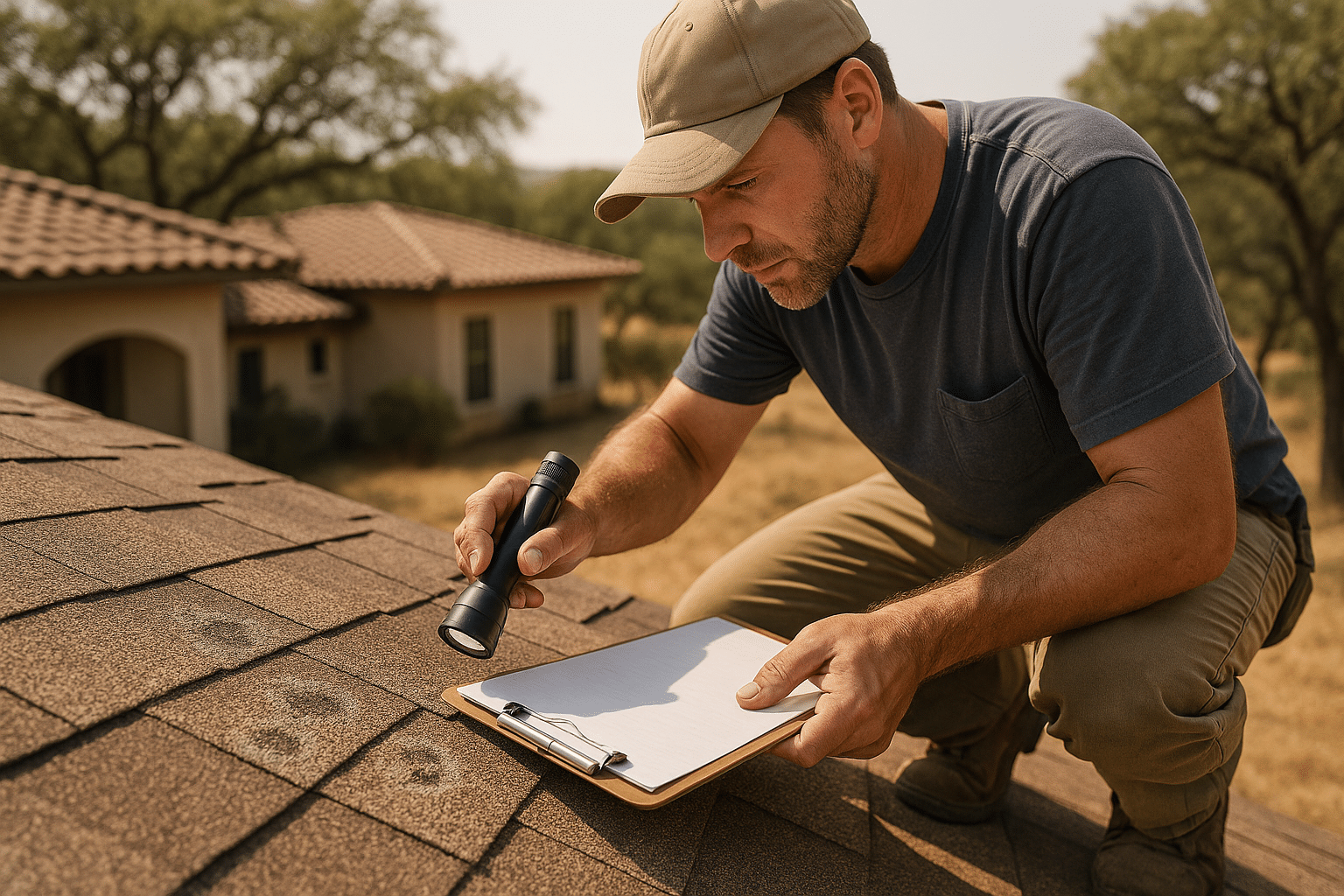
Here’s what a close inspection typically reveals:
- Granule loss:
Hail impact can cause loss of granules, which may expose the roof felt underneath. - Dark, bruised spots:
Hail hits often appear black in color, the asphalt or mat underneath looks shiny, and the impact area feels soft to the touch, like a bruise on an apple. - Dents or pits: These are usually round marks with granules displaced or pushed into the shingle mat rather than knocked away.
- Cracks or fractures:
On older asphalt shingle roofs, hail impacts can also cause shingles to crack, break, or shear off completely. - Soft spots you can’t always see:
Bruised areas often feel soft in places, and pressing down gently may cause granules to flake away or the shingle to crumble.
Don’t confuse a bruise with normal shingle flex.
Being able to gently bend the whole shingle without it cracking is actually a sign the shingle is still in relatively good condition — random soft spots or holes are a completely different story.
Ground-Level Clues Before You Ever Get on a Ladder
You can spot warning signs without leaving the yard.
Look for mineral granules collecting at the ends of your downspouts, and check metal components like siding, AC or heat pump condensers, and any cars left outside for dents or damage.
Your gutters tell a story too.
A sudden, heavy accumulation of black, sand-like granules in your gutters and downspouts — beyond the normal gradual shedding all asphalt shingles experience — indicates hail has stripped away the protective coating.
That matters long-term:
significant granule loss can accelerate shingle aging by 5 to 7 years according to NRCA studies
, referring to the National Roofing Contractors Association, the trade group that sets inspection and quality standards for the roofing industry.
How to Check Your Shingles for Hail Damage: Step-by-Step
- Check the ground and gutters first. Walk your property line and look for granules, shingle fragments, or debris near downspout exits. Note any dents on your AC unit, gutters, or mailbox — these often mirror hailstone size and direction.
- Look at the size of the hail that fell. This matters more than most people realize.
Functional damage to three-tab and dimensional-style asphalt shingles generally requires a hailstone of 1 to 1 1/4 inches — quarter- to golf-ball size
, and
impact marks smaller than 3/4 inch are very rarely functional hail damage.
If local reports say the hail was smaller than a quarter, cosmetic marks may not translate into a valid claim. - Never inspect the roof yourself in wet or windy conditions. If you do go up, use a stable ladder, wear non-slip shoes, and only walk the roof if it’s dry, calm, and you’re comfortable with heights. Otherwise, skip straight to calling a professional.
- Scan each slope for random, scattered marks. Focus on eaves, valleys, ridges, and any shingles that face the direction the storm came from — these areas usually take the worst hits.
- Touch-test suspicious spots. Gently press on discolored or shiny areas. If it feels soft or spongy, or granules flake off easily, that’s a likely hail bruise, not just wear.
- Photograph everything with a reference object. Place a coin or tape measure next to each mark for scale before you climb down. Adjusters and contractors both rely on this documentation.
- Check your attic or ceiling for early leak signs. Water stains, musty smells, or daylight through the roof deck mean damage has already progressed past the cosmetic stage.
- Get a professional opinion before filing or skipping a claim. A trained eye can tell functional damage from normal wear, weathering, or old repair patches — something that’s easy to get wrong from the ground or a quick look on a ladder.
What You’ll Need
- A stable ladder and non-slip footwear (or skip this and call a pro)
- A flashlight to check for exposed, shiny asphalt in shaded areas
- A phone camera and a coin or tape measure for scale in photos
- Your homeowners or windstorm policy number and the date of the storm
Common Mistakes Homeowners Make
- Waiting for a leak. By the time water comes through the ceiling, granule loss and mat exposure have usually been progressing for months.
- Confusing blistering with hail damage.
Blistering appears as raised bubbles that pop into steep-sided craters with rigid walls, while hail damage leaves concave dents with granules crushed into the shingle mat.
Mixing these up can sink an insurance claim. - Ignoring hail smaller than expected. As noted above, small hail rarely causes damage that qualifies for a claim — but golf-ball-plus hail almost always warrants a professional look.
- Sitting on it too long. Along the Texas coast, insurers move fast to close the window after a storm.
Once a named storm enters the Gulf, most insurers, including the Texas Windstorm Insurance Association (TWIA), stop selling or changing policies
— and claim deadlines follow the same urgency. Filing promptly protects your coverage. - DIY roof-walking after a storm. Wet, granule-slick shingles are a fall hazard. It’s not worth the risk when a licensed contractor can document damage for you.
What This Means for Coastal Bend Homeowners
Corpus Christi, Aransas Pass, and the surrounding Coastal Bend sit in Texas Windstorm Insurance Association territory, which changes how hail claims are handled. If your home carries a TWIA policy alongside your standard homeowners policy, documentation matters even more — and a valid windstorm certification affects what’s covered. Our guide on hurricane roof damage in Corpus Christi walks through what to do before, during, and after a coastal storm, including windstorm coverage basics.
If you’re farther inland in Alice, Banquete, or Beeville, hail is often the bigger threat compared to wind — but the same shingle inspection steps apply. And if you’re not sure whether your roof’s age or condition means it’s due for full replacement rather than a patch, our checklist on signs it’s time to replace your roof in Texas can help you decide.
When to Call a Professional
If you spot even a few of the signs above — granule buildup in gutters, dark soft spots, cracked shingles, or dented metal roof components — it’s time for a trained inspection. A qualified roofer can distinguish true hail bruising from normal aging, document it properly for your insurance company, and walk you through repair versus replacement options. Buffalo Roofing & Exteriors offers free estimates across Corpus Christi, Alice, Aransas Pass, Banquete, and Beeville, and can also assist directly with insurance claim documentation so you’re not navigating the process alone. If your roof uses shingles specifically, our team handles professional shingle roof repair for exactly this kind of storm damage.
The Bottom Line
Hail damage on shingles rarely announces itself with a hole in your ceiling. It shows up in granules in your gutter, a soft spot you can barely feel, or a shingle that cracks a little too easily. Catching it early — and documenting it well — protects both your roof and your insurance claim.
Recommended Reads
- Hail Damage Roof Repair in San Antonio: What Homeowners Need to Know
- Hurricane Roof Damage in Corpus Christi: What to Do Before, During, and After a Storm
- 8 Signs It’s Time to Replace Your Roof in Texas
Sources