TL;DR: From Corpus Christi’s salt air to San Antonio’s hail and UV exposure, Texas roofs age faster than the national average. This guide covers the 8 clearest warning signs it’s time for a full roof replacement instead of another patch job, plus what to do next if you spot them.
Your roof doesn’t fail all at once. It gives you warnings first — a curled shingle here, a dark streak there, a soft spot you notice only when you’re up in the attic. The trick is knowing which warning signs mean ‘call a roofer soon’ versus ‘you need a full replacement.’
In South and Central Texas, roofs work harder than most. Coastal homes in Corpus Christi, Aransas Pass, Rockport, and along the Gulf deal with salt air corrosion, hurricane-force winds, and humidity that never really lets up. Inland communities like Alice, Banquete, and Beeville face intense UV exposure and big temperature swings that stress shingles just as hard, just differently. San Antonio and the Hill Country deal with hail and thermal cycling that ages a roof from the inside out. That’s why we tell homeowners across our service area the same thing: don’t wait for a leak to start paying attention to your roof.
Here are the 8 signs that usually mean it’s time to stop patching and start planning for a new roof.
1. Your roof is pushing 20 years old (or more)
Owens Corning advises that most asphalt shingle roofs last between 15 and 30 years, and it’s critical to start planning for replacement once your roof hits the 20-year mark, even if problems aren’t yet visible.
That baseline assumes moderate conditions — and South Texas isn’t moderate.
The average lifespan for shingles, normally around 20 years, is closer to 14 years in warmer environments like the Southwest, compared to 19 to 20-plus years in the North.
If your Corpus Christi or Beeville home has an original roof from the early 2000s, age alone is reason enough to schedule a free estimate and find out where you really stand.
2. Shingles are curling, cupping, or losing their granules
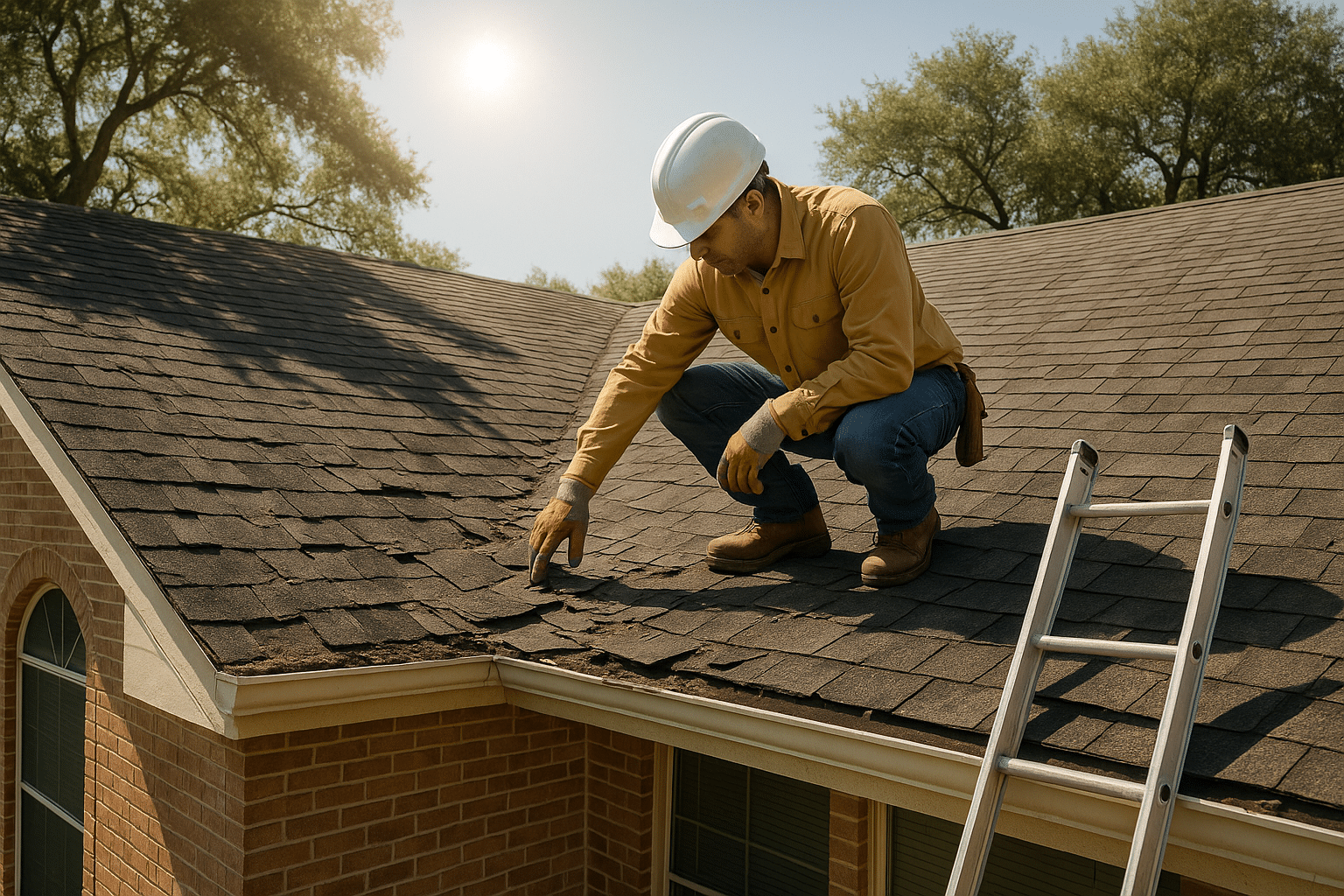
Curled shingle edges or shingle tabs that are cupped, bald, or cracked are a classic sign your roof may need repair or replacement.
Granule loss matters because those granules are what shield the asphalt underneath from UV rays — and losing them accelerates damage fast in our sun. If you find gritty, sand-like granules collecting in your gutters, that’s your roof telling you its protective layer is wearing thin.
3. Dark streaks, moss, or algae are spreading across the roof
A roof that looks worn, has dark algae streaks, or has moss growing on it can be removed, but it’s best to contact a professional contractor to avoid damage.
In humid coastal towns like Aransas Pass, algae and moss take hold quickly on shaded or north-facing slopes. Isolated streaking might just need a cleaning, but widespread growth combined with other signs on this list usually points to an aging roof system underneath.
4. You can see daylight or water stains in the attic
Ceiling stains, musty attic smells, or actual daylight coming through the roof deck are not cosmetic issues — they mean water is getting past your shingles and underlayment.
Whether to repair or replace a damaged roof depends on the extent of damage, how much life the roof has left, and whether the underlying cause can be fixed; isolated damage may warrant targeted repair, while widespread or systemic deterioration may indicate the roof needs replacement.
One stain might be a flashing fix. Stains in multiple rooms usually mean it’s time for a full evaluation.
5. Your roof has taken a direct hit from hail
Hail is one of the most common reasons Texas homeowners end up needing a new roof, especially across San Antonio and the Hill Country.
Look for dents and dings on metal components like roof vents and gutters, and cracks or granule loss on shingles that leave dark spots where the protective layer is missing.
Hail bruises aren’t always visible from the ground, which is why a professional check after any significant storm matters — even if your roof looks fine from the driveway. For homeowners in and around San Antonio, our hail damage roof repair guide walks through exactly what adjusters look for.
6. The roofline is sagging
A sagging roofline is one of the most serious signs on this list. It usually points to a compromised deck, rotted framing, or long-term moisture damage — structural problems that go well beyond shingles. This is never a DIY diagnosis. If you notice any dip or wave in your roofline, get a licensed contractor out immediately, before it becomes a safety issue.
7. Storm winds have lifted or blown off shingles
Missing shingles after a windstorm expose the deck to water intrusion almost immediately. If this happens more than once in a few years, it’s often a sign the roof’s fasteners, underlayment, or shingle class are no longer holding up to local wind conditions. Coastal properties in TDI’s designated catastrophe counties, which includes Nueces County and the Corpus Christi area, are held to stricter wind-resistance standards precisely because of this risk. If your roof needs a full re-roof in one of these counties, you’ll also need a WPI-8, the Texas Department of Insurance’s windstorm Certificate of Compliance required for coverage through the Texas Windstorm Insurance Association. Learn more in our WPI-8 windstorm certification guide.
8. Neighbors on the same street are replacing their roofs
If your roof is at least 20 years old, or other homes in the area that were built at the same time need roof repair, that’s a sign worth paying attention to.
Homes built in the same subdivision around the same time, common in parts of Alice and Banquete, tend to wear out on similar timelines since they faced the same storms, sun exposure, and installation-era materials. If you’re seeing dumpsters and shingle bundles up and down the block, it’s worth getting your own roof checked before a problem forces the issue.
What to do if you spot these signs
- Get a free estimate, not a guess. A trained eye can tell the difference between a $400 repair and a full replacement — don’t rely on a curb-side look.
- Document everything before a storm claim. Photos of damage, receipts for temporary repairs, and a written scope of work all strengthen your position with an adjuster.
- Ask about financing if cost is the holdup. Buffalo Roofing & Exteriors offers Improvifi financing from $1,000 to $50,000 with $0 down and no impact to your credit score, so a failing roof doesn’t have to wait on a lump sum.
- Confirm windstorm compliance if you’re coastal. Any full re-roof in a TDI catastrophe-area county typically requires a WPI-8 inspection before your windstorm coverage is valid.
Why Texas roofs wear out differently depending on where you live
Corpus Christi, Aransas Pass, and the surrounding coastal communities deal with salt air corrosion, high humidity, and hurricane-force wind uplift — conditions that shorten the life of fasteners, flashing, and even metal roofing components faster than inland areas. Alice, Banquete, and Beeville sit further from the coast but still face intense UV exposure and wide temperature swings that dry out and crack asphalt shingles over time. Meanwhile, homeowners in San Antonio and the Hill Country are fighting a different battle entirely: hail impact and thermal cycling from extreme heat, not salt air. If you’re further north, our Hill Country roofing guide covers what New Braunfels and Boerne homeowners specifically need to watch for.
Wherever you’re located in our service area, the fix is the same: don’t wait until a small problem becomes a big one. A free estimate costs you nothing and tells you exactly where your roof stands.
Recommended Reads
- WPI-8 Windstorm Certification in Corpus Christi: What It Is and Why Your Roof Needs It
- Roofing in New Braunfels and Boerne: What Hill Country Homeowners Need to Know
- Roof Replacement in New Braunfels, TX | Buffalo Roofing & Exteriors