Many commercial property managers assume roof coatings are just a temporary patch, a quick fix that won’t hold up to coastal Texas storms. That’s a costly misconception. When properly selected and applied, commercial roof coatings extend roof life by 10 to 20 years while delivering genuine waterproofing and energy savings. This article cuts through the confusion, explaining which coating types work best in storm-prone environments, how to avoid common application failures, and what benefits you can realistically expect from investing in a quality coating system.
Table of Contents
- Key takeaways
- What are commercial roof coatings and how do they work?
- Types of commercial roof coatings: choosing what suits coastal Texas
- Critical application steps and common pitfalls to avoid
- Maximizing benefits: durability, energy savings, and maintenance for coastal properties
- Protect your commercial roof with expert coating services
- Frequently asked questions
Key Takeaways
| Point | Details |
|---|---|
| Roof life extension | When properly selected and applied, commercial roof coatings extend roof life by 10 to 20 years. |
| Waterproofing seams | A seamless membrane seals vulnerable seams and penetrations to stop water intrusion when placed with recommended dry film thickness of 20 mils. |
| Energy savings through reflectivity | Coatings reflect solar heat to reduce cooling loads and cut energy costs, with greater impact on hot coastal summers. |
| Silicone for coastal storms | Silicone performs best for coastal storm resistance and ponding water, while acrylics are less suitable for standing water and the Texas coast. |
| Proper application matters | Cure conditions, temperature, and humidity must meet manufacturer specifications to ensure adhesion and durability. |
What are commercial roof coatings and how do they work?
Commercial roof coatings are fluid-applied membranes that extend roof life, restore waterproofing, and improve energy efficiency through reflectivity. Unlike tear-off replacements, coatings go directly over your existing roof system, creating a seamless, monolithic barrier that protects against water intrusion and UV damage. Think of them as a protective skin that seals vulnerable seams, fasteners, and penetrations while reflecting solar heat away from your building.
The key to effective waterproofing lies in achieving proper dry film thickness. Most coating manufacturers specify a minimum of 20 mils for full waterproof protection. Thinner applications may look fine initially but won’t deliver the promised durability or weather resistance. For commercial roof maintenance in Texas, this thickness standard becomes even more critical given the intense UV exposure and storm frequency.
Coatings deliver three primary benefits. First, they waterproof your roof by filling cracks and bridging gaps that allow moisture penetration. Second, they extend service life significantly, with quality systems adding 10 to 15 years to single-ply roofs. Third, their reflective properties lower roof surface temperatures by 50 to 80 degrees, reducing cooling loads and cutting energy costs. In coastal Texas where summer temperatures routinely exceed 95 degrees, that reflectivity translates directly to lower utility bills.
The application process matters as much as the product itself. Coatings must cure properly to form a durable membrane. Temperature and humidity during application affect cure time and final performance. Applying coatings in conditions outside manufacturer specifications leads to poor adhesion, premature failure, and voided warranties.
Core functions of commercial roof coatings:
- Create seamless waterproof barrier over existing roof systems
- Reflect solar radiation to reduce building cooling loads
- Protect substrate from UV degradation and weather damage
- Extend roof service life by 10-20 years when properly maintained
- Seal seams, fasteners, and penetrations vulnerable to leaks
Types of commercial roof coatings: choosing what suits coastal Texas
Four main coating types dominate the commercial market: acrylic, silicone, polyurethane, and butyl. Each offers distinct advantages, but performance in coastal storm conditions varies dramatically. Understanding these differences helps you avoid expensive mistakes and choose a system that actually protects your investment.
Silicone coatings outperform acrylic and polyurethane in Florida’s subtropical climate after 40 years of exposure, retaining flexibility and adhesion while competitors degraded. That matters for coastal Texas where similar heat, humidity, and storm exposure challenge roof systems year after year. Silicone excels in ponding water situations, maintaining waterproof integrity even when water sits on the roof for extended periods. This makes it ideal for low-slope commercial roofs common in Texas where drainage issues occur.
Acrylic coatings cost less upfront but fail under ponding water common in coastal Texas. They work well in dry climates with good drainage but break down when exposed to standing water for more than 48 hours. Given that coastal storms can dump several inches of rain in hours, acrylic becomes a risky choice despite the lower initial investment. The money you save on materials gets spent on premature recoating or repairs.
Polyurethane coatings offer excellent impact resistance, making them valuable for hail-resistant roofing in coastal Texas. They create a tough, durable surface that withstands foot traffic and debris impact better than other options. However, polyurethane costs more and requires more precise application conditions. Temperature and humidity windows are narrower, limiting when contractors can apply it. For buildings in hail-prone areas, the extra cost and complexity may be justified.
Butyl coatings provide extreme elongation and flexibility, moving with substrate expansion and contraction without cracking. They work well on metal roofs where thermal movement is significant. Asphalt-based coatings represent the traditional, low-cost option but lack the reflectivity and longevity of modern alternatives. They’re rarely the best choice for weather-resistant roofing in Texas homes or commercial buildings.
| Coating Type | Best For | Coastal Suitability | Typical Cost | Lifespan |
|---|---|---|---|---|
| Silicone | Ponding water, UV exposure | Excellent | $$$ | 15-20 years |
| Acrylic | Dry climates, good drainage | Poor | $ | 7-10 years |
| Polyurethane | Impact resistance, foot traffic | Good | $$$$ | 10-15 years |
| Butyl | Metal roofs, extreme flexibility | Good | $$ | 10-15 years |
| Asphalt | Budget projects, temporary fixes | Fair | $ | 5-8 years |
Pro Tip: For coastal Texas commercial buildings, silicone coatings deliver the best balance of storm resistance, longevity, and energy savings. The higher upfront cost pays back through longer service life and fewer maintenance issues.
Critical application steps and common pitfalls to avoid
Proper application involves multiple steps including moisture survey, rigorous surface preparation, defect repair, base coat, reinforcing fabric, and final topcoat. Skipping or rushing any step compromises the entire system. This isn’t a DIY weekend project. Professional installation following ASTM standards ensures you get the performance and warranty protection you’re paying for.
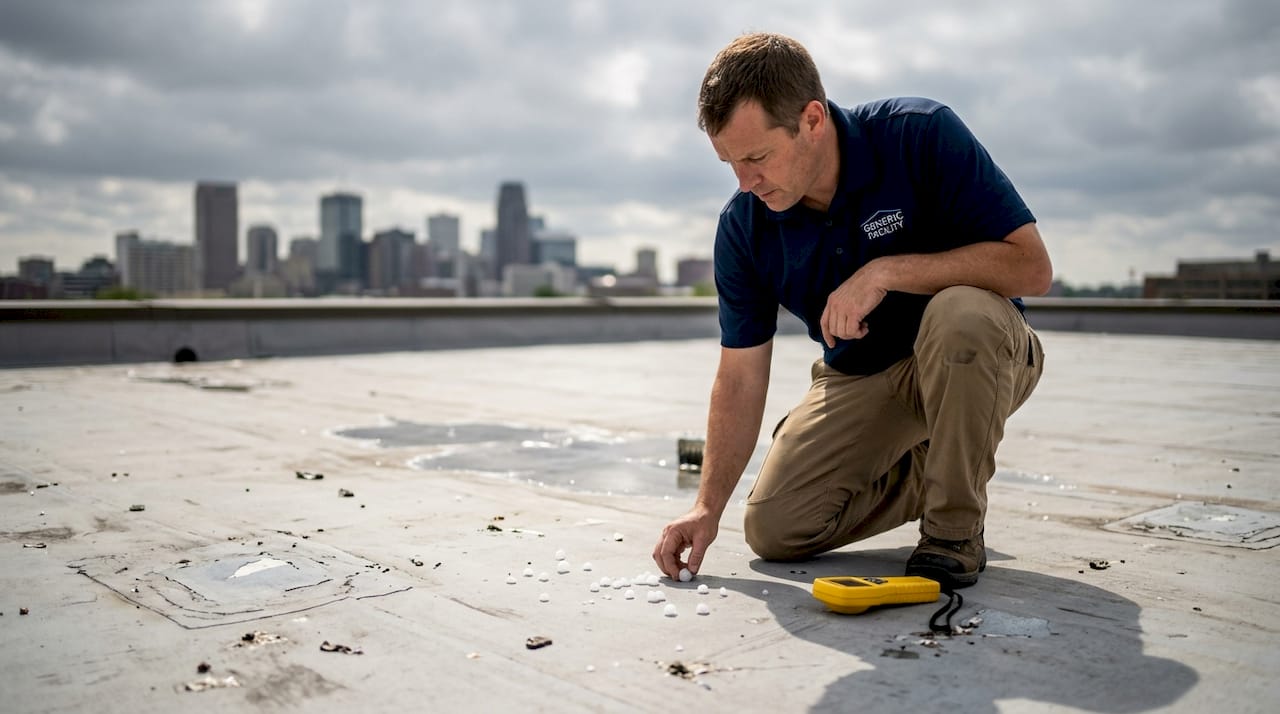
The moisture survey comes first and matters most. Applying coating over wet insulation traps moisture inside your roof system, leading to accelerated deterioration and coating failure. Infrared scanning or nuclear moisture meters identify wet areas that need repair before coating. Property managers who skip this step to save money end up spending far more on premature system failure.
Surface preparation determines adhesion and longevity. Pressure washing at 3000 psi removes dirt, biological growth, and loose material that prevents proper bonding. All rust, corrosion, and failed caulking must be addressed. Seams and penetrations get special attention since these areas are most vulnerable to leaks. The roof must be completely dry before coating application begins.
Repairs and reinforcing fabric increase durability at stress points. Cracks, splits, and open seams get filled and bridged with fabric embedded in base coat. This creates a stronger, more flexible waterproof layer at locations where movement and stress concentrate. Penetrations around pipes, vents, and equipment get similar reinforcement. The fabric acts like rebar in concrete, distributing stress and preventing crack propagation.
Dry film thickness verification per ASTM standards ensures adequate coverage. Contractors use wet film thickness gauges during application to confirm they’re applying enough material to achieve the specified dry thickness after curing. Under-application is one of the most common failure modes. It looks fine initially but won’t deliver promised durability or waterproofing.
90% of failures stem from application errors such as poor prep, under-application, and wrong cure conditions. The coating product itself rarely causes problems. Application shortcuts and corner cutting destroy performance. That’s why choosing an experienced contractor matters as much as selecting the right coating type.
Six-step professional application process:
- Conduct comprehensive moisture survey using infrared or nuclear methods
- Pressure wash roof surface at 3000 psi minimum to remove all contaminants
- Repair all defects, rust, failed caulking, and damaged areas
- Apply base coat at specified wet film thickness for proper dry mil build
- Embed reinforcing fabric at seams, penetrations, and stress points
- Apply topcoat to achieve total system thickness per manufacturer specs
Pro Tip: Specify warranty minimums in your contract and plan for recoating every 10 to 15 years. This maintenance schedule preserves waterproofing and extends total roof life to 30 years or more. Review the step-by-step roof installation guide for Texas coastal homes to understand quality standards, and always verify why roofing warranties matter before signing contracts.
Maximizing benefits: durability, energy savings, and maintenance for coastal properties
Silicone coatings extend roof life by 10 to 20 years and lower cooling costs by 10 to 25% due to high reflectivity. That’s not marketing hype. It’s verified performance data from decades of real-world installations. For coastal Texas commercial properties facing intense sun and frequent storms, these benefits translate directly to lower operating costs and reduced capital expenditure on roof replacements.
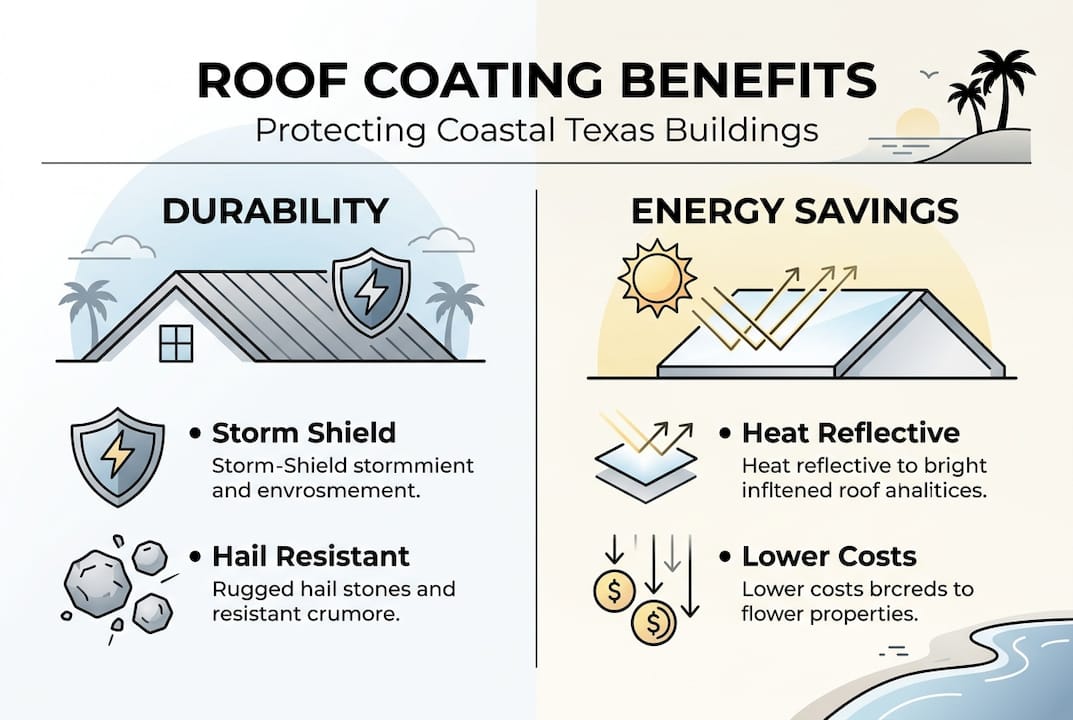
Energy savings from reflectivity add up quickly in hot coastal climates. A white silicone coating reflects 85 to 90% of solar radiation, keeping roof surface temperatures 50 to 80 degrees cooler than uncoated dark surfaces. Lower roof temperatures mean less heat transfer into your building, reducing air conditioning load during the long Texas cooling season. Buildings with coated roofs commonly see 15 to 25% reductions in cooling costs. Over a 15-year coating life, that can exceed the initial coating investment.
Regular recoating preserves waterproofing and durability without the disruption and expense of tear-off replacement. Plan for recoating every 10 to 15 years depending on coating type and exposure conditions. Silicone systems at the upper end of that range, acrylic at the lower end. Recoating costs roughly 30 to 40% of initial installation since surface prep is simpler and less material is needed. This maintenance approach extends total roof life to 30 years or more.
Properly maintained coatings reduce storm damage impact and costly repairs in hurricane-prone areas. The seamless membrane eliminates vulnerable points where wind-driven rain penetrates. Reflective surfaces stay cooler, reducing thermal stress that weakens roof materials over time. Regular inspections catch small issues before they become major problems. This proactive maintenance strategy protects your investment and avoids emergency repairs during peak storm season.
“After 40 years of exposure in Florida’s harsh subtropical climate, silicone coatings retained flexibility and adhesion while acrylic and polyurethane systems showed significant degradation. This long-term durability makes silicone the clear choice for coastal commercial buildings facing similar environmental challenges.”
Key benefits for coastal Texas commercial properties:
- Extend roof service life by 10-20 years beyond original design life
- Reduce cooling costs by 10-25% through solar reflectivity
- Lower storm damage risk with seamless waterproof membrane
- Avoid disruption and expense of complete roof replacement
- Maintain property value with well-protected building envelope
Understanding why investing in roof maintenance matters helps property managers budget appropriately. Regular coating maintenance costs far less than emergency repairs or premature replacement. Check the roof lifespan guide for coastal Texas to see how coatings fit into your long-term capital planning.
Protect your commercial roof with expert coating services
Choosing the right coating matters, but professional application ensures you actually get the performance you’re paying for. Proper surface preparation, correct dry film thickness, and compliance with ASTM standards separate successful installations from expensive failures. You need a contractor who understands coastal Texas conditions and has proven experience with commercial coating systems.
Buffalo Roofing & Exteriors provides comprehensive flat roof solutions designed specifically for coastal storm exposure. Our team conducts thorough moisture surveys, performs rigorous surface prep, and applies coatings to manufacturer specifications with verified dry film thickness. We offer material warranties backed by our installation guarantee, giving you confidence your coating system will perform as promised.
Every commercial property faces unique challenges based on roof type, building use, and exposure conditions. Our consultation process evaluates your specific situation and recommends roof materials and options optimized for your needs and budget. We explain the tradeoffs between coating types so you can make an informed decision. Whether you need silicone for superior storm resistance or polyurethane for impact protection, we have the expertise to deliver lasting results. Contact us today for a detailed assessment of your commercial roof and a customized coating recommendation that protects your investment for years to come.
Frequently asked questions
What is the best roofing coating type for coastal Texas buildings?
Silicone coatings perform best in coastal Texas due to superior ponding water resistance and UV durability. They maintain waterproof integrity even when water sits on the roof for extended periods, common after heavy storms. The 40-year Florida weathering study confirms silicone outperforms alternatives in humid, storm-prone climates similar to coastal Texas.
How important is surface preparation before applying roof coatings?
Surface preparation determines coating success or failure. 90% of coating failures result from poor prep, not product defects. Proper moisture survey, pressure washing at 3000 psi, and repair of all defects are essential. Skipping prep steps to save money guarantees premature failure and voided warranties.
How often do commercial roof coatings need reapplication?
Plan for recoating every 10 to 15 years depending on coating type and exposure. Silicone systems typically last 15 to 20 years before needing recoat, while acrylic requires reapplication every 7 to 10 years. Regular maintenance extends total roof life to 30 years or more. Review commercial roof maintenance in Texas for detailed scheduling guidance.
What energy savings can I expect from reflective roof coatings?
Reflective coatings typically reduce cooling costs by 10 to 25% in hot climates like coastal Texas. White silicone coatings reflect 85 to 90% of solar radiation, lowering roof surface temperatures by 50 to 80 degrees. Actual savings depend on building insulation, HVAC efficiency, and occupancy patterns, but most properties see measurable utility bill reductions.
What causes most commercial roof coating failures?
Application errors cause 90% of coating failures, not product defects. Common mistakes include inadequate surface prep, applying coating over wet insulation, insufficient dry film thickness, and working outside proper temperature and humidity ranges. Choosing an experienced contractor who follows ASTM standards and manufacturer specifications prevents these failures.