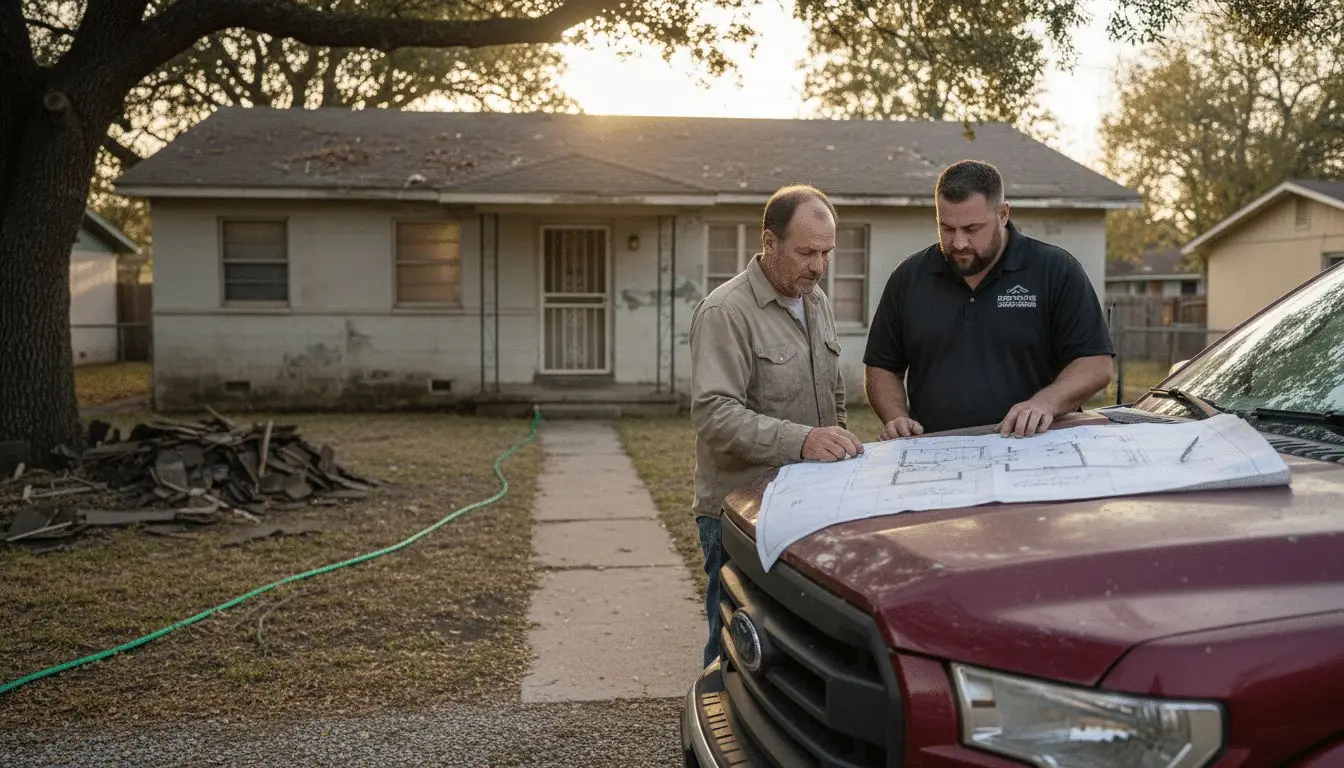
Storm-damaged roofs and energy-efficient upgrades create real stress for homeowners in Corpus Christi and San Antonio. Getting a roofing estimate is more than just asking for a price—it is a careful evaluation of your home’s entire protection system. Unpacking the basics of roofing estimates, including what is truly needed and common misconceptions, helps you confidently plan repairs or replacements. This guide reveals key details, local regulations, and critical cost breakdowns so you can make smart decisions and avoid costly mistakes.
Table of Contents
- Roofing Estimate Basics And Common Myths
- Types Of Roofing Estimates Explained
- What’s Included In A Standard Estimate
- Local Regulations Impacting Corpus Christi Roofing
- Cost Breakdown And Financing Options
- Mistakes To Avoid When Requesting Estimates
Key Takeaways
| Point | Details |
|---|---|
| Understand Estimate Types | Familiarize yourself with different roofing estimate types to ensure accurate cost projections and planning. |
| Beware of Common Myths | Recognize misconceptions about roofing estimates, such as the idea that all estimates are free or that cheaper is better. |
| Review Included Components | Ensure a comprehensive roofing estimate includes material costs, labor expenses, and necessary permits to prevent unexpected expenses. |
| Prepare Thoroughly for Estimates | Gather all necessary documentation and communicate clearly with contractors to facilitate accurate and effective estimate requests. |
Roofing Estimate Basics and Common Myths
Homeowners often approach roof repair with a mix of uncertainty and anxiety, particularly when understanding the estimate process. Contrary to popular belief, getting a roofing estimate is more than just receiving a price tag – it’s a comprehensive evaluation of your home’s exterior protection system.
Understanding the fundamentals of roofing estimates helps demystify the process and empowers homeowners to make informed decisions. Consumer Reports highlights that not every roof damage requires complete replacement, and estimates help clarify the specific repair needs.
Common myths about roofing estimates can lead homeowners to make costly mistakes. Here are the most prevalent misconceptions:
- Myth 1: All Estimates Are Free
- Not every contractor provides free estimates
- Some professionals charge for detailed, comprehensive assessments
- Reputable companies often offer complimentary initial consultations
- Myth 2: Lowest Estimate Is Always Best
- Cheapest isn’t necessarily the most cost-effective
- Low estimates might indicate subpar materials or limited scope of work
- Consider value, quality, and long-term protection
- Myth 3: One Estimate Is Enough
- Always obtain multiple estimates for comparison
- Different contractors might offer varying perspectives on repair needs
- Helps ensure fair pricing and comprehensive understanding
Legal considerations also play a crucial role in roofing estimates. Legal sources clarify that while no federal law mandates estimates, many states require written contracts for work exceeding specific monetary thresholds.
Differentiating between an estimate and a quote is critical. An estimate provides an approximate cost, while a quote represents a fixed price. Understanding this distinction prevents unexpected financial surprises during roof repair projects.
Pro tip: Request detailed written estimates that break down material costs, labor, potential additional repairs, and warranty information to make a truly informed decision.
Types of Roofing Estimates Explained
Roofing estimates are not a one-size-fits-all process. Homeowners should understand that different types of estimates serve unique purposes throughout a roofing project’s lifecycle. Construction cost estimating techniques reveal multiple approaches to evaluating potential roof repair or replacement expenses.
Professional contractors typically utilize several distinct estimate types, each providing varying levels of detail and accuracy. These estimates help homeowners make informed decisions about their roofing projects, from initial planning to final implementation.
Here are the primary types of roofing estimates homeowners might encounter:
- Rough Order of Magnitude (ROM) Estimate
- Preliminary assessment with broad cost range
- Accuracy typically within 25-50% of final cost
- Used during initial project conceptualization
- Helps establish initial budget parameters
- Preliminary Estimate
- More refined than ROM estimate
- Provides more detailed cost projection
- Uses basic measurements and general material assumptions
- Accuracy improves to approximately 15-25% variance
- Definitive Estimate
- Highly detailed cost projection
- Includes specific material selections
- Precise measurements of roof area
- Minimal cost variance, typically within 5-15%
- Detailed Estimate
- Most comprehensive estimate type
- Includes exact material costs, labor expenses
- Accounts for potential additional repairs
- Provides line-item breakdown of all projected expenses
Understanding these estimate types allows homeowners to ask informed questions and set realistic expectations. Construction estimate variations demonstrate how each estimate serves a specific purpose in project planning.
Each estimate type progressively increases in accuracy and specificity, moving from broad conceptual projections to precise financial blueprints. Homeowners should request detailed written estimates that clearly explain the estimate’s scope and potential variations.
Here is a quick comparison of the main estimate types used in roofing projects:
| Estimate Type | Detail Level | Typical Use Phase | Cost Accuracy Range |
|---|---|---|---|
| Rough Order of Magnitude | Very basic overview | Early conceptual planning | Within 25-50% of final cost |
| Preliminary | Moderate details | Budgeting and feasibility | Within 15-25% variance |
| Definitive | Detailed breakdown | Pre-construction planning | Within 5-15% variance |
| Detailed | Full itemized costs | Final budget and contracting | Minimal variance, most precise |
Pro tip: Always request written estimates that specify which type of estimate is being provided, and ask contractors to explain the potential cost range and accuracy level.
What’s Included in a Standard Estimate
A comprehensive roofing estimate serves as a critical roadmap for homeowners planning repair or replacement projects. Roofing estimate components break down the complex process into clear, manageable line items that help prevent unexpected expenses and misunderstandings.

Understanding the detailed breakdown of a standard estimate empowers homeowners to make informed decisions about their roofing investment. Professional contractors typically provide estimates that cover multiple critical aspects of the roofing project, ensuring transparency and clarity.
Here are the key components typically included in a standard roofing estimate:
- Material Costs
- Specific roofing materials selected
- Cost per square foot
- Quality and grade of materials
- Manufacturer specifications
- Labor Expenses
- Removal of existing roofing
- Installation of new roofing system
- Number of workers required
- Estimated labor hours
- Skill level of installation team
- Disposal and Cleanup
- Removal of old roofing materials
- Dumpster rental fees
- Hauling and disposal costs
- Site cleanup and preparation
- Additional Project Considerations
- Roof complexity and slope
- Number of stories
- Presence of chimneys or skylights
- Potential structural repairs
Homeowners should carefully review each line item to understand the full scope of the proposed roofing project.
Roofing replacement calculators highlight that estimates can vary significantly based on project-specific details. Factors like local building codes, permit requirements, and regional material costs can impact the final price.
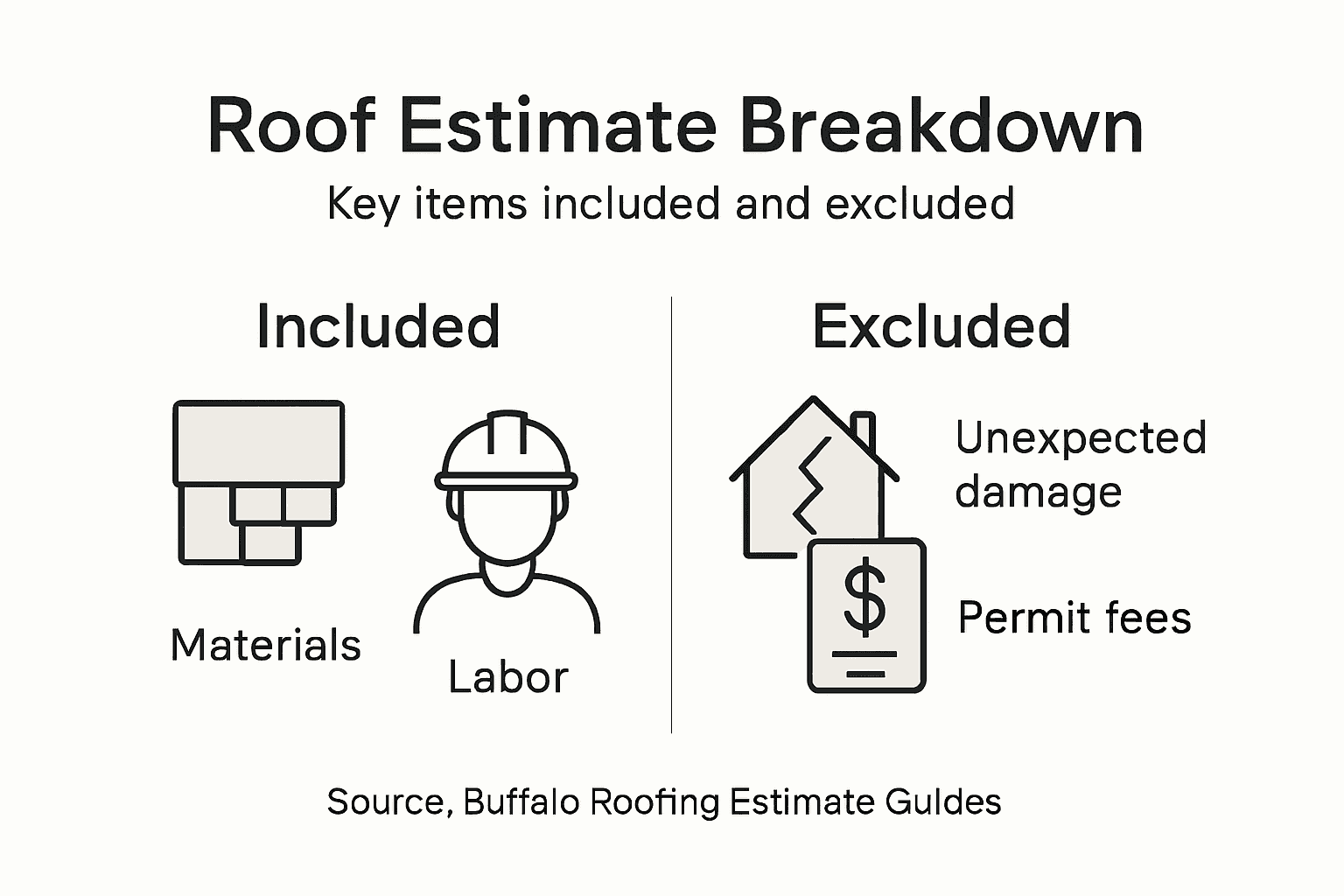
It’s crucial to recognize that some items are typically not included in standard estimates. These may involve unexpected structural damage, permit fees, or additional repair work discovered during the initial inspection.
Below is a reference guide summarizing what is commonly included—and excluded—from standard roofing estimates:
| Estimate Line Item | Commonly Included | Often Excluded/Extra |
|---|---|---|
| Material specifications | Roofing type, quantity | Upgrades, premium grades |
| Labor and installation | Removal, new install | Specialized repairs |
| Disposal/cleanup | Dumpster, removal fees | Hazardous waste handling |
| Permits and fees | Basic local permits | Extra inspections, renewals |
| Additional repairs | Minor structural issues | Major hidden damage |
Pro tip: Request a comprehensive written estimate that clearly explains each line item, and don’t hesitate to ask contractors to elaborate on any unclear charges or potential additional expenses.
Local Regulations Impacting Corpus Christi Roofing
Corpus Christi homeowners face a unique set of roofing regulations that directly impact their home improvement projects. International building code adoption plays a critical role in determining what roofing practices are permissible in this coastal Texas city.
The city’s regulatory landscape is particularly complex due to its coastal location and susceptibility to severe weather conditions. Professional roofers must navigate a maze of local requirements that go beyond standard building practices, ensuring structural integrity and safety for homeowners.
Key regulatory aspects for Corpus Christi roofing include:
- Windstorm Certification Requirements
- Mandatory for coastal region construction
- Specific installation techniques for wind resistance
- Certification from Texas Department of Insurance
- Special fastening and attachment methods
- Permit Acquisition Process
- Detailed documentation required
- Inspections before, during, and after roofing
- Compliance with 2021 International Building Codes
- Specific local amendments to standard regulations
- Material Restrictions
- Approved materials for coastal environments
- Corrosion-resistant components
- Enhanced durability standards
- Wind-load rating specifications
- Insurance and Compliance Considerations
- Impact-resistant material requirements
- Documentation for insurance purposes
- Proof of professional installation
- Compliance certificates
Homeowners must understand that local regulations are not optional – they are mandatory requirements for safe and legal roofing in Corpus Christi.
Local development services provide critical guidance for navigating these complex regulatory requirements. Contractors and homeowners must work closely with the city’s Development Services Department to ensure full compliance.
Additionally, coastal regulations often exceed standard building codes, reflecting the unique environmental challenges of the Corpus Christi region. These regulations are designed to protect homes from hurricane-force winds, salt air corrosion, and extreme weather conditions.
Pro tip: Always request that your roofing contractor provide documented proof of windstorm certification and local code compliance before beginning any roofing project.
Cost Breakdown and Financing Options
Homeowners confronting roofing projects must navigate a complex financial landscape that extends far beyond simple material and labor costs. Comprehensive roofing cost analysis reveals multiple factors that contribute to the overall expense of a roofing project.
Understanding the nuanced cost structure helps homeowners make informed financial decisions and avoid unexpected expenditures. Professional roofing projects involve multiple cost components that homeowners should carefully consider before committing to a full replacement or extensive repair.
Here’s a detailed breakdown of typical roofing project expenses:
- Material Costs
- Roofing shingles or tiles
- Underlayment
- Flashing
- Ventilation components
- Sealants and additional materials
- Labor Expenses
- Roof removal
- Installation
- Cleanup
- Disposal fees
- Specialized technical work
- Additional Project Expenses
- Permits
- Inspection fees
- Potential structural repairs
- Dumpster rental
- Equipment costs
- Financing Options
- Home improvement loans
- Personal bank loans
- Credit lines
- Manufacturer financing
- Insurance claim support
Homeowners should anticipate that roofing costs can vary significantly based on project complexity, materials selected, and local market conditions.
National construction cost studies indicate that roofing expenses typically range from $5,000 to $15,000 for an average residential project, with high-end or complex installations potentially exceeding $25,000.
Financing options have expanded dramatically, offering homeowners multiple strategies to manage roofing investment costs. Many contractors now provide flexible payment plans, and some financial institutions offer specialized home improvement loan products tailored to roofing projects.
Pro tip: Request detailed written quotes from multiple contractors and compare not just total costs, but specific line-item breakdowns to understand the true value of each proposal.
Mistakes to Avoid When Requesting Estimates
Roofing estimates represent a critical junction in home maintenance where homeowners can easily make costly missteps. Project management insights reveal that preparation and strategic communication are key to obtaining accurate, comprehensive roofing estimates.
Understanding common pitfalls can help homeowners navigate the estimate process more effectively, ultimately saving time, money, and potential future headaches. Professional contractors look for specific signs of preparedness and seriousness from potential clients.
Here are the most critical mistakes to avoid when requesting roofing estimates:
- Failing to Prepare Documentation
- Incomplete property information
- Lack of roof measurements
- Missing previous repair records
- No clear project scope defined
- Seeking Only the Lowest Price
- Overlooking contractor quality
- Ignoring experience levels
- Disregarding warranty offerings
- Prioritizing cost over craftsmanship
- Miscommunicating Project Requirements
- Vague project descriptions
- Not specifying material preferences
- Hiding potential structural issues
- Failing to discuss timeline expectations
- Unprofessional Estimate Request Behavior
- Multiple last-minute changes
- Inconsistent communication
- Not respecting contractor’s time
- Unrealistic expectation setting
Professional contractors value clear, serious, and well-prepared estimate requests that demonstrate homeowner commitment and understanding.
Contractor association guidelines emphasize the importance of treating the estimate process as a professional interaction. Many contractors now charge for detailed estimates to ensure they are working with serious clients who value their expertise.
The most successful roofing projects begin with transparent, thorough communication. Homeowners should approach estimates as collaborative discussions, not transactional interactions, providing comprehensive information and maintaining open dialogue throughout the process.
Pro tip: Prepare a comprehensive folder with property details, roof measurements, previous repair documents, and clear project objectives before requesting estimates to demonstrate professionalism and commitment.
Take Control of Your Roofing Project with Buffalo Roofing & Exteriors
Getting a clear and detailed roofing estimate can feel overwhelming. From understanding different estimate types to navigating Corpus Christi’s local regulations, the challenges are real. You want reliable professionals who break down material costs, labor expenses, and compliance issues so you can feel confident in your investment. Don’t let uncertainty hold you back from securing a durable and weather-resistant roof.

Explore how our expert team at Buffalo Roofing & Exteriors delivers transparent and comprehensive roofing services. Whether you need a minor repair or a full roof replacement, our Roofing Archives offers valuable insights and solutions tailored to your unique needs. Ready for a free detailed estimate? Visit us today and take the first step toward a safer, stronger home.
Frequently Asked Questions
What should homeowners know about roofing estimates?
Homeowners should know that roofing estimates provide a comprehensive evaluation of repair needs, rather than just a price. It’s essential to understand the distinction between estimates and quotes, as well as the various types of estimates that exist.
Are all roofing estimates free?
Not all contractors offer free estimates. While many reputable companies provide complimentary initial consultations, some may charge for detailed assessments. It’s best to clarify this before requesting an estimate.
How many roofing estimates should a homeowner obtain?
Homeowners should obtain multiple estimates to compare pricing, scope of work, and perspectives on repair needs. This practice helps ensure fair pricing and a better understanding of the project requirements.
What components are typically included in a roofing estimate?
A standard roofing estimate usually includes material costs, labor expenses, disposal and cleanup fees, and any additional project considerations. However, unexpected structural damage or permit fees may not be included and should be clarified with the contractor.