TL;DR:
- Coastal Texas roofs face faster deterioration due to salt, humidity, and storm exposure.
- Routine professional inspections identify hidden damage, preventing costly storm-related repairs.
- Biannual inspections before and after storm season help maintain roof integrity and support insurance claims.
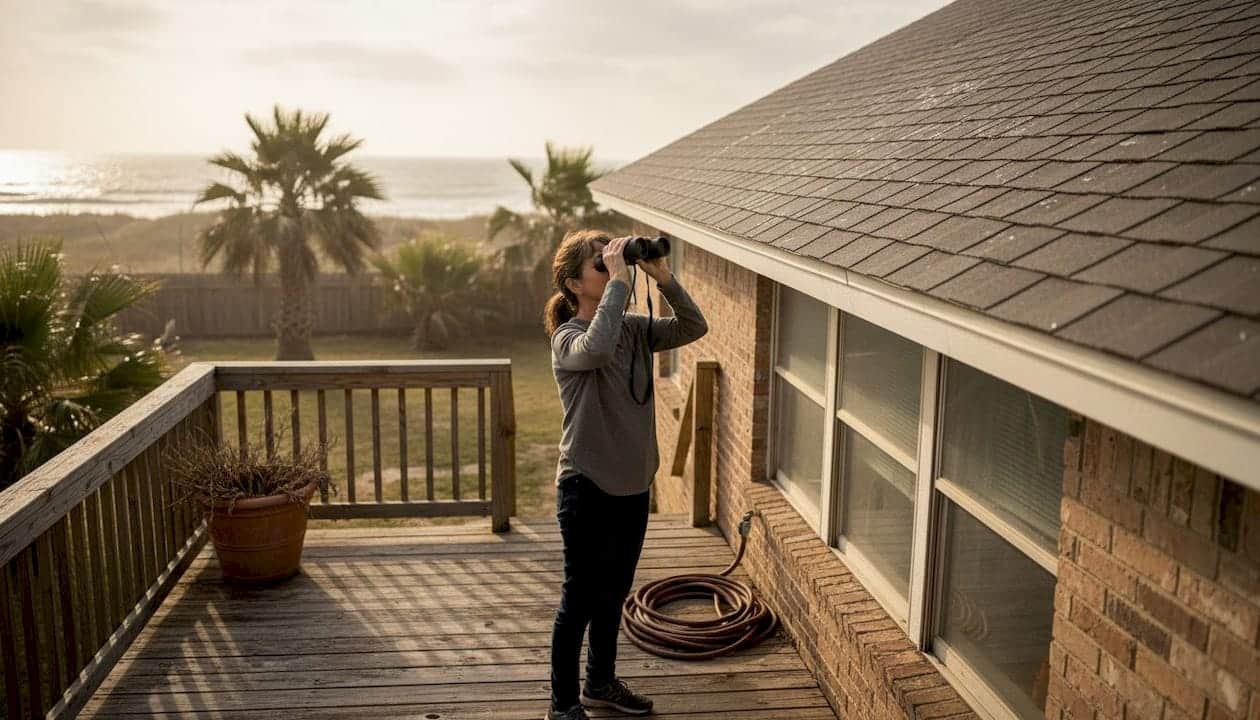
Most homeowners only think about their roof when water starts dripping through the ceiling. In coastal Texas, that mindset can cost you tens of thousands of dollars. The combination of hurricane-force winds, relentless salt air, and year-round humidity puts roofs here under stress that inland homes simply never experience. Waiting for visible damage before calling a roofer is like waiting for chest pains before visiting a doctor. Routine roof inspections are your first line of defense, and in a region where storm season can arrive fast and hit hard, they are not optional. They are essential.
Table of Contents
- Understanding coastal Texas roof risks
- What routine roof inspections involve
- How inspections prevent storm damage and save money
- When and how often to schedule roof inspections in Texas
- Our take: The real value of roof inspections for Texas homeowners
- Protect your investment with expert roof inspections
- Frequently asked questions
Key Takeaways
| Point | Details |
|---|---|
| Coastal roofs need attention | Storms and salt increase wear on Texas coastal roofs more than inland regions. |
| Inspections prevent costly damage | Routine checks find issues early, saving you from bigger, more expensive repairs after storms. |
| Twice-a-year is ideal | Schedule roof inspections before and after local storm seasons for best protection. |
| Professional checks matter | Experts spot hidden damage and boost your roof’s lifespan and insurance success. |
Understanding coastal Texas roof risks
Coastal Texas is one of the harshest environments a roof can endure. The Gulf Coast delivers a punishing mix of heat, moisture, wind, and salt that few other regions match. Salt spray from the ocean doesn’t just settle on your car. It works its way into roofing materials, corroding metal flashings, weakening shingle adhesives, and accelerating rust on fasteners. Add in the humidity that never really goes away, and you have a recipe for mold growth, wood rot, and material breakdown that happens faster than you might expect.
Coastal Texas experiences frequent hurricanes and salt-laden humidity, both of which accelerate roof wear at a rate that surprises most homeowners. In fact, coastal roofs can age up to 40% faster than roofs in drier, inland climates. That means a roof rated for 25 years may only perform reliably for 15 years without proper maintenance and regular inspection.
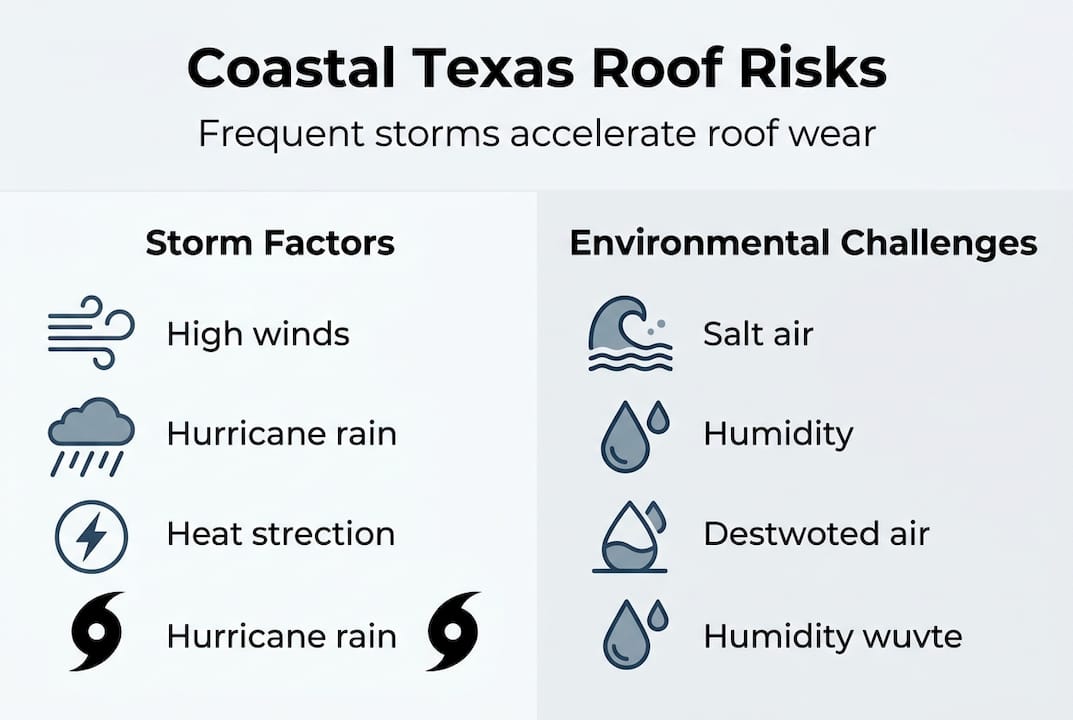
Storm season, which runs from June through November, raises the stakes even higher. A single severe storm can lift shingles, crack tiles, and force water into places you cannot see from the ground. Hurricane safety in Texas resources consistently emphasize the importance of pre-storm preparedness, and your roof is the first structure that takes the hit.
Here is a quick look at the most common types of roof damage seen across the Texas coastal region:
| Damage type | Primary cause | Typical result |
|---|---|---|
| Lifted or missing shingles | High winds | Water intrusion, structural exposure |
| Corrosion on flashings | Salt spray and humidity | Leaks around chimneys and vents |
| Water intrusion | Storm-driven rain | Mold, rot, ceiling damage |
| Granule loss on shingles | UV exposure and heat | Reduced shingle lifespan |
| Sagging roof deck | Long-term moisture exposure | Structural compromise |
The most common issues our team finds during inspections are lifted shingles, corroded metal components, and slow-developing water intrusion that homeowners had no idea existed. Good storm damage prevention starts with knowing what you are up against.
“Coastal roofs face a combination of stressors that inland roofs rarely encounter. Without routine attention, small vulnerabilities become major failures in a single storm season.”
What routine roof inspections involve
A professional roof inspection is not just someone walking around and glancing at your shingles. It is a structured process that looks at every component of your roofing system, inside and out. Understanding what is covered helps you appreciate the value and know what to expect when you book one.
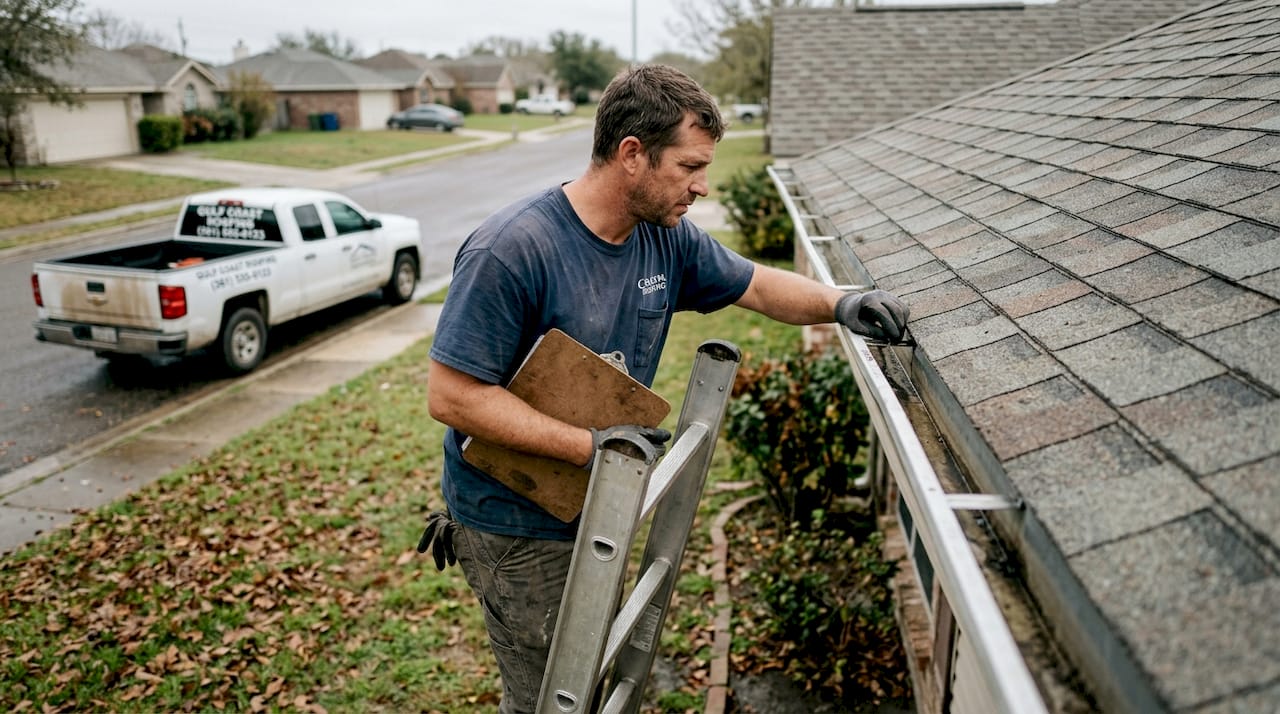
Professional inspections cover areas that DIY efforts often miss, including hidden leaks and flashing failures that are invisible from street level. Here is what a thorough inspection typically includes:
- Visual exterior check: The roofer examines shingles, tiles, or metal panels for cracking, curling, missing sections, and granule loss.
- Flashing assessment: All metal flashing around chimneys, vents, skylights, and valleys is checked for rust, gaps, and improper sealing.
- Gutter and drainage review: Gutters are inspected for blockages, sagging, and signs that water is pooling or backing up toward the roofline.
- Attic inspection: The inspector checks for moisture, daylight coming through the decking, insulation damage, and signs of mold or rot.
- Structural check: The roof deck and rafters are assessed for soft spots, sagging, or signs of long-term water damage.
This is very different from what most homeowners can do on their own. Here is a simple comparison:
| Inspection type | What it covers | Limitations |
|---|---|---|
| DIY check | Visible shingles, obvious damage | Misses hidden leaks, flashing issues, attic problems |
| Professional inspection | Full exterior, attic, gutters, flashings | Requires scheduling, small cost |
You can review a roof maintenance checklist to understand what homeowners can monitor between visits, but nothing replaces a trained eye. The roof inspection basics from the National Roofing Contractors Association reinforce that professional evaluations catch problems early before they grow into expensive repairs.
Pro Tip: Before your roofer arrives, clear any debris from gutters, make sure attic access is unobstructed, and note any areas inside the home where you have noticed staining or unusual smells. This helps the inspector work faster and gives them useful context.
Scheduling professional roof inspection services at least twice a year is the smartest habit a coastal Texas homeowner can build.
How inspections prevent storm damage and save money
The financial case for routine inspections is straightforward. Small problems found early cost a fraction of what they cost after a storm turns them into full-blown failures. A cracked flashing seal that costs $150 to fix today can become a $6,000 interior water damage repair after a heavy rain event.
Early intervention can save homeowners thousands in storm-related repair costs, and the math is hard to argue with. Homes without regular inspections are statistically twice as likely to need major storm repairs compared to homes that receive routine professional attention. That is not a small difference.
Here are the top problems that routine inspections catch before they escalate:
- Active or developing leaks that have not yet reached interior surfaces
- Lifted or loose shingles that will peel away in the next high-wind event
- Rusted or failing flashings that allow water to enter around roof penetrations
- Rotting decking or fascia caused by prolonged moisture exposure
- Clogged gutters that force water under the roofline during heavy rain
Beyond preventing physical damage, inspections also have a direct impact on your insurance situation. Many local insurers in coastal Texas look favorably on homeowners who maintain documented inspection records. Some policies even require proof of regular maintenance before approving storm-related claims. Knowing how to spot storm damage is useful, but having a professional document the condition of your roof before and after a storm is far more powerful.
Pro Tip: Keep a folder, physical or digital, with dates, photos, and written reports from every inspection. When you file a claim, this record demonstrates that your roof was properly maintained, which can speed up approvals and reduce disputes.
Understanding the connection between roof inspections and storm damage is what separates reactive homeowners from proactive ones. And if a leak does develop, knowing how to repair roof leaks quickly is equally important.
When and how often to schedule roof inspections in Texas
Timing matters as much as frequency. In coastal Texas, the calendar has two natural checkpoints that every homeowner should build their inspection schedule around.
Roofs in storm-prone regions benefit from biannual inspections: one before storm season begins and one after it ends. Here is how to plan it:
- Spring inspection (March to May): Schedule this before hurricane season kicks in. The goal is to identify and fix any vulnerabilities before storms arrive.
- Fall inspection (November to December): After storm season, have a professional assess any damage that occurred and prepare the roof for winter weather.
- Post-storm check: After any significant storm, schedule an inspection within a week, even if you see no obvious damage.
- New home or recent purchase: Always inspect a roof before or shortly after buying a home, regardless of the season.
Between professional visits, watch for these warning signs that mean you should not wait for your next scheduled inspection:
- Shingles that are visibly curling, cracking, or missing
- Water stains on ceilings or walls inside the home
- Granules from shingles collecting in your gutters
- Daylight visible through the attic
- Sudden spikes in your energy bills without explanation
- Sagging areas anywhere on the roofline
You can learn more about signs you need a roof repair to stay ahead of problems between visits. Building a habit of regular roof maintenance and following a seasonal roof checklist gives you the best chance of catching issues before they become emergencies.
Our take: The real value of roof inspections for Texas homeowners
After years of working on roofs across Corpus Christi, San Antonio, and Victoria, we have seen a pattern that never changes. The homeowners who call us in a panic after a storm are almost always the ones who skipped their last inspection. And the damage we find is rarely new. It was there before the storm. The storm just finished the job.
Most roof problems are invisible to the untrained eye until they have already caused significant harm. A small gap in flashing, a few lifted shingle tabs, a soft spot in the decking. None of these look alarming from the ground. But they are all open doors for water.
What we also see is that homeowners who invest in routine inspections build something valuable over time: a documented history of their roof’s condition. That history matters when you sell your home, when you file an insurance claim, and when you want to know whether your roof needs replacement or just maintenance.
Skipping inspections is a gamble, and in coastal Texas, the odds are not in your favor. The importance of professional inspections goes beyond finding damage. It is about building a relationship with your roof and understanding its condition before a storm forces your hand.
Protect your investment with expert roof inspections
Your roof is the most important barrier between your family and the elements, and in coastal Texas, those elements are serious. The good news is that staying ahead of problems does not require a major investment of time or money.
At Buffalo Roofing & Exteriors, we make it easy to schedule a roof inspection with experienced local professionals who understand exactly what coastal Texas roofs go through. Whether you need a pre-storm evaluation, a post-storm assessment, or full storm damage restoration, we are ready to help. We also offer weather-resistant roofing solutions designed specifically for the Gulf Coast climate. Contact us today for a free estimate and take the first step toward a roof that is ready for whatever storm season brings.
Frequently asked questions
How often should I schedule a roof inspection in coastal Texas?
Schedule biannual inspections twice a year, once in spring before storm season and once in fall after it ends, to keep your roof in its best condition year-round.
What are the early signs I need a roof inspection?
Missing shingles, water stains on ceilings, sagging areas, and rising energy bills are all warning signs. These early indicators mean you should not wait for your next scheduled visit.
Are professional inspections better than DIY roof checks?
Yes. Professional inspections uncover hidden weak spots like failing flashings and attic moisture that homeowners typically cannot detect from the ground.
Can routine inspections help with insurance claims?
Absolutely. Documented inspection records demonstrate proper maintenance, which can make insurance claims faster and reduce disputes with your insurer after storm damage.