


TL;DR:
- Gutters play a critical role in home safety by directing water away from foundations, walls, and roofs, preventing costly damage. Regular maintenance, including cleaning twice a year and checking for warning signs, is essential to avoid structural issues and winter ice dam problems. Safety concerns during DIY gutter work highlight the importance of hiring professionals for complex or high-risk tasks to prevent injury and further damage.
Most homeowners think about their roof when a storm rolls in. Gutters barely register. But the role of gutters in home safety is more significant than most people realize until something goes wrong. A properly functioning gutter system quietly redirects thousands of gallons of water away from your foundation, walls, and roof every year. When gutters fail, the damage often starts silently underground or behind your walls, and by the time it becomes visible, you’re looking at repairs that can run into thousands of dollars.
Table of Contents
- Key takeaways
- The role of gutters in home safety and structural protection
- Ice dams, winter damage, and what gutters have to do with it
- Safety hazards of gutter maintenance work
- Signs of gutter failure and how to stay ahead of them
- My take on gutters as a safety feature
- Protecting your home starts with the right team
- FAQ
Key takeaways
| Point | Details |
|---|---|
| Gutters protect your foundation | Directing water away from the base of your home prevents soil erosion, cracks, and basement flooding. |
| Ice dams start before you see them | Heat loss through your roof melts snow that refreezes near gutters, causing leaks and structural damage. |
| DIY gutter work carries real risks | Ladder injuries account for roughly 20,000 emergency room visits annually during home maintenance tasks. |
| Twice-a-year cleaning is the minimum | Spring and fall cleanings prevent overflow, water damage, and the compounding problems that follow. |
| Gutter failure shows visible warning signs | Sagging, overflow during rain, and pooling water near your foundation all signal a system that needs attention. |
The role of gutters in home safety and structural protection
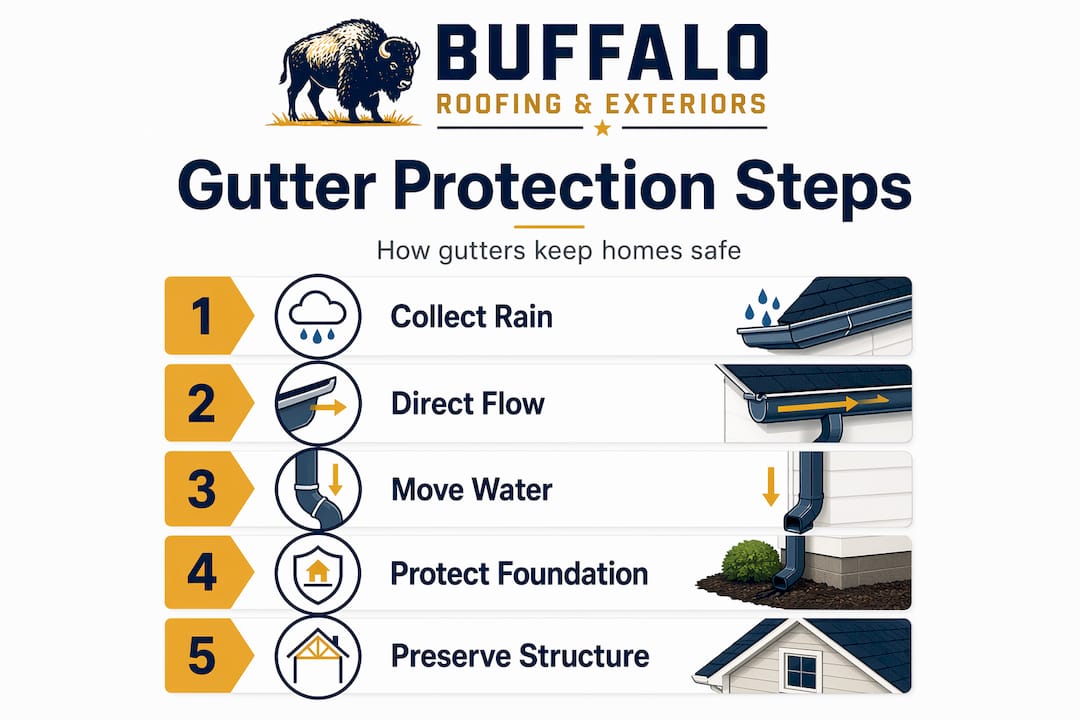
Gutters do one job: move water away from your house. But that job touches nearly every part of your home’s structure in ways that are easy to underestimate until failure happens.
How water threatens your foundation
Your foundation is the most expensive single structural element of your home. When gutters overflow or are missing entirely, water pools along the perimeter of the house. Over time, that water causes foundation cracks and basement leaks that can compromise the entire structure. Foundation repair costs average around $5,000, and that figure climbs fast depending on the severity of the damage.
Gutters and home protection work together because a properly pitched gutter system with correctly positioned downspouts channels water at least six feet away from your home. That distance matters. Even a few inches too close can mean water saturating the soil directly against your foundation walls.
Protecting walls, fascia, and roof edges
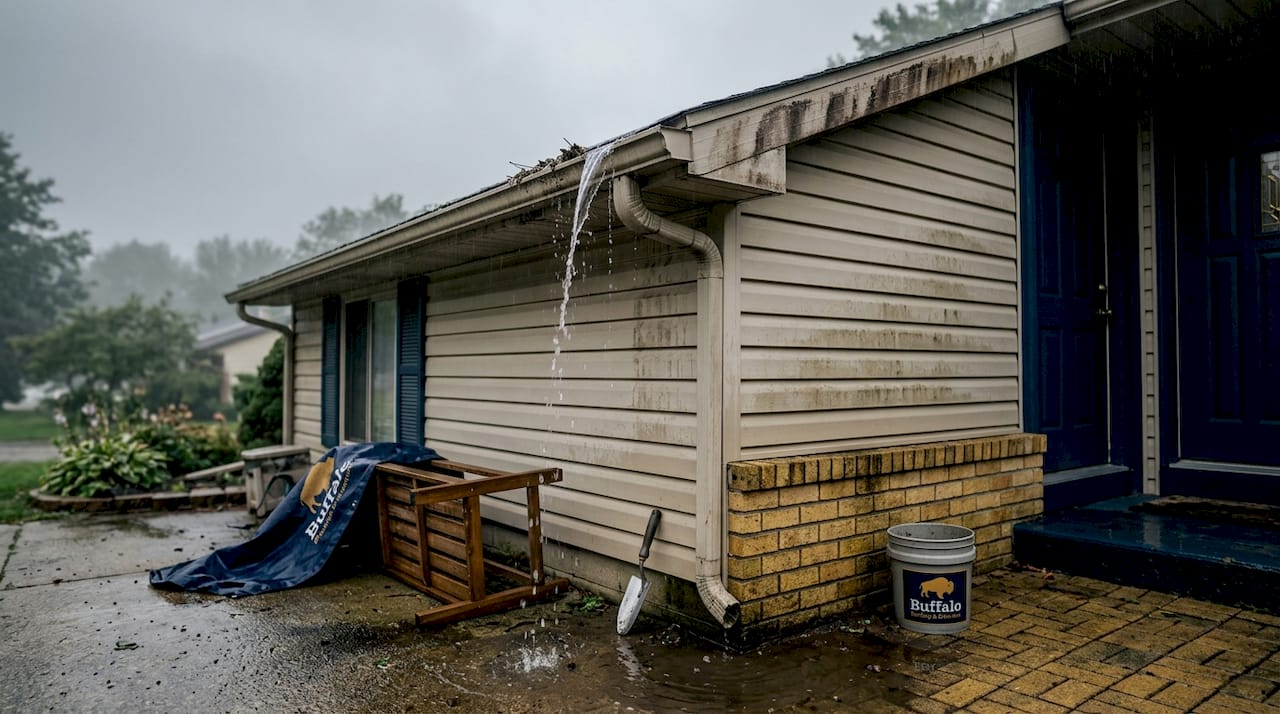
Water that misses your gutters doesn’t just fall to the ground harmlessly. It runs down your siding, soaks into fascia boards behind the gutters, and works its way under roofing materials at the eaves. Clogged or overflowing gutters lead to interior moisture damage, affecting roofing materials, basement integrity, and creating conditions where mold thrives.
The landscaping angle most people miss
Beyond the structure itself, improper drainage can destroy your landscaping, erode soil from garden beds, crack driveways, and create standing water that attracts mosquitoes. That last one is worth taking seriously in coastal Texas, where mosquito-borne illness risk is real. The importance of gutters extends well past keeping your basement dry.
Pro Tip: Check your downspout extensions after every major storm. They get knocked loose or crushed and can end up directing water straight back toward your foundation without you noticing.
Ice dams, winter damage, and what gutters have to do with it
Homeowners in colder climates deal with a specific threat that gutters either help prevent or make significantly worse depending on how well they are maintained.
Ice dams form when heat escaping through your roof melts snow at the top, sending meltwater running down toward the cold eaves where gutters sit. That water refreezes, creating a dam of ice that traps subsequent meltwater. The backed-up water has nowhere to go but under your shingles and into your home. Here’s what makes this worse: ice dam problems begin before any visible ice forms. By the time you see icicles hanging from your gutters, the process has already started.
How do gutters impact this safety issue directly? Blocked gutters packed with leaves and debris trap meltwater even more aggressively, accelerating ice buildup. Blocked gutters worsen freeze-thaw damage significantly compared to clean, free-flowing systems.
Here are four steps to reduce your ice dam risk through proper gutter management:
- Clean gutters in late fall before freezing temperatures arrive. Leaves and debris are the primary culprits trapping water near the eaves.
- Extend downspouts at least six feet from your home’s foundation. Proper downspout placement reduces water backup behavior in winter conditions.
- Improve attic insulation and ventilation alongside gutter maintenance. Heat escaping through a poorly insulated attic drives ice dam formation regardless of how clean your gutters are. This is well covered in Buffaloroofingandexteriors’ roof maintenance guide for cold-weather protection.
- Inspect hangers and joints in spring after freeze-thaw cycles have put stress on the entire system. Ice is heavy. Gutters that survived winter may still need recalibrating.
Pro Tip: If you see consistent icicle formation in the same spot year after year, that’s a thermal weak point in your attic. Fixing the insulation there will do more for ice dam prevention than any amount of gutter cleaning alone.
Safety hazards of gutter maintenance work
Understanding the importance of gutters also means understanding the risks involved in maintaining them yourself. Gutter work is one of the more hazardous routine home maintenance tasks homeowners take on.
The numbers are not reassuring. The Consumer Product Safety Commission estimates roughly 20,000 ladder injuries annually during home maintenance activities. Falls from gutters and rooflines are among the leading causes of home-related fatalities. That context matters before you pull out an extension ladder on a Saturday morning.
Beyond falls, there are other hazards that don’t get enough attention:
- Electrical lines near rooflines. Many homes have service lines running close to the roofline. A metal ladder or gutter tool making contact with a live wire is a life-threatening hazard. Treat any overhead wire as live until a utility company confirms otherwise. Real incidents, like a man shocked during gutter work, reinforce that this risk is not theoretical.
- Unstable ladder placement. Gutters are not structural supports. Never brace a ladder against a gutter. Use standoff stabilizers that rest against the fascia or roof instead.
- Working alone. A spotter at the base of the ladder is not optional. It both stabilizes the ladder and gets you help immediately if something goes wrong.
- Wet or slippery conditions. Post-rain cleanings might seem logical since debris is wet and easier to remove, but wet gutters and wet rungs dramatically increase fall risk.
When should you call a professional? If your roofline is more than one story, if there are utility lines near the work area, or if the gutters need structural repairs beyond cleaning, hiring experts reduces both personal risk and the chance of making damage worse.
Signs of gutter failure and how to stay ahead of them
Gutters communicate when they’re struggling. The problem is that most homeowners aren’t looking. Here’s how to recognize failure early and what maintenance actually keeps a system working.
What to look for
| Warning sign | What it likely means |
|---|---|
| Sagging sections | Hangers are failing or debris weight has bent the trough |
| Overflow during moderate rain | Blockage or incorrect pitch preventing drainage |
| Pooling water near foundation | Downspouts directing water too close to the house |
| Plant growth inside gutters | Long-term debris accumulation creating a growing medium |
| Peeling paint on fascia | Water is sitting in the gutter and soaking into the wood behind it |
| Water stains on siding | Overflow is running down exterior walls |
Signs like sagging gutters and overflow during rain are the most obvious indicators, but the subtler ones like staining and plant growth often appear first and get ignored longest.
Maintenance that actually matters
Routine gutter cleaning twice a year is the baseline. Spring cleaning removes winter debris and checks for freeze-thaw damage. Fall cleaning clears leaf accumulation before the rainy season or first freeze hits. In coastal areas with frequent storms, a third inspection after a major weather event is worth the time.
Beyond cleaning, check that your gutters maintain a consistent slope toward the downspouts. A quarter inch of drop per ten feet of run is the standard. Any section that has settled flat or slopes backward will hold standing water, which degrades the gutter material and eventually leads to the problems above.
Gutter guards can reduce cleaning frequency, but they are not maintenance-free. Fine debris still accumulates on top of mesh guards. They work best as a supplement to regular inspections, not a replacement. And managing water at the source through proper exterior drainage is always more effective than correcting interior water damage after the fact.
Pro Tip: Run a garden hose through your gutters from the far end toward the downspout. Watch where water slows, pools, or backs up. That’s exactly where you’ll find the pitch problems, blockages, or connection gaps causing trouble.
My take on gutters as a safety feature
I’ve watched homeowners spend tens of thousands of dollars fixing foundation problems, mold remediation, and basement flooding that started with a gutter system nobody paid attention to for a few years. And in almost every one of those cases, the early warning signs were there. The gutters were sagging. There was water staining on the fascia. A downspout was discharging right against the house. Nobody acted on it.
What I’ve come to believe is that gutters are underrated exactly because they work quietly when they’re functioning. You don’t feel them protecting you the way you’d notice a roof replacement or a new HVAC system. That invisibility creates a false sense that nothing needs attention.
The other thing I’d push back on is the assumption that gutter maintenance is always a reasonable DIY task. For a single-story home with good ladder access and no utility lines nearby, maybe. But for anything more complex, the cost of a professional visit is almost always lower than the cost of treating what happens when the job gets done wrong, or when someone gets hurt.
Maintaining gutters for safety is not just about protecting your house. It’s about protecting yourself during maintenance too. Those are two separate risks, and both deserve serious attention.
— Buffaloroofingandexteriors
Protecting your home starts with the right team
If reading this has made you think about gutters you haven’t inspected in a while, or storm damage you’ve been putting off, that concern is worth acting on quickly. Water damage compounds over time, and the longer it goes unaddressed, the more expensive the fix becomes.

Buffaloroofingandexteriors works with homeowners across Corpus Christi, San Antonio, and Victoria to assess and address exactly these kinds of exterior vulnerabilities. From storm damage restoration to full exterior renovation services, the team brings deep regional experience with coastal weather and the specific threats it poses to Texas homes. If you want a professional set of eyes on your gutters, roofline, or exterior drainage before the next storm season, reach out to Buffaloroofingandexteriors for a free estimate.
FAQ
What is the main role of gutters in home safety?
Gutters channel rainwater away from your home’s foundation, roof edges, and walls, preventing erosion, flooding, and structural damage. Without them, water pooling around the base of your home can cause cracks and basement leaks over time.
How often should gutters be cleaned for safety?
Gutters should be cleaned at least twice a year, typically in spring and fall, with additional inspections after major storms. Regular cleaning prevents overflow, blockages, and the water damage that follows when gutters stop functioning properly.
Can clogged gutters cause ice dams?
Yes. Debris-packed gutters trap meltwater near the eaves in winter, accelerating ice dam formation and making it worse. Clean gutters combined with proper attic insulation and ventilation are the most effective defense against ice dam damage.
When is it safer to hire a professional for gutter work?
Any gutter work on a home taller than one story, near utility lines, or requiring structural repairs goes beyond what most homeowners should attempt safely. Professional gutter cleaning and repair reduces both injury risk and the chance of causing further damage to your system.
What are the first signs that gutters are failing?
Sagging sections, overflow during moderate rain, water pooling near the foundation, and paint peeling on fascia boards are all early warning signs. Catching these signals early prevents the far more expensive repairs that follow when drainage problems go unresolved.