

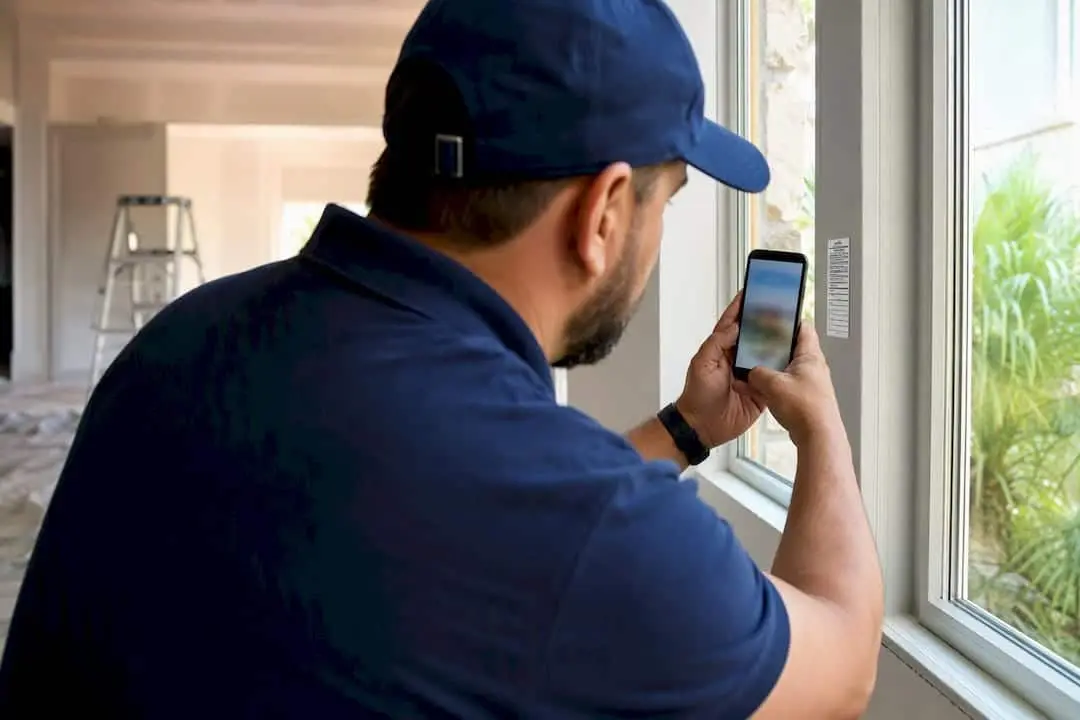
Yes, a federal window tax credit exists for 2026. Homeowners can claim 30% of the cost of qualifying energy-efficient windows and skylights, capped at $600 total for that category per tax year, under the Energy Efficient Home Improvement Credit. The IRS and ENERGY STAR set the eligibility rules, and you claim it on Form 5695 for the year the windows were installed.
TL;DR:
- The federal window tax credit for 2026 covers 30% of qualifying window costs, capped at $600 per year regardless of multiple purchases.
- Eligibility requires the home to be your primary residence in the U.S., with windows installed and functional within that tax year.
- Windows must meet strict requirements, including Most Efficient certification and an NFRC label with U-factor and SHGC ratings suitable for your climate zone.
- Claim the credit using Form 5695 during the year the windows are installed, ensuring proper documentation like invoices, NFRC labels, and install dates is retained.
- Replacing multiple windows or adding insulation does not increase the cap beyond $600, making large projects less beneficial for tax credits if they exceed this limit.
Table of Contents
- How Much You Can Claim in 2026: Credit Rate and Caps
- Who Qualifies to Claim the Credit
- Which Windows Qualify: Certification and Label Requirements
- How to Claim the Credit: Forms and Timing
- Documentation and Audit-Proofing Your Claim
- Common Mistakes That Cost Homeowners the Credit
- Worked Examples: How the $600 Cap Plays Out
- Do Condos and Manufactured Homes Qualify?
- Stacking the Credit With Other Incentives
- What U-Factor and SHGC Actually Mean for Eligibility
- How 2026 Rules Compare to Prior Years
- Are There Deadlines to Worry About?
- Filing Jointly, Separately, or With Multiple Owners
- How Buffalo Roofing & Exteriors Documents Every Window Install
- Buffalo Roofing & Exteriors: Window Replacement Built Around Your Tax Claim, Not Just the Install
- Sources
How Much You Can Claim in 2026: Credit Rate and Caps
The math is simple on paper: multiply your qualifying window cost by 30%, then check it against the cap. If you spend $3,000 on eligible windows, the math says $900, but the Energy Efficient Home Improvement Credit caps windows and skylights at $600 aggregate for the entire tax year, no matter how many openings you replace.
That $600 cap sits inside a larger structure. Other qualified improvements, insulation, exterior doors, and certain equipment carry their own limits, and many homeowners have seen guides citing combined caps for building envelope items with a separate allowance pushing total annual credits higher when heat pumps or biomass stoves are included, as explained in How New Interior Doors Improve Energy Efficiency in Older Portland Homes. Windows don’t get a slice of that larger number beyond their own $600 ceiling.
- The rate is 30% of the product cost, not labor in every case, so check your invoice breakdown.
- Windows and skylights together are capped at $600 per year, combined, not per window.
- The credit is nonrefundable, meaning it reduces what you owe but won’t generate a refund check on its own.
The window and skylight cap holds it to $600.
Who Qualifies to Claim the Credit
Not every property or every purchase counts. The rules hinge on how you use the home and whether the windows are new.
- The home must be your primary residence located in the United States, not a rental property or a vacant second home used only occasionally.
- Landlords generally cannot claim this credit for units they rent out, since the Energy Efficient Home Improvement Credit is built around owner-occupied living space.
- The home must already exist. New construction doesn’t qualify. This credit is for improving a house you already live in, not building one.
- Windows must be new products, never used or salvaged, and installed with an expected useful life of at least five years.
- Eligibility ties to the year the windows are placed in service, meaning installed and functional, not the year you signed a contract or paid a deposit.
Borderline cases trip people up constantly. A second home you visit for three weeks a year doesn’t count. A home office inside your primary residence doesn’t disqualify you, but a fully separate rental unit on the same property might complicate the math. When in doubt, the IRS guidance is the tiebreaker, not a contractor’s sales pitch.
Which Windows Qualify: Certification and Label Requirements
This is where most homeowners get tripped up, because “ENERGY STAR” and “ENERGY STAR Most Efficient” are not the same thing. The federal credit requires the stricter Most Efficient designation, a smaller subset of products that meet tougher performance thresholds than standard certification.
- Confirm Most Efficient status first. A window can carry a regular ENERGY STAR sticker and still fail to qualify for the 25C credit if it hasn’t earned the Most Efficient label for your climate zone.
- Record the NFRC label details. Every qualifying window should carry a National Fenestration Rating Council label listing U-factor, Solar Heat Gain Coefficient, and a model number. Write these down or photograph the label before installers dispose of packaging.
- Check the manufacturer’s QM/PIN code. Manufacturers register as Qualified Manufacturers and assign product identification numbers tied to specific models. Ask your supplier or installer where this code appears on your paperwork.
- Verify the listing on your install date. ENERGY STAR updates its Most Efficient lists periodically, and a model that qualified last year isn’t guaranteed to qualify this year. Check the current listing status before you finalize a purchase order.
Pro Tip: Don’t trust a brochure printed six months ago. Manufacturer certifications shift, and climate-zone qualifications for the same window model can differ between the Gulf Coast and the Midwest. Pull the live ENERGY STAR listing the week you sign the contract.
How to Claim the Credit: Forms and Timing
Claiming this credit is a paperwork exercise, not a complicated one, but the timing rules catch people off guard. You file IRS Form 5695, Residential Energy Credits, with your regular federal return for the tax year the windows were placed in service.
Here’s where the confusion usually starts. If you paid a deposit in December 2025 but the crew didn’t finish the install until January 2026, you claim the credit on your 2026 return, not 2025, because “placed in service” means installed and operational, not paid for.
- File Form 5695 for the tax year matching your placed in service date, verified by your installer’s completion paperwork.
- Remember the credit only offsets tax you owe. If your liability is $300 and your credit is $600, you use $300 and the rest is generally lost, since these credits typically don’t carry forward.
- Homeowners with lower tax liability sometimes split large projects across two tax years to make full use of the nonrefundable credit in each year.
- Double check that you’re using the correct year’s version of Form 5695, since the IRS updates the form periodically to reflect current caps.
Documentation and Audit-Proofing Your Claim
The IRS doesn’t ask you to attach receipts to your return, but skipping documentation is a gamble you don’t need to take. Keep records that would satisfy an auditor who has no idea who you are.
- Itemized invoices that separate product cost from labor, since only product cost typically counts toward the 30% calculation.
- NFRC labels with model numbers and the manufacturer’s QM/PIN code, photographed before disposal.
- A written installation completion date and installer contact information.
- Copies of the ENERGY STAR Most Efficient listing confirming your specific model qualified.
Retain everything for at least three years, longer if you can manage it. The documentation homeowners typically keep for energy credits mirrors what any home improvement audit trail should include.
Pro Tip: Take a phone photo of the NFRC sticker on every window before the crew hauls away the old units and packaging. It takes ten seconds and solves the single most common documentation gap homeowners run into later.
Common Mistakes That Cost Homeowners the Credit
Most lost claims trace back to a handful of avoidable errors, usually made before a contract is even signed.
- Assuming a standard ENERGY STAR label is enough. It isn’t. You need Most Efficient certification specifically.
- Trying to claim window treatments like blinds, shutters, or tinting film. None of that qualifies, no matter how much it improves comfort.
- Not asking whether a state or utility rebate reduces your federal eligible cost. Some rebate programs lower the amount you can claim federally, so confirm the interaction before you count on the full 30%.
- Paying the final invoice before getting model numbers, NFRC labels, and a written placed-in-service date in hand. Once the crew leaves, getting that paperwork retroactively is harder than it should be.
Ask for everything in writing before the last check clears. A reputable installer will hand this over without hesitation.
Worked Examples: How the $600 Cap Plays Out
Numbers make this clearer than rules alone. Here are three quick scenarios homeowners actually run into.
- Single window replacement. You replace one large picture window for $1,200. Thirty percent equals $360, well under the $600 cap, so you claim the full $360.
- Whole-house window package. You replace twelve windows for a total of $9,000. Thirty percent equals $2,700, but the aggregate cap on windows and skylights holds your claim to $600, regardless of the larger investment.
- Windows plus insulation in the same year. You spend $4,000 on qualifying windows and $2,000 on insulation. Windows cap at $600, and insulation falls under the separate $1,200 combined envelope limit, so your total credit across both categories could reach $1,800 depending on how much of that broader cap you’ve already used.
Bigger jobs don’t always mean bigger credits once you hit the ceiling, which is worth knowing before you commit to a full-house window overhaul purely for the tax benefit. Homeowners weighing the investment against the return they’ll actually recover should treat the credit as a bonus, not the primary financial driver.
Do Condos and Manufactured Homes Qualify?
Home type matters more than most guides admit. The credit requires the property to function as your primary residence, but the structure itself can take several forms.
Condominium owners generally qualify for windows they own and are responsible for replacing, though condo association rules sometimes complicate who technically “owns” the exterior window unit. If your HOA handles window replacement as a shared building expense, you may not have an eligible individual purchase to claim at all. Always check with your association before assuming the credit applies to your unit specifically.
Manufactured homes can qualify too, provided the home meets the primary residence test and sits on a permanent foundation consistent with how the IRS defines a dwelling unit. Mobile homes still titled as vehicles rather than real property create gray areas that are worth confirming with a tax professional before you count on the credit.
Multi-unit buildings and duplexes present another wrinkle. If you live in one unit and rent out the other, only the portion of the home you occupy as your primary residence typically qualifies, and the windows serving a rented unit generally fall outside the credit. Second homes, even ones you visit frequently, don’t meet the primary residence requirement no matter how energy-efficient the windows are.
If your living situation doesn’t map neatly onto “single-family house I own and live in full time,” it’s worth a conversation with a tax preparer before you finalize a purchase decision based on assumed savings.
Stacking the Credit With Other Incentives
The federal credit rarely stands alone. Many states and utility companies run their own rebate programs for energy-efficient windows, and layering them with the federal credit can meaningfully change your net cost.
The key question is whether a rebate reduces your federal eligible cost before you calculate the 30%. Some state and utility rebates are treated as a reduction to the purchase price, which means your federal credit gets calculated on a smaller number. Others are structured as separate incentives that don’t touch your federal eligible basis at all. The rules vary by program, so check the specific rebate’s terms rather than assuming either treatment applies.
Beyond windows specifically, homeowners doing broader exterior work often pair the window credit with incentives tied to other envelope improvements, insulation upgrades, or heat pump installations that fall under different federal categories with their own caps. None of these interactions reduce the $600 window cap itself, but they can raise your total household credit for the year when several projects happen together.
State energy offices and utility providers publish their own program pages annually, and those change more frequently than federal rules. Before signing a contract, ask your contractor directly whether local rebate paperwork needs to be filed before or after the installation, since some programs require pre-approval that a federal claim doesn’t.
What U-Factor and SHGC Actually Mean for Eligibility
The label matters, but the numbers on the label matter more. Two figures drive whether a window earns ENERGY STAR Most Efficient status: U-factor and Solar Heat Gain Coefficient, both printed on the NFRC label.
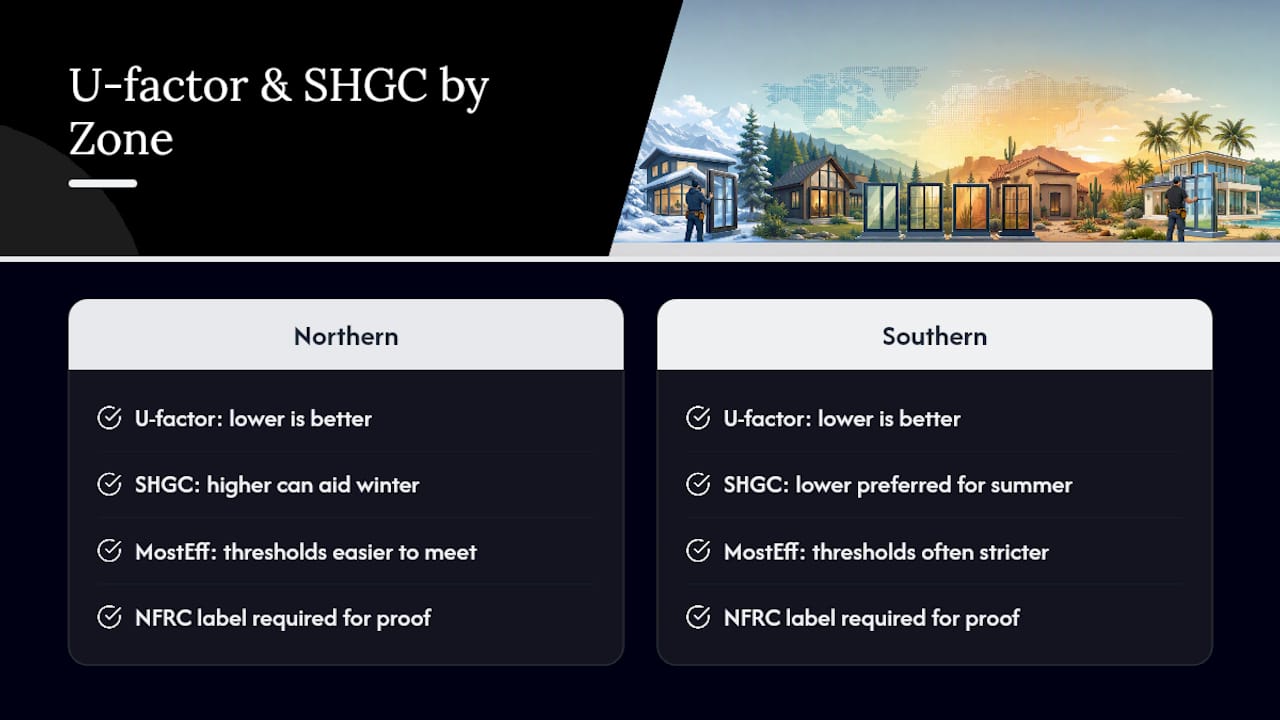
U-factor measures how well a window prevents heat from escaping. Lower numbers mean better insulation, and Most Efficient qualification requires U-factor thresholds tighter than standard ENERGY STAR certification, with the exact number varying by climate zone.
Solar Heat Gain Coefficient, or SHGC, measures how much solar heat passes through the glass. In hot southern climates like South Texas, a lower SHGC is generally better, since it keeps unwanted heat out during summer months. In colder northern climates, a higher SHGC can actually help by letting in passive solar warmth during winter.
This is why climate zone matters so much for qualification. A window that easily clears Most Efficient thresholds in a northern zone might fall short of the requirements set for a southern coastal zone, and vice versa. The NFRC label lists both numbers precisely, which is exactly why keeping that label, or a clear photo of it, matters more than remembering a salesperson’s verbal assurance that “these are the efficient ones.” Contractors and manufacturers set their published specs against these thresholds, so cross-checking the label against your climate zone’s current requirement is the only reliable verification step.
How 2026 Rules Compare to Prior Years
The core structure of this credit hasn’t shifted dramatically year to year, but the details homeowners need to track have tightened. The 30% rate and the $600 aggregate cap for windows and skylights have held steady, giving the program more predictability than some other federal energy incentives that have seen caps or rates adjusted annually.
What has changed is enforcement rigor around product certification. The manufacturer Qualified Manufacturer registration and QM/PIN code system has continued rolling out, meaning more products now carry a specific identification code tied to their eligibility status, something earlier years handled with looser documentation standards. Homeowners filing in 2026 should expect installers and suppliers to reference these codes more routinely than they did just a couple of years earlier.
The ENERGY STAR Most Efficient lists themselves also see periodic refreshes, and a model that qualified in an earlier tax year isn’t automatically grandfathered into future years. If you’re comparing quotes now against research you did in 2024 or 2025, treat old bookmarked product lists as outdated and pull current listings before finalizing a purchase.
The biggest practical shift for homeowners is less about the numbers and more about verification habits. Confirming Most Efficient status, NFRC label details, and QM/PIN codes has become standard due diligence rather than an optional extra step, largely because audit scrutiny on energy credits has increased across recent filing seasons.
Are There Deadlines to Worry About?
There’s no expiration printed on a calendar for the 2026 tax year specifically, but timing still matters in ways homeowners overlook. Your claim is tied to the calendar year in which the windows were placed in service, and you file that claim when you submit your federal return for that year, typically by the following April.
If you’re planning a window project now with the 2026 credit in mind, the practical deadline is simply getting the installation completed and functional before December 31, 2026, if you want it to count on your 2026 return. Projects that slip into January 2027 shift the claim to the following tax year automatically, based on the placed-in-service date rather than your original planning timeline.
Federal energy credit programs have historically been subject to renewal or adjustment through tax legislation, so there’s no guarantee current caps and rates will look identical in future years beyond 2026. Homeowners weighing a multi-year window replacement plan should treat the current rules as the ones in effect now, and verify the credit’s status again before starting a project scheduled for a later tax year.
If you owe an extension on your tax filing, that extends your paperwork deadline, not your placed-in-service deadline. The window still needs to be installed within the calendar year you’re claiming, regardless of when you actually file.
Filing Jointly, Separately, or With Multiple Owners
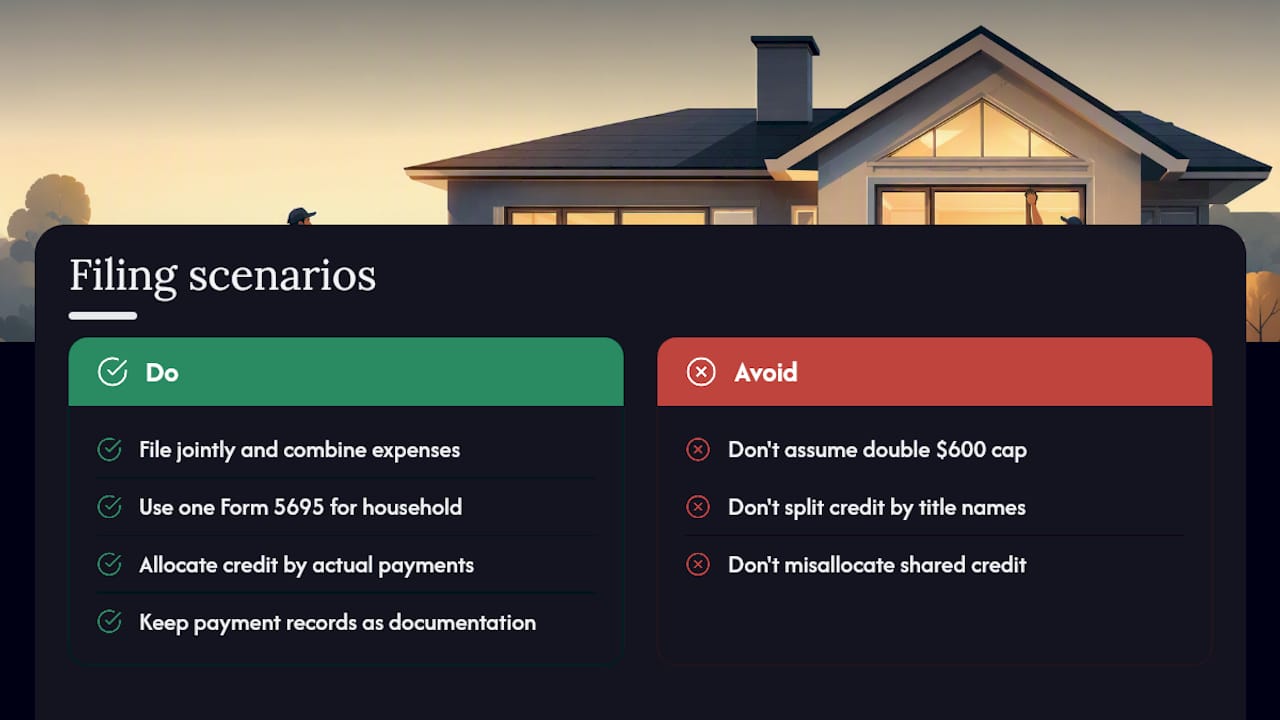
Married couples filing a joint return typically combine their eligible expenses onto one Form 5695 without needing to split anything, since the home and the credit apply to the household as a single primary residence. This is the simplest scenario and covers most homeowners.
Couples who file separately face a more specific question: which spouse claims the credit, and how much of it. When both spouses own the home jointly and file separate returns, the credit generally needs to be allocated between them based on how the expense was actually paid or how ownership is structured, and the total combined claim across both returns still can’t exceed the $600 window cap for that residence. This isn’t a case where filing separately doubles your available credit. It’s still one home, one cap.
Multiple owners outside a marriage, such as co-owners on a deed, unmarried partners, or family members who jointly own a property, face similar allocation questions. The IRS generally expects the credit to reflect actual costs paid by each owner claiming a share, not an even split simply because two names are on the title. Keep payment records showing who actually funded the window purchase, since that documentation becomes the basis for how any shared claim gets allocated between returns.
If your ownership or filing situation involves anything beyond a straightforward single-owner or joint-filing household, a conversation with a tax preparer before you file is worth the hour it takes. Misallocating a shared credit is one of the more common triggers for IRS correspondence on these claims.
How Buffalo Roofing & Exteriors Documents Every Window Install
Getting the credit right starts on the job site, not at tax time. Our crews record model numbers and NFRC label details for every window before installation begins, and we photograph labels as a standard part of our completion checklist, so homeowners aren’t scrambling for proof months later.
We’ve seen placed-in-service dates get muddled when a project spans a permit delay or a weather postponement, common enough along the Gulf Coast. Our completion paperwork states the actual functional install date in writing, separate from the contract date, specifically so that date holds up if a homeowner’s return gets a second look.
Ask any contractor for three things before final payment: model numbers, NFRC stickers, and a written install completion note. If they hesitate, that’s worth noticing.
— Results
Buffalo Roofing & Exteriors: Window Replacement Built Around Your Tax Claim, Not Just the Install
Buffalo Roofing & Exteriors treats the paperwork as part of the job, not an afterthought you chase down later. Before we install anything, we help confirm the window models you’re considering actually carry current ENERGY STAR Most Efficient status for South Texas’ climate zone, so you’re not discovering a certification gap after the invoice is paid.

Every install comes with a documented paper trail: itemized invoices separating product from labor, NFRC labels photographed and filed, and a written placed-in-service date you can hand straight to your tax preparer. Our window replacement services cover Corpus Christi, San Antonio, and Victoria, backed by manufacturer warranties and a crew that’s replaced windows through enough coastal storm seasons to know what durable, code-compliant installation actually looks like. If you’re planning a project with the 2026 credit in mind, get a free estimate and we’ll walk through which models on your shortlist qualify before you sign anything.