TL;DR:
- Exterior renovations in Texas can increase property value and weather resilience but may trigger higher taxes if timed improperly.
- Completing upgrades after January 1 helps avoid immediate reassessment and defers tax impacts to the following year.
- Proper documentation and strategic timing are essential for successful tax protests and maximizing renovation benefits.
Most Texas commercial property owners treat exterior renovations as a curb appeal project. That’s only half the story. The right upgrades can raise property value, attract better tenants, and improve weather resilience, but poorly timed work can also trigger a reassessment and inflate your tax bill before you see a dollar of return. Renovations like roofing or HVAC upgrades can raise appraised value and property taxes if timed wrong in Texas. This guide walks you through what to upgrade, when to do it, and how to protect your bottom line every step of the way.
Table of Contents
- Why exterior renovations matter: More than curb appeal
- The financial impact: Property value, tax, and timing in Texas
- Choosing the right exterior upgrades for Texas businesses
- Navigating challenges: Tax protests, evidence, and expert support
- Rethinking renovations: The practical wisdom Texas owners need
- Explore trusted solutions for exterior renovations
- Frequently asked questions
Key Takeaways
| Point | Details |
|---|---|
| Renovation timing matters | Scheduling upgrades after January 1 can help avoid higher property taxes in Texas. |
| Choose upgrades wisely | Roofing, siding, and windows provide the best balance of property value and weather resilience. |
| Evidence supports tax appeals | Strong documentation and expert help make property tax protests far more effective after renovations. |
| Resilience adds real value | Weather-resistant materials protect business assets and reduce long-term maintenance costs. |
Why exterior renovations matter: More than curb appeal
When you own commercial property in Texas, first impressions carry real financial weight. A well-maintained exterior signals stability to tenants, customers, and lenders alike. But the benefits go far beyond visual appeal, and that’s exactly where many owners leave money on the table.
Exterior improvements boost property value and attract more customers, making them one of the highest-return investments a commercial property owner can make. That means a fresh roof, updated siding, or energy-efficient windows isn’t just a cosmetic fix. It’s a financial strategy.
Here’s what exterior renovations actually do for commercial properties in Texas:
- Increase appraised market value, which supports higher lease rates and better financing terms
- Reduce operating costs through better insulation, modern roofing materials, and weatherproofing
- Protect the structure against Gulf Coast storms, extreme summer heat, and high humidity
- Signal professionalism to tenants and customers, reducing vacancy rates over time
- Lower insurance risk profiles, which can translate into reduced premium costs
Functional upgrades are especially critical along the Texas coast. Roofing systems take the brunt of tropical weather events. Siding absorbs wind-driven rain. Windows face repeated pressure cycles during storm seasons. Ignoring these systems doesn’t just hurt aesthetics; it accelerates structural damage that costs far more to fix later.
“A commercial property’s exterior is its first and most persistent marketing tool. When it deteriorates, so does the perception of everything inside it.”
You can explore exterior renovation ideas specifically tailored to coastal Texas conditions, where the climate demands materials and methods that most standard guides overlook. For a broader overview, the full exterior renovation guide covers the foundational decisions every Texas property owner should make before breaking ground.
The bottom line is this: exterior renovations aren’t a luxury budget item. In competitive Texas markets like Corpus Christi, San Antonio, and Victoria, they’re a core part of protecting and growing your asset.
The financial impact: Property value, tax, and timing in Texas
Understanding the why, it’s essential to grasp the financial levers and timing tactics unique to Texas. The state uses a January 1 valuation date for property tax assessments. That single detail changes everything about how you plan renovation work.
Renovations after January 1 avoid immediate reassessment, which means the work you complete after that date won’t be captured until the following tax year. That gives you a full operating year to benefit from the upgrade before any increase in assessed value catches up.
Here’s how the timing math breaks down for common upgrade scenarios:
| Renovation Type | Completed Before Jan 1 | Completed After Jan 1 |
|---|---|---|
| New commercial roof | Increases assessed value same year | Deferred to next tax cycle |
| HVAC system overhaul | May trigger reassessment immediately | Gives full year before reassessment |
| Window replacement | Modest impact, still captured early | Better positioned for tax protest |
| Siding and facade work | Visible improvement flagged by appraisers | Documentation stronger post-protest |
Knowing when to schedule work is just as important as knowing what to do. Commercial properties are assessed using the income approach, cost approach, or sales comparison approach. A significant physical upgrade can shift an appraiser’s cost-approach calculation upward quickly, especially for roofing and HVAC.
Here are the upgrades most likely to trigger a reassessment:
- Complete roof replacement
- HVAC system additions or replacements
- Major facade renovations or additions
- Structural expansions or enclosures
For properties where upgrade building exteriors work is already planned, the data clearly favors a post-January 1 start date. You also want to check on exterior renovations in Texas rules that apply specifically to your county, since appraisal districts vary in how aggressively they pursue post-renovation reassessments.
Pro Tip: Keep a complete documentation file for every renovation project. Photographs taken before and after, contractor invoices, and material specs become powerful leverage if you protest your appraisal. Appraisers rely heavily on visible improvement evidence, and your records can counter inflated estimates. Review the best time for exterior upgrades to schedule work that aligns with both weather windows and tax strategy.
Choosing the right exterior upgrades for Texas businesses
Having learned the impact and timing, let’s break down which upgrades are most effective and durable. Texas businesses face a unique combination of extreme heat, hurricane-force winds, heavy rainfall, and coastal humidity. Not every material or system performs equally under those conditions.
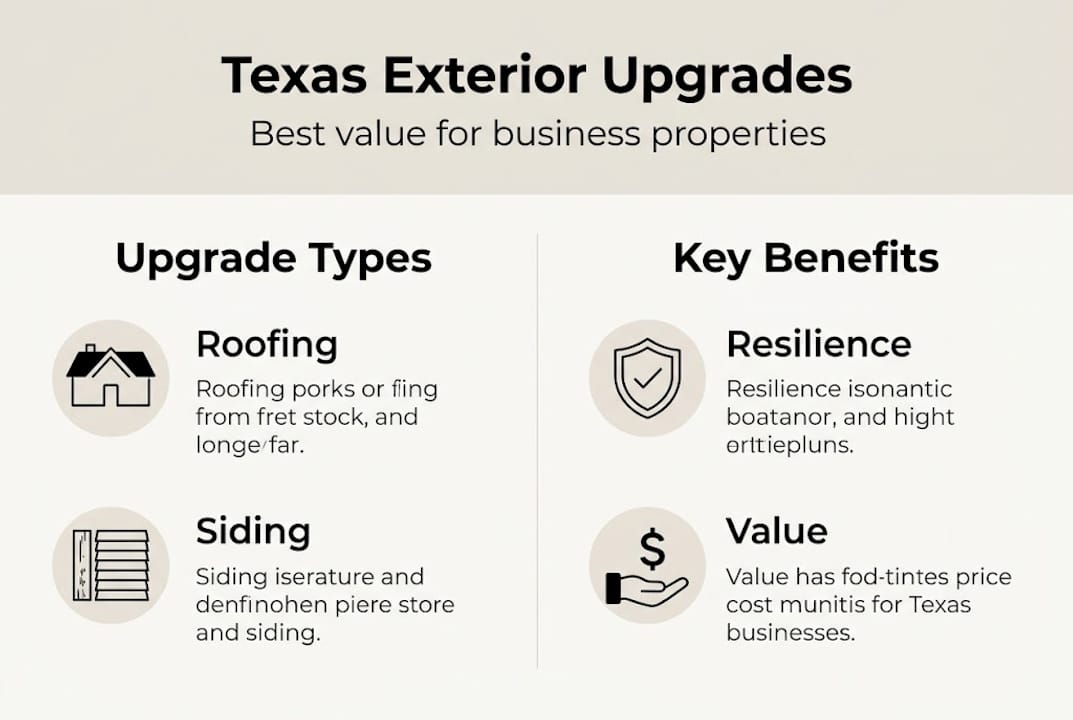
Roofing and siding are among the most impactful exterior upgrades for value and resilience, and that holds especially true for commercial properties in Gulf Coast markets. But the right choice depends on your building type, budget, and long-term goals.
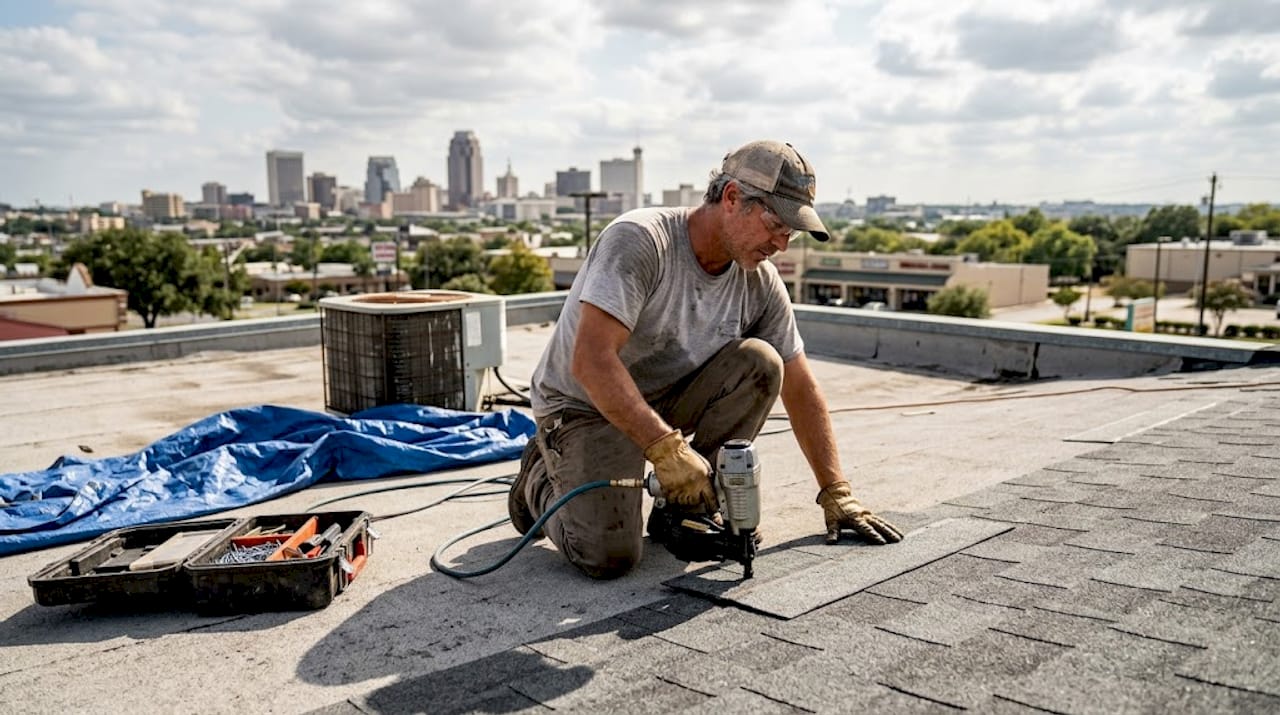
Here’s a performance comparison of the most common commercial exterior upgrades in Texas:
| Upgrade | Average Cost Range | Climate Suitability | Value Impact |
|---|---|---|---|
| Metal roofing | $8 to $15 per sq ft | Excellent for heat and storms | High |
| TPO/EPDM flat roofing | $5 to $10 per sq ft | Good UV resistance | Moderate to high |
| Fiber cement siding | $6 to $12 per sq ft | Strong against moisture and wind | High |
| Impact-resistant windows | $400 to $900 per unit | Critical for coastal locations | Moderate |
| Painted/sealed concrete | $2 to $5 per sq ft | Good for heat, low maintenance | Low to moderate |
How do you decide where to start? Follow this sequence:
- Assess structural integrity first. No cosmetic upgrade adds lasting value to a failing structure. Get a professional inspection of the roof and building envelope before anything else.
- Prioritize weather-facing systems. Roof and siding take the most abuse in Texas. Fix those before windows or facade details.
- Calculate life cycle cost, not just upfront price. A cheaper material that needs replacement in 10 years costs more than a durable option lasting 25.
- Match materials to your climate zone. Corpus Christi’s coastal humidity demands different specs than San Antonio’s dry heat.
- Get multiple bids from local specialists. National chains often use materials not suited for Texas conditions.
Pro Tip: Ask your contractor for a life cycle cost analysis before signing any contract. This breaks down not just what you’ll pay today, but what maintenance, repairs, and energy costs will look like over 15 to 20 years. You can see real exterior renovation examples from Texas properties to benchmark what’s realistic. For roofing specifically, the commercial roof replacement guide walks through every decision point, and exploring the full range of commercial roofing types helps match systems to your specific building needs.
Navigating challenges: Tax protests, evidence, and expert support
With upgrades chosen, property owners must prepare for post-renovation challenges, especially with tax protests. Here’s a reality many owners discover too late: improving your property can make your appraisal review board (ARB) hearing harder, not easier.
“The ARB is less sympathetic after renovations, but evidence-based appeals can succeed.” In practice, this means the work you do to protect your building can be used against you at the appraisal table if you’re not prepared.
The ARB may be less sympathetic after renovations, but a well-documented, evidence-based appeal still wins. The key is building your case before, during, and after the renovation, not scrambling to gather records after you receive an inflated appraisal notice.
Here’s where owners commonly run into trouble:
- No before photos: Without clear documentation of the property’s prior condition, it’s hard to argue the upgrade simply brought the building to market standard.
- Missing contractor invoices: ARBs want to see actual cost data. Estimates alone don’t carry the same weight as paid invoices.
- Overestimating the appraiser’s accuracy: Appraisers work at scale and often apply blanket value increases for renovation permits pulled. Your actual costs and comparable market data may tell a very different story.
- Failing to hire a consultant: Protest consultants know how to present evidence in the format and sequence that ARB panels respond to. This isn’t a DIY situation for high-value commercial properties.
Expert support matters most when the gap between your appraised value and actual market value is large. A qualified tax consultant can pull comparable sales, model the income approach, and identify procedural errors in the appraisal itself. Understanding what commercial roofing work was completed and its documented cost gives your consultant specific ammunition to fight inflated assessments tied to roofing permits.
The protest window in Texas is tight. Most property owners have until May 15 or 30 days after receiving the appraisal notice, whichever is later. Do not wait until that notice arrives to start gathering your documentation.
Rethinking renovations: The practical wisdom Texas owners need
Here’s something most guides won’t tell you: the owners who come out ahead on exterior renovations aren’t always the ones with the biggest budgets. They’re the ones who treat documentation and timing as seriously as the renovation itself.
We’ve seen property owners invest significantly in high-quality roofing and siding, only to face an inflated appraisal that erases the financial benefit for the first two years. The upgrade was right. The strategy wasn’t. Speed and aesthetics drove the decision, not tax calendar awareness.
The uncomfortable truth is that most renovation contractors won’t raise the tax timing issue with you. That’s not their job. But it’s absolutely your problem if you ignore it. Pairing a quality contractor with a tax strategy, even a simple one, changes the outcome.
If you’re planning upgrading exteriors in 2026, treat January 1 as your planning anchor. Work backward from that date, and you’ll make smarter decisions about which projects to accelerate and which to defer. Documentation isn’t paperwork. It’s leverage.
Explore trusted solutions for exterior renovations
Ready to take action with your exterior renovation strategy? The right partner makes the difference between a renovation that costs you on paper and one that builds lasting equity.
At Buffalo Roofing & Exteriors, we work with commercial property owners across Corpus Christi, San Antonio, and Victoria to plan and execute exterior projects built for Texas conditions. Whether you need a complete roof overhaul, new siding, or a full building envelope upgrade, we bring the local expertise and material knowledge that generic contractors miss. Discover exterior renovation services that match your property goals, see renovation examples from real Texas projects, and browse our roofing portfolio to see the standard we hold our work to. Get a free estimate and make your next renovation work harder for you.
Frequently asked questions
How do exterior renovations affect property taxes in Texas?
Upgrades like roofing or HVAC can increase appraised value and property taxes if completed before the January 1 valuation date. Completing work after January 1 gives you a full year before any reassessment takes effect.
What exterior upgrades improve weather resilience for Texas businesses?
Roofing, siding, and impact-resistant windows offer the strongest protection against storms and extreme heat. Roofing and siding consistently rank as top upgrades for both value and durability in Texas climates.
Is it possible to protest property taxes after exterior renovations?
Yes, but success depends heavily on your evidence and the support of a knowledgeable consultant. The ARB may be less sympathetic post-renovation, which is why documentation gathered before and during the project is critical.
Which exterior renovations offer the best value for commercial properties?
Roofing, siding, and professional facade upgrades typically deliver the strongest return for Texas commercial properties. Exterior improvements boost property value and attract more customers, making them a smart long-term investment.
Recommended
- 6 Key Examples of Exterior Renovations for Texas Homes
- Why upgrade building exteriors? Boost durability and savings
- What Is Exterior Renovation and Why It Matters
- Best exterior renovation ideas for coastal Texas homes
- Business drainage solutions: fix issues & cut costs
- Roofing Company San Antonio TX