


TL;DR:
- Window ratings provide essential, verified data on window insulation, solar heat control, and draft prevention. They are crucial for energy efficiency, code compliance, safety, and maximizing tax credits, especially when selecting the right metrics for your climate zone. Proper installation ensures these ratings deliver real-world performance, saving homeowners money and enhancing comfort.
Window ratings are standardized performance metrics that measure how well your windows insulate, control solar heat, and prevent drafts. Windows cause 25%–30% of all residential heating and cooling energy loss in the U.S. That single fact explains why window ratings matter more than most homeowners realize. Choosing windows without checking their ratings is like buying a car without looking at the fuel economy. The numbers tell you what the marketing never will. Metrics like U-Factor and Solar Heat Gain Coefficient (SHGC) give you a verified, apples-to-apples comparison that no sales pitch can replicate.
Why window ratings matter: the core metrics explained
Window ratings are not just technical jargon. They are the only objective way to compare one window against another. The National Fenestration Rating Council (NFRC) sets the standard, and every certified window carries a label with four key numbers.
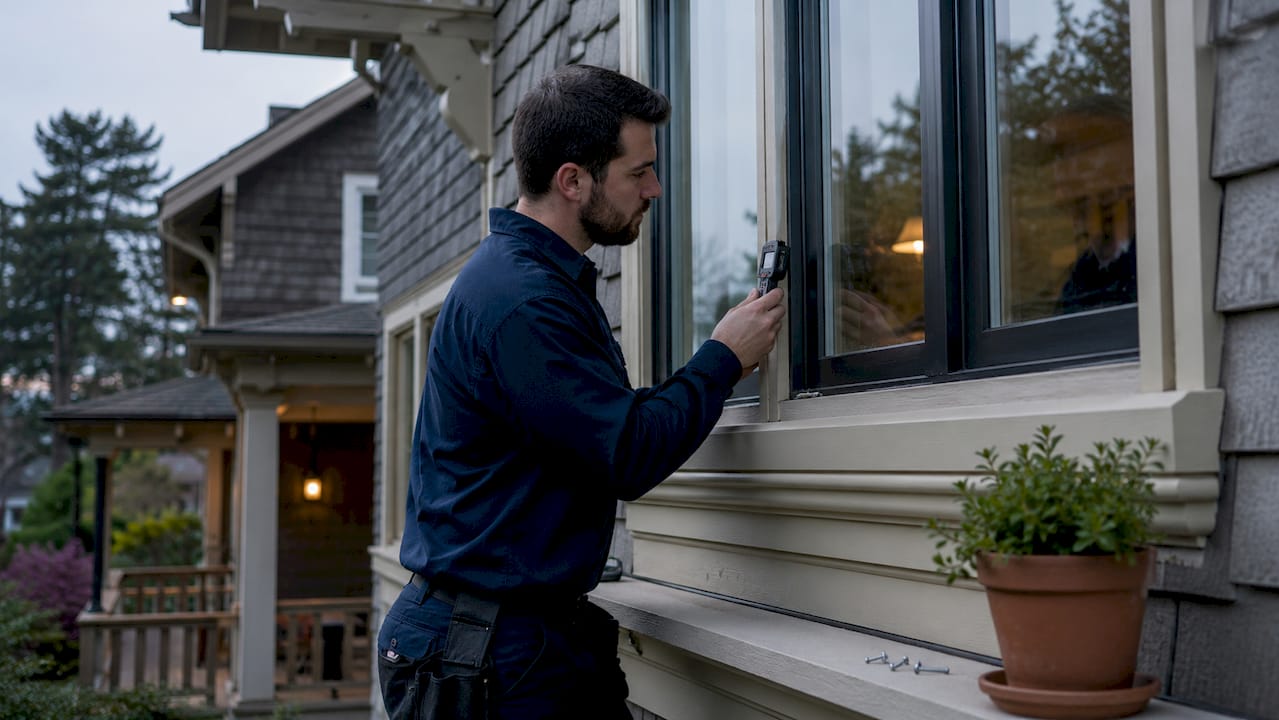
U-Factor measures how well a window resists heat flow. The lower the number, the better the insulation. A U-Factor of 0.30 or below is the recommended threshold for most climates. Think of it as the window equivalent of insulation R-value.
Solar Heat Gain Coefficient (SHGC) measures how much solar heat passes through the glass. A score of 0.25 or below is the target for hot climates like South Texas. Lower SHGC means less heat entering your home on a summer afternoon, which directly cuts your air conditioning bill.
Air Leakage (AL) measures how much air passes through the window assembly. A rating of 0.30 cfm per square foot or below is the professional standard for air-tightness. Windows that fail this threshold create drafts even when fully closed.
Visible Transmittance (VT) measures how much natural light passes through. Higher VT means brighter rooms. The catch is that high solar-control coatings that lower SHGC also tend to lower VT. That tradeoff is real and worth planning for.
- U-Factor: target 0.30 or below for most climates; 0.22 or below for cold northern zones
- SHGC: target 0.25 or below for hot climates; higher values acceptable in cold climates for passive solar gain
- Air Leakage: 0.30 cfm/sq ft or below for professional-grade air-tightness
- Visible Transmittance: higher is brighter; balance against SHGC for your climate
- Light-to-Solar Gain (LSG) ratio: a less-known but useful metric that identifies glazing letting in daylight while blocking heat
Pro Tip: When comparing windows at a showroom, ask for the NFRC label data sheet, not just the brochure. The label is the only number that is independently verified.
How do window ratings affect comfort, safety, and code compliance?
Poor window ratings show up in your daily life before they show up on your energy bill. A window with a high U-Factor lets heat escape in winter and seep in during summer, creating cold spots near the glass and uneven room temperatures. Windows with poor ratings cause drafts and uneven temperatures that no thermostat adjustment can fully fix.
Building codes in Texas and across the U.S. now incorporate NFRC and ENERGY STAR standards directly. If your replacement windows do not meet the required ratings for your climate zone, they may fail a building inspection. Beyond code compliance, ratings also determine whether you qualify for the 2026 federal tax credit. The credit is worth up to $600, but northern zones require U-Factor ≤ 0.22 and southern zones require SHGC ≤ 0.23 to qualify. Miss those thresholds by even a fraction and the credit disappears.
Safety is another dimension that ratings address. Impact-resistant windows designed for coastal Texas carry additional performance certifications beyond standard NFRC ratings. These windows resist wind-driven debris, a real concern from Corpus Christi to San Antonio during hurricane season. Air-tight windows also reduce moisture infiltration, which protects against mold and structural rot over time.
- Code compliance: ENERGY STAR and NFRC ratings are now embedded in many local building codes
- Tax credit eligibility: specific U-Factor and SHGC thresholds apply by climate zone in 2026
- Draft prevention: low air leakage ratings eliminate cold spots and reduce HVAC strain
- Storm protection: impact ratings add a safety layer beyond energy performance
- Moisture control: air-tight windows reduce humidity infiltration and long-term structural damage
Pro Tip: Before signing a window contract, ask your contractor to confirm the NFRC ratings in writing and verify they meet your local building code requirements. This protects you at inspection and at tax time.
Northern vs. southern climates: which ratings should you prioritize?
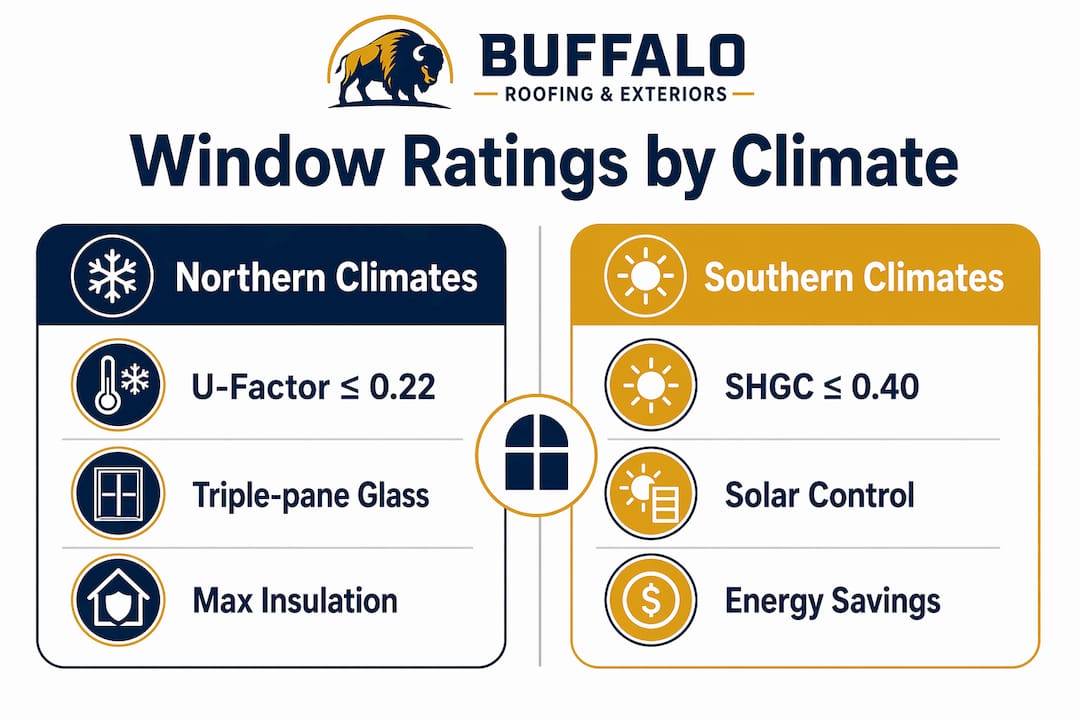
The importance of window ratings shifts significantly depending on where you live. A window that performs well in Minnesota can be the wrong choice for a home in Corpus Christi. The table below shows how priorities differ by region.
| Climate Zone | Priority Rating | Target Value | Reason |
|---|---|---|---|
| Northern (cold) | U-Factor | ≤ 0.22 | Minimize heat loss through glass in winter |
| Northern (cold) | SHGC | Higher (0.40+) | Passive solar gain reduces heating load |
| Southern (hot) | SHGC | ≤ 0.23 | Block solar heat to reduce cooling costs |
| Southern (hot) | U-Factor | ≤ 0.30 | Still matters, but secondary to SHGC |
| Mixed/Transitional | LSG Ratio | As high as possible | Balance daylight with heat control |
Selecting the wrong metric for your climate wastes money or forfeits tax credits. That is not a hypothetical risk. It happens regularly when homeowners buy windows based on a salesperson’s recommendation rather than verified ratings.
Northern climates often require triple-pane glass to hit a U-Factor of 0.22 or below. Triple-pane windows are heavier and sometimes require reinforced framing. Ultra-low U-Factor windows around 0.20 can be costly and may require structural upgrades that eat into your savings. A U-Factor of 0.25 in a moderate northern climate often delivers better value than chasing 0.20.
In South Texas, the SHGC is the number that controls your summer electricity bill. A window with SHGC 0.40 lets in nearly twice the solar heat as one rated 0.23. Over a full Texas summer, that difference shows up clearly on your utility statement. The Light-to-Solar Gain ratio helps you find windows that keep rooms bright without turning them into greenhouses. Look for an LSG above 1.0 when shopping for south-facing windows in warm climates.
How to read window energy labels when shopping
Reading an NFRC label takes about 30 seconds once you know what to look for. Here is a step-by-step process for using labels to make a confident purchase.
- Find the NFRC label. Every certified window has a small label affixed to the glass or frame. If a window lacks this label, the ratings are unverified and should not be trusted regardless of what the brochure says.
- Check U-Factor first. Confirm it meets your climate zone’s target. For Texas homeowners, 0.30 or below is the baseline. For the 2026 tax credit in southern zones, confirm SHGC is 0.23 or below.
- Look for the ENERGY STAR mark. ENERGY STAR certification means the window has been independently verified to meet regional performance standards. It is not just a marketing badge. The certification is tied to specific NFRC numbers for your geographic zone.
- Compare air leakage ratings. If two windows have similar U-Factor and SHGC scores, the one with lower air leakage will perform better in real-world conditions. This number is often overlooked and rarely mentioned in sales conversations.
- Calculate the LSG ratio. Divide VT by SHGC. A result above 1.0 means the window lets in more light than heat. This is the sweet spot for south-facing windows in warm climates.
Standardized window ratings shift homeowners away from subjective sales pitches and toward informed decisions. That shift prevents overpaying for performance you do not need or buying windows that underperform for your specific climate. Replacing old windows with ENERGY STAR-certified models cuts household energy bills by an average of 13% nationally. For a Texas home running air conditioning eight months a year, that adds up fast.
Key takeaways
Window ratings are the only objective tool for comparing window performance across brands, and choosing the wrong ratings for your climate costs money every month.
| Point | Details |
|---|---|
| U-Factor controls insulation | Target 0.30 or below for most climates; 0.22 or below for cold northern zones. |
| SHGC drives cooling costs | Southern homeowners need SHGC ≤ 0.23 to reduce heat gain and qualify for 2026 tax credits. |
| Air leakage is often overlooked | A rating of 0.30 cfm/sq ft or below prevents drafts that undermine all other performance gains. |
| NFRC labels are the only verified source | Ignore brochure claims and marketing ratings; the NFRC label is independently certified. |
| Installation quality determines real performance | Even a top-rated window underperforms if it is installed incorrectly, negating every rating benefit. |
What i’ve learned after years of window installations in coastal texas
The most common mistake I see homeowners make is chasing the lowest U-Factor number without asking whether it fits their climate or budget. A homeowner in Corpus Christi does not need a U-Factor of 0.20. That window costs more, weighs more, and may require frame reinforcement. What that homeowner actually needs is a low SHGC and a tight air leakage rating. Getting those two numbers right will do more for their comfort and energy bill than any triple-pane upgrade.
The second mistake is trusting marketing over labels. Window manufacturers use terms like “high-performance glass” and “energy-efficient design” with no standardized meaning. The NFRC label is the only number that has been tested and verified by a third party. I have seen beautiful windows with impressive brochures that carried SHGC ratings above 0.40. In a Texas summer, those windows are expensive heaters.
Installation matters as much as ratings. Poor installation negates rating benefits entirely. A window rated for 0.25 air leakage installed with gaps in the flashing will leak like a screen door. The rating only holds if the installation is done correctly. That is why choosing a contractor with verified installation experience is not optional. It is the last step in getting the performance you paid for.
If you are buying a home or planning a renovation, pull the NFRC data on every window before you finalize anything. For Texas coastal homes, also check out windows and home insulation considerations specific to your region. The ratings are there. Use them.
— Buffaloroofingandexteriors
Get the right windows installed right the first time
Buffaloroofingandexteriors works with homeowners across Corpus Christi, San Antonio, and Victoria to select and install windows that match their climate zone, energy goals, and budget. The team identifies your home’s specific U-Factor and SHGC requirements before recommending any product. Every window Buffaloroofingandexteriors installs is ENERGY STAR certified and backed by verified NFRC ratings. Professional installation preserves those ratings in real-world conditions, so the performance you pay for is the performance you get. If you are ready to stop guessing and start saving, explore window installation services from a team that knows coastal Texas conditions firsthand. You can also learn more about exterior renovation options that protect and improve your home’s value.
FAQ
What is a good u-factor for windows in texas?
A U-Factor of 0.30 or below meets the baseline standard for most Texas climates. For the 2026 federal tax credit in southern zones, confirm your window also carries an SHGC of 0.23 or below.
What does SHGC mean on a window label?
SHGC stands for Solar Heat Gain Coefficient. It measures how much solar heat passes through the glass, with lower numbers meaning less heat enters your home, which directly reduces cooling costs in warm climates.
How do window ratings affect my tax credit in 2026?
The 2026 federal tax credit of up to $600 requires windows to meet specific NFRC-verified thresholds by climate zone. Southern zones require SHGC ≤ 0.23, while northern zones require U-Factor ≤ 0.22 to qualify.
Does installation quality affect window performance ratings?
Yes. A window’s NFRC rating reflects lab-tested performance, but poor installation with gaps or improper flashing eliminates those benefits in practice. Professional installation is required to achieve the rated performance in your home.
What is the light-to-solar gain ratio and why does it matter?
The Light-to-Solar Gain (LSG) ratio divides Visible Transmittance by SHGC. A ratio above 1.0 means the window admits more daylight than heat, making it ideal for south-facing windows in warm climates where brightness and heat control both matter.