


Yes, in Corpus Christi, most reroofing jobs require a building permit. If you’re replacing shingles over a certain area threshold, changing the roof slope, or swapping out decking, you need one before work starts. Coastal properties add a second layer: a Texas Department of Insurance WPI‑1 filing before construction begins. Start with Form 1003 on the city portal and confirm windstorm requirements the same week.
TL;DR:
- Most reroofing projects over 100 square feet, changing the roof slope, or switching materials require a building permit before starting work.
- Coastal properties must file a WPI‑1 with the Texas Department of Insurance before construction begins to qualify for windstorm insurance coverage.
- The permit fee is calculated per square foot based on the project’s size, with standard review and inspection times often within a few business days.
- Missing or late filings, especially for WPI‑1 forms, can lead to permit delays, fines, or loss of windstorm certification, impacting insurance claims.
- Contractors usually handle the permit and windstorm certification process, but homeowners should keep all documentation and verify requirements before work starts.
Table of Contents
- Which Roofing Projects Require a Corpus Christi Building Permit
- How to Apply for a Roofing Permit on the Corpus Christi Portal
- What Does a Roofing Permit Cost in Corpus Christi?
- Windstorm Inspections and TDI: What Coastal Corpus Christi Homeowners Must Do
- Common Permit Delays and What to Do if Your Contractor Skipped the Permit
- Why Buffalo Roofing & Exteriors Treats Permits as Part of the Job
- Sources
Which Roofing Projects Require a Corpus Christi Building Permit
The City of Corpus Christi draws a clear line based on scope. Replace shingles across more than 100 square feet, and you’ve crossed into permit territory, according to the city’s residential remodel and repair guidance. Anything touching the structure itself, not just the surface layer, triggers the same requirement.
Here’s what pulls a permit into play:
- Replacing shingles or roofing material over a defined threshold area
- Changing the roof’s slope or pitch
- Removing and replacing roof decking
- Switching roof material types (asphalt to metal, for example)
- Full tear-offs and complete re-roofs
Smaller jobs often skip the process entirely. Patching a small leak, replacing a handful of storm-damaged shingles, or resealing flashing on a limited section typically falls under the threshold. That said, the city’s own documentation is the final word, not a contractor’s guess or a neighbor’s experience. Corpus Christi roof regulations get specific fast, and a project that looks minor from the ground (a small patch here, a vent boot there) can still cross into decking or slope territory once a crew opens things up. When in doubt, the homeowner permit application process starts with a phone call to Development Services, not a shrug.
How to Apply for a Roofing Permit on the Corpus Christi Portal
The city runs its permit application process through a dynamic online portal, and that’s where every roofing permit application in Corpus Christi begins now. Here’s the sequence that keeps most applications moving without a rejection letter.
- Create an account on the city’s building permits portal.
- Complete Form 1003 with a detailed scope of work. Vague language (“repair roof”) gets kicked back; specifics (“remove 1,800 sq ft of asphalt shingle, replace decking, install new underlayment and architectural shingles”) move faster.
- Upload contractor license and insurance documents, manufacturer installation instructions when required, and a WPI‑1 if the property sits in a first‑tier coastal county.
- Submit and wait for plan review. Respond to any revision requests promptly, since a stalled response is the single most common reason a permit sits untouched for weeks.
- Pay the permit fee once approved, then schedule your inspections.
Either the property owner or a licensed contractor can apply, but most homeowners let their contractor handle it since the paperwork ties directly to the scope of work being performed. The homeowners guide to permitting lists exactly which attachments a re-roof submission needs, including an engineer’s agreement to inspect where applicable.
Pro Tip: Start your windstorm application the same day you submit Form 1003, not after. WPI‑1 has to go in before construction begins, and waiting until the city permit clears often costs you a week you didn’t need to lose.
What Does a Roofing Permit Cost in Corpus Christi?
The city’s FY2026 development fee schedule prices roofing and siding permits by square footage, not a flat rate. The schedule lists a per-square-foot rate with a minimum fee and a standard inspection fee; exact amounts can be found on the official fee schedule.
Those figures come straight from the FY2026 development fee schedule. Residential jobs get priced this way, per square foot of roof area. Commercial roofing permits, by contrast, typically run on project valuation rather than square footage, so a commercial estimate will look different from a homeowner’s math even for a similarly sized building.
A few things affect your actual timeline:
- Standard plan review usually clears within a few business days if the scope of work is detailed and complete.
- Texas Department of Insurance windstorm inspections target a 48-hour turnaround under normal conditions.
- After a hurricane or major storm event, both city inspection queues and TDI windstorm inspections back up significantly. Plan for longer waits during those catastrophe periods.
Windstorm Inspections and TDI: What Coastal Corpus Christi Homeowners Must Do
A city permit and a windstorm certificate are not the same thing, and confusing the two is the costliest mistake homeowners make on this process. Nueces County sits among the first‑tier coastal counties where the Texas Department of Insurance requires WPI‑8 certification for Texas Windstorm Insurance Association (TWIA) eligibility, according to the WPI‑8 fact sheet.
The process runs in a specific order:
- File Form WPI‑1 with TDI before construction begins. This isn’t optional paperwork; it’s the application that makes everything after it valid.
- Schedule inspections during construction, not after the roof is closed up. A TDI inspector or an appointed licensed engineer needs to see the work in progress.
- Receive WPI‑8, the certificate of compliance, once inspections confirm the work meets windstorm building code.
Under normal circumstances, TDI aims to complete requested inspections within 48 hours, excluding weekends and holidays. Miss the WPI‑1 filing window, and you can permanently lose the chance to certify that specific job. TDI’s own guidance is blunt about this: a late filing can prevent WPI‑8 issuance entirely, which means your insurer may treat that roof as uncertified for windstorm coverage purposes, regardless of how well the work was actually done.
Common Permit Delays and What to Do if Your Contractor Skipped the Permit
City inspectors check specific things at specific stages: decking condition before new material goes down, underlayment installation, flashing details, and final coverage before the job closes out. Missing any one of those checkpoints in sequence usually means a failed inspection and a return trip.
Most delays trace back to a handful of causes. Incomplete Form 1003 submissions, missing WPI‑1 paperwork on coastal properties, and post-storm inspection backlogs account for the bulk of stalled projects.
If you discover your contractor never pulled a permit, here’s the corrective sequence:
- Stop work immediately. Continuing without a permit compounds the liability.
- Contact Development Services directly to explain the situation and ask about a corrective permit process.
- Gather every piece of documentation: contracts, photos, material invoices, and any communication with the contractor.
- File the corrective permit and be prepared for possible fines tied to unpermitted work performed before the filing.
- If windstorm certification applies, ask immediately whether retroactive WPI‑1 filing is even possible; often it isn’t once work is complete.
Pro Tip: Keep every text message and email with your roofing contractor in writing. If a permit dispute ever affects an insurance claim, that paper trail is what protects you, not a verbal promise that “the permit’s being handled.”
Why Buffalo Roofing & Exteriors Treats Permits as Part of the Job
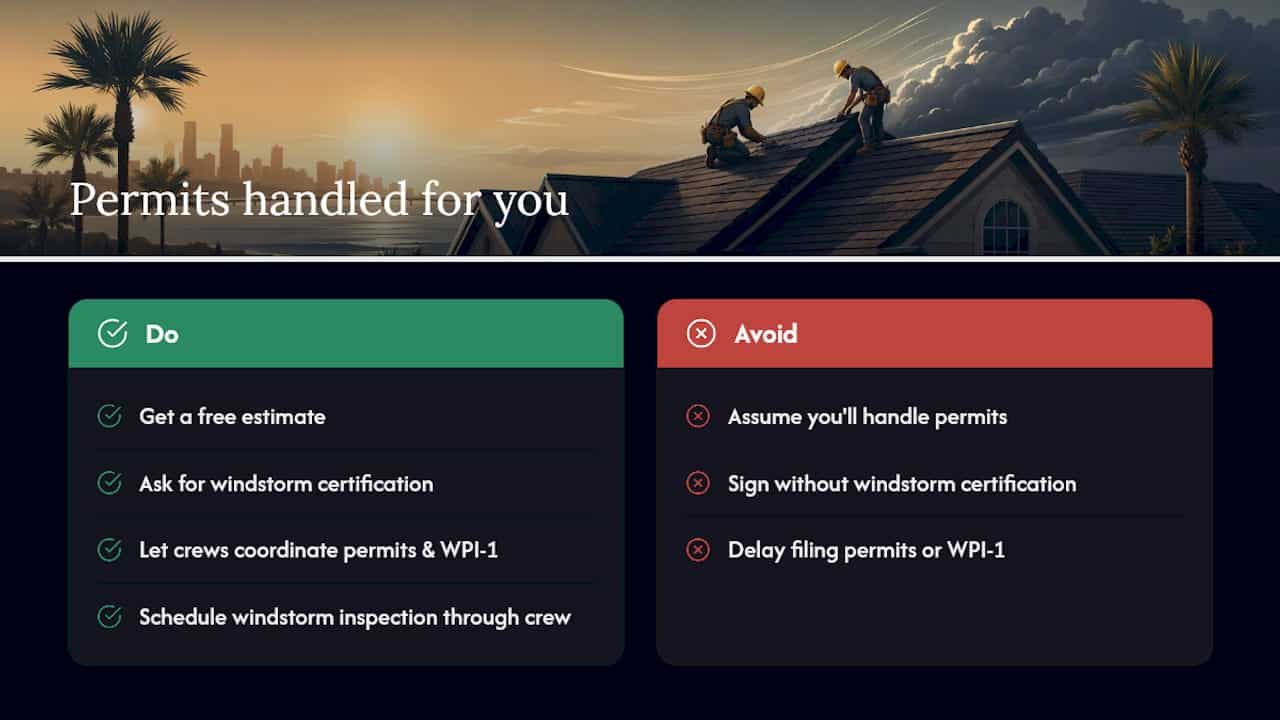
We’ve walked enough Corpus Christi homeowners through this process to know the paperwork trips people up more often than the actual roofing work does. Coordinating a WPI‑1 filing alongside a city permit application isn’t intuitive, and most homeowners have never touched either form before their roof needs replacing.
Our crews handle permit coordination and windstorm inspection scheduling as a standard part of every re-roof, not an upsell. If you’re not sure whether your project needs a permit, a free estimate is the fastest way to get a straight answer, along with a scope of work detailed enough to survive plan review on the first pass. For coastal properties, ask specifically about windstorm certification before signing any contract.
— Results
Sources
Start with the City of Corpus Christi’s building permits page for the portal login and Form 1003. Pull fee numbers from the FY2026 fee schedule and windstorm details from the TDI inspection process page and the WPI‑8 fact sheet. Before scheduling any inspection, review this roof inspection checklist to document existing conditions.
- Residential Remodels and Repairs | City of Corpus Christi
- WPI‑8 fact sheet (English/Spanish) | Texas Department of Insurance