Professional installation of exterior weatherproofing systems reduces failures by 60% in Texas coastal homes, yet many homeowners still rely on outdated methods that leave their properties vulnerable. This guide explains what effective exterior weatherproofing means for your coastal home, the materials that truly protect against salt air and hurricanes, and maintenance practices that extend your investment’s value for decades.
Table of Contents
- Understanding Exterior Weatherproofing: Definition And Key Components
- Challenges Of Weatherproofing In Texas Coastal Climate
- Materials And Products Best Suited For Coastal Weatherproofing
- Professional Installation Techniques For Maximum Weatherproofing Effectiveness
- Common Misconceptions About Exterior Weatherproofing
- Real-World Outcomes: Case Studies And Insurance Benefits
- Maintaining Your Weatherproofed Exterior: Best Practices
- Protect Your Texas Coastal Home With Buffalo Roofing & Exteriors
- Frequently Asked Questions
Key Takeaways
| Point | Details |
|---|---|
| Multi-layer systems required | Effective weatherproofing uses overlapping barriers, not single coatings or paint alone. |
| Texas coast demands specialized materials | Salt corrosion and hurricane winds require coastal-rated products that resist moisture and impact. |
| Professional installation cuts failures 60% | Certified installers follow strict sealing standards to prevent premature weatherproofing breakdown. |
| Coastal-rated materials extend lifespan | Fiber-cement siding and reinforced windows significantly outlast standard products in salt air. |
| Regular maintenance adds 25% more years | Seasonal inspections and prompt repairs sustain weatherproofing performance long-term. |
Understanding Exterior Weatherproofing: Definition and Key Components
Exterior weatherproofing creates a multi-layer barrier system that shields your home from water intrusion, wind damage, and salt air corrosion. This approach combines membranes, sealants, exterior siding, and storm-resistant windows into an integrated defense against coastal elements.
A multi-layer system outperforms single barriers because overlapping protection catches what one layer might miss. Salt air accelerates corrosion of metals and degrades most materials faster than inland conditions, so coastal weatherproofing must resist both moisture and chemical attack. Proper sealing around windows, doors, and wall penetrations prevents water from finding hidden pathways into your home structure.
Key weatherproofing components include:
- Weather-resistant barriers (WRB) that block bulk water while allowing vapor to escape
- Elastomeric sealants that remain flexible through temperature swings and maintain adhesion
- Impact-rated windows and doors engineered to withstand hurricane-force winds
- Flashing systems that channel water away from vulnerable joints and transitions
- Coastal-grade exterior cladding designed to resist salt, moisture, and biological growth
These elements work together as a system rather than independent upgrades. When you invest in exterior renovation, each component must integrate properly with adjacent layers to maintain continuous protection. Gaps or incompatible materials create weak points where water enters and wind pressure builds, leading to structural damage that repairs cannot always reverse.
Challenges of Weatherproofing in Texas Coastal Climate
Salt air near the Gulf Coast causes corrosion that shortens material lifespan by up to 50% compared to inland installations. High humidity creates ideal conditions for mold and wood rot when moisture barriers fail or ventilation proves inadequate. Storm surge during hurricanes brings standing water that tests every seal and joint in your exterior envelope.
Hurricane-force winds generate uplift pressure on roofs and lateral loads on walls that standard construction cannot handle. Texas coastal weather challenges require materials engineered specifically for impact resistance and wind ratings exceeding typical building codes. Materials degrade faster when exposed to salt spray, UV radiation, and temperature cycling between hot summers and occasional freezes.
Coastal weatherproofing must address:
- Wind uplift forces that can strip roofing and siding during storms
- Salt-laden moisture that penetrates porous surfaces and corrodes fasteners
- UV degradation that breaks down sealants and protective coatings within 3 to 5 years
- Biological growth including mildew and algae that trap moisture against surfaces
- Rapid temperature changes that cause materials to expand and contract, breaking seals
These conditions explain why standard inland weatherproofing approaches fail on the coast. You need products rated for marine environments and installation techniques that account for extreme weather. Shortcuts or budget materials may survive a few years but typically fail during the first major storm, resulting in repair costs that far exceed the savings from initial compromises.
Materials and Products Best Suited for Coastal Weatherproofing
Coastal-rated membranes and sealants provide superior resistance to salt and moisture compared to standard products. Fiber-cement siding resists moisture and pests better than wood, offering longer durability in areas with high humidity and salt exposure. Storm-resistant windows with impact-rated glass and reinforced frames are essential for protecting openings during hurricanes.
Multi-layer membrane systems create redundant barriers that block water even if the outer layer sustains damage. Choosing materials compatible with your existing structure ensures seamless installation without creating thermal bridges or gaps. The right coastal siding options balance aesthetic appeal with performance requirements specific to marine environments.
| Material Type | Standard Product Lifespan | Coastal-Rated Product Lifespan | Key Advantage |
|---|---|---|---|
| Siding | 15-20 years | 30-40 years | Resists salt corrosion and moisture |
| Sealants | 5-7 years | 10-15 years | Maintains flexibility in temperature extremes |
| Windows | 20 years | 25-30 years | Impact resistance and seal integrity |
| Membranes | 10-15 years | 20-25 years | Blocks water and allows vapor escape |
Top coastal weatherproofing materials include:
- Fiber-cement siding that won’t rot, warp, or attract termites
- Polyurethane and silicone sealants formulated for marine exposure
- Aluminum or vinyl-clad windows with impact-resistant laminated glass
- Self-adhered rubberized asphalt membranes for superior water blocking
- Stainless steel or coated fasteners that resist rust and corrosion
Pro Tip: Always verify product certifications for coastal wind zones and salt spray resistance before purchase. Marketing claims mean little without third-party testing that confirms performance in harsh marine conditions.
Material selection directly impacts how long your weatherproofing performs. Investing in coastal-grade products costs 20% to 30% more upfront but eliminates the cycle of frequent repairs and premature replacement that homeowners face with standard materials.
Professional Installation Techniques for Maximum Weatherproofing Effectiveness
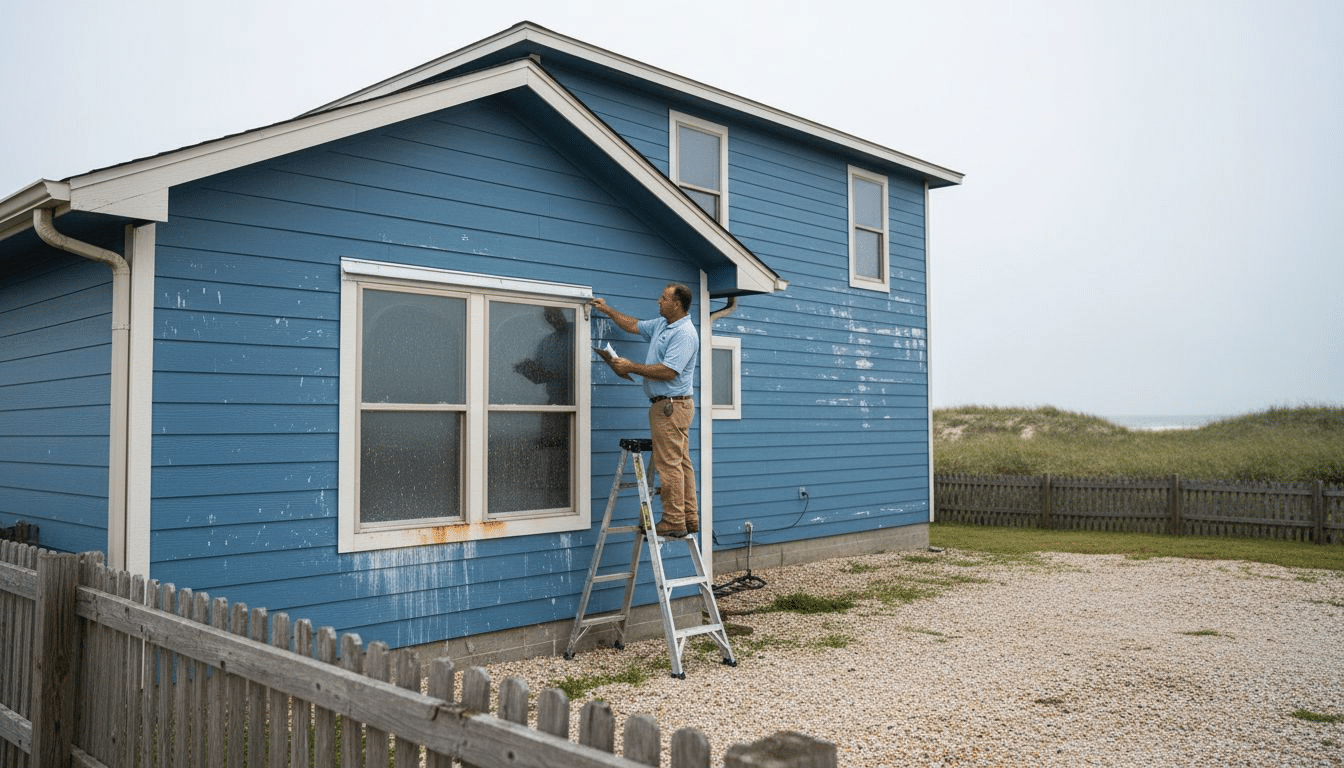
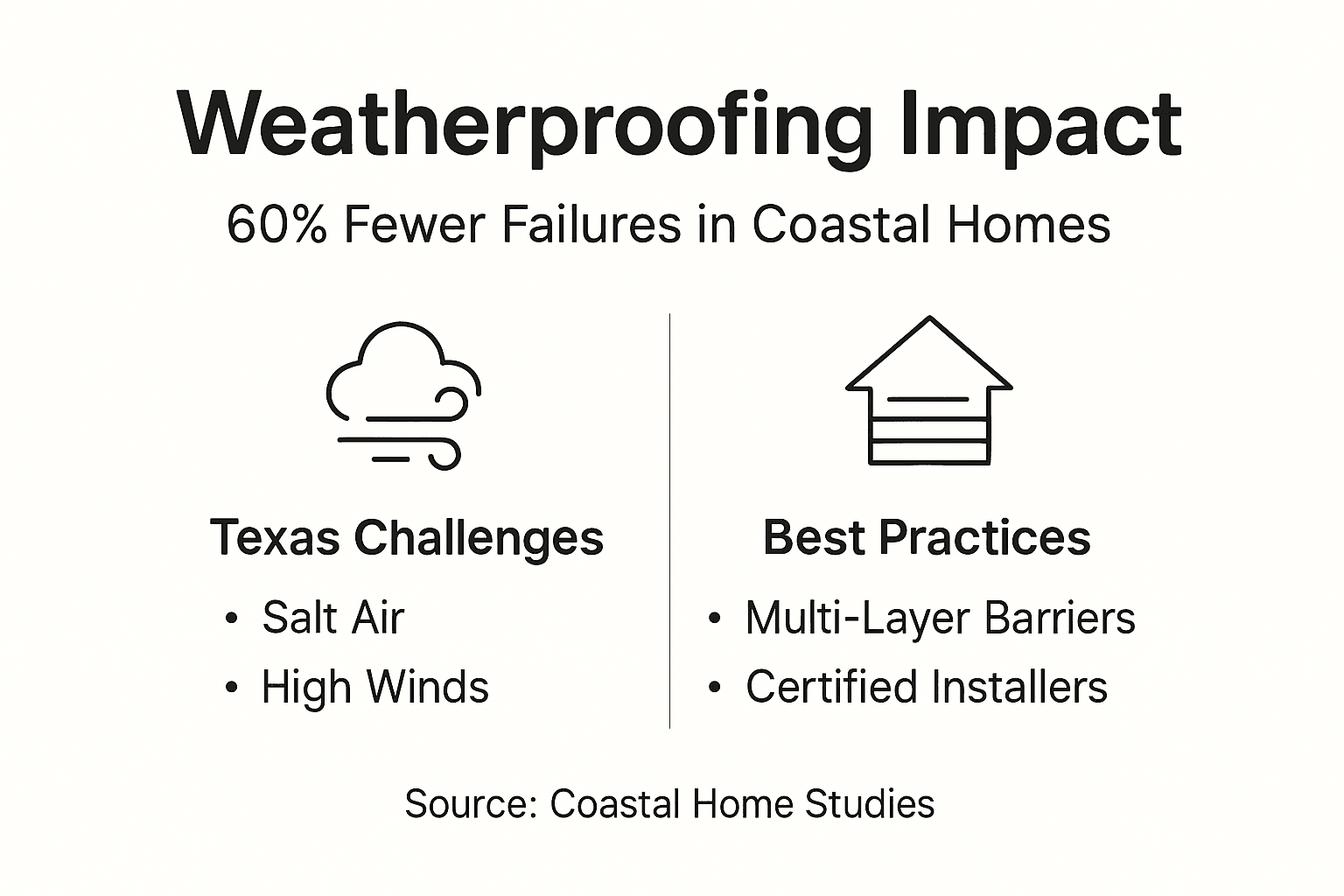
Proper installation technique by certified professionals reduces weatherproofing failures by 60% because expert installers follow strict overlap and sealing standards that DIY approaches rarely achieve. Certified contractors understand how to integrate storm shutters, reinforced windows, and multi-layer barriers into a cohesive system without creating weak points. Skipping professional installation remains a leading cause of premature weatherproofing failure even when quality materials are used.
Installation quality determines whether your weatherproofing system performs as designed or fails during the first storm. The professional installation process includes critical steps that homeowners often overlook or execute incorrectly.
Essential installation practices include:
- Applying membranes with proper overlap (typically 4 to 6 inches) and sealing all seams
- Installing flashing at every penetration, window, and door before cladding goes up
- Maintaining continuous air and water barriers without gaps or compression
- Using compatible sealants that bond chemically with adjacent materials
- Following manufacturer specifications for fastener spacing and edge distances
- Inspecting each layer before covering it with the next component
Pro Tip: Request photos documenting each installation layer before it gets covered. This creates a record of proper technique and helps identify issues if problems emerge later.
“The difference between adequate and exceptional weatherproofing lies in the details. Professional installers know that a single unsealed gap can compromise an entire wall section during a storm.” – National Roofing Contractors Association
Expert integration of components ensures that water finding one entry point cannot migrate through the assembly. Proper flashing and caulking around penetrations prevent the common failure modes where water enters at pipe boots, electrical boxes, or HVAC line sets. These details require training and experience that general handyman services typically lack.
Common Misconceptions About Exterior Weatherproofing
Painting alone blocks less than 15% of water intrusion and cannot serve as reliable weatherproofing for coastal homes. Single-layer weatherproofing systems do not provide adequate protection against the combined assault of salt air, driving rain, and hurricane winds. Many homeowners believe installation is a minor factor, but proper technique reduces failure rates by 60% compared to amateur work.
Assuming minimal maintenance is needed ignores the reality that routine upkeep extends weatherproofing lifespan by 25%. These misunderstandings lead to costly repairs, reduced home values, and difficulty obtaining favorable insurance coverage. Correcting false beliefs about weatherproofing myths helps you make informed decisions that truly protect your investment.
Common weatherproofing myths include:
- Myth: Any exterior paint provides sufficient weather protection for coastal homes
- Myth: Weatherproofing is only necessary on ocean-facing walls
- Myth: DIY installation saves money without compromising performance
- Myth: Once installed, weatherproofing requires no ongoing attention
- Myth: All siding materials offer equivalent protection in salt air
The truth is that effective coastal weatherproofing requires engineered systems, professional installation, and regular maintenance. Cutting corners on any element increases your risk of storm damage and shortens the lifespan of your exterior. Insurance companies increasingly require proof of proper weatherproofing to maintain coverage in coastal zones, making amateur approaches financially risky beyond the immediate repair costs.
Real-World Outcomes: Case Studies and Insurance Benefits
Weatherproofing upgrades have reduced storm damage claims by 40% to 60% in documented coastal home case studies. Homes with properly installed multi-layer systems demonstrate 25% longer exterior lifespan compared to those using standard construction methods. Insurance companies recognize this difference and often provide premium discounts ranging from 10% to 20% for verified weatherproofing improvements.
Case examples from Texas coastal communities show fewer repair needs after hurricanes when professional weatherproofing standards are met. Quantifying these durability gains helps homeowners justify the investment in coastal-grade materials and expert installation. The evidence from coastal home weatherproofing cases demonstrates measurable financial returns beyond peace of mind.
Documented weatherproofing benefits include:
- Reduced emergency repair costs averaging $12,000 to $18,000 per major storm event
- Lower long-term maintenance expenses through extended material lifespan
- Improved resale value with buyers willing to pay premiums for verified protection
- Faster insurance claim processing with proper documentation of protective measures
- Eligibility for coastal construction incentive programs in some jurisdictions
| Performance Metric | Standard Construction | Professional Weatherproofing | Improvement |
|---|---|---|---|
| Storm damage frequency | Every 5-7 years | Every 12-15 years | 70% reduction |
| Exterior lifespan | 20 years | 35+ years | 75% increase |
| Annual maintenance cost | $800-$1,200 | $400-$600 | 50% savings |
| Insurance premium discount | 0% | 10-20% | Immediate savings |
These outcomes reflect real performance data from coastal properties that invested in comprehensive weatherproofing systems. The financial case becomes compelling when you calculate avoided damage costs over a 20-year period compared to the initial upgrade investment.
Maintaining Your Weatherproofed Exterior: Best Practices
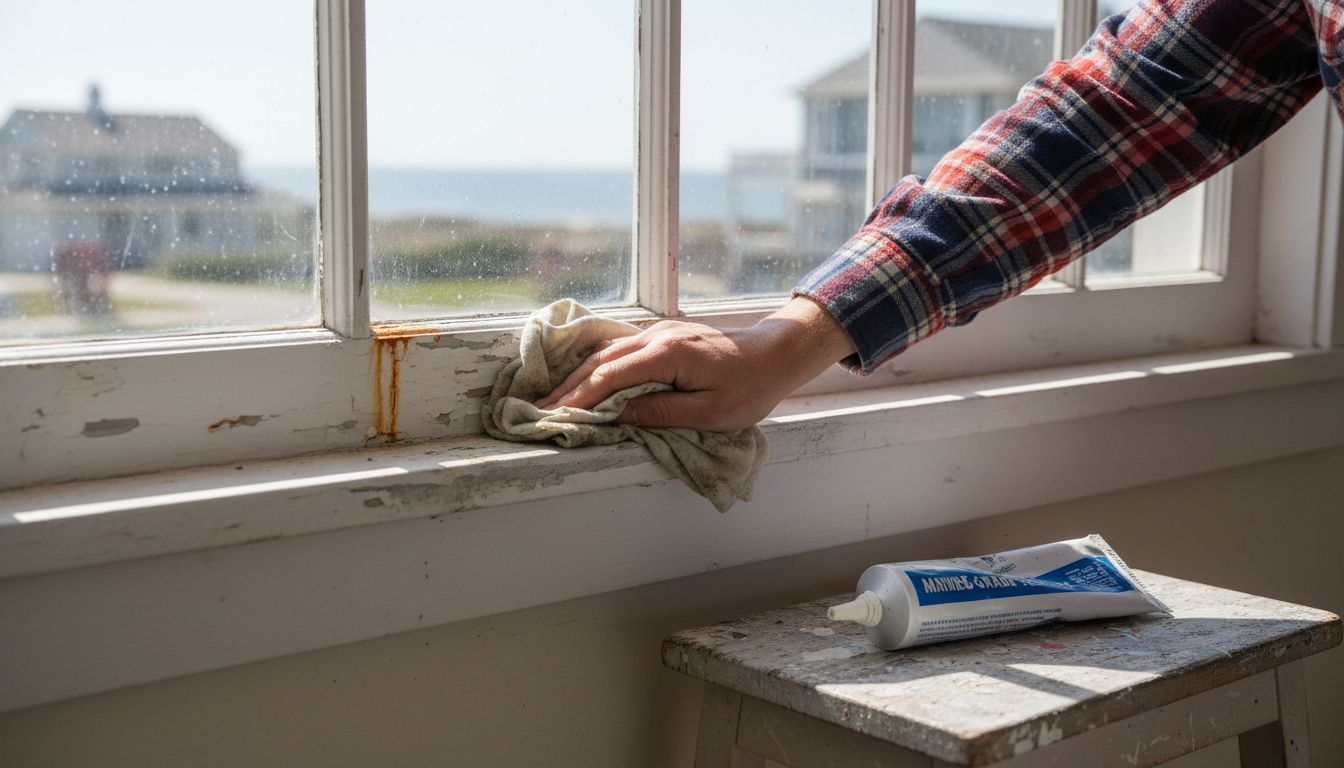
Schedule regular inspections annually or biannually to catch damage early before minor issues become major repairs. Promptly repair and reseal any cracks or breaches to maintain barrier integrity throughout your weatherproofing system. Clean surfaces seasonally to remove salt deposits that accelerate corrosion and trap moisture against materials.
Adjust maintenance routines based on storm season and local weather patterns, increasing inspection frequency during and after severe weather. Routine upkeep can add 25% more years to weatherproofing effectiveness while reducing emergency repair costs. Following weatherproofing maintenance tips ensures your investment continues protecting your home long-term.
Weatherproofing maintenance checklist:
- Inspect all sealant joints for cracks, gaps, or separation from substrates
- Examine flashing around windows, doors, and penetrations for corrosion or looseness
- Check siding for damage, biological growth, or signs of water intrusion behind surfaces
- Clean gutters and ensure proper drainage away from foundation walls
- Test window and door seals by checking for air leaks or moisture staining
- Document findings with photos and address any issues within 30 days
Pro Tip: Create a maintenance log with inspection dates and findings. This documentation proves valuable for insurance claims and demonstrates responsible homeownership that can reduce premiums.
Preventive maintenance costs significantly less than emergency repairs. A typical annual inspection and minor seal renewal runs $300 to $500, while storm damage repairs average $8,000 to $15,000. Consistent attention to your weatherproofing system protects both your home structure and your financial resources.
Protect Your Texas Coastal Home with Buffalo Roofing & Exteriors
Your Texas coastal home deserves protection that stands up to salt air and hurricane-force winds. Buffalo Roofing & Exteriors specializes in comprehensive weatherproofing solutions engineered specifically for Gulf Coast conditions.
Our certified professionals bring decades of experience installing custom weather barriers and resilient materials that extend your home’s lifespan. We provide complete service from initial consultation through material selection, expert installation, and ongoing maintenance support. Benefit from improved durability, reduced repair costs, and potential insurance premium discounts when you choose weather-resistant roofing and expert exterior siding installed to coastal standards. Contact Buffalo Roofing & Exteriors today to schedule your weatherproofing assessment and safeguard your investment against the next storm season.
Frequently Asked Questions
What is the most important material for coastal weatherproofing?
Fiber-cement siding combined with self-adhered rubberized membranes provides the strongest foundation for coastal protection. These materials resist salt corrosion, block water intrusion, and maintain integrity through hurricane-force winds better than any single component alone.
How often should I inspect my home after coastal storms?
Inspect your exterior within 48 hours after any storm with winds exceeding 50 mph or heavy sustained rainfall. Early detection of damage prevents water from migrating into wall cavities where it causes hidden structural deterioration and mold growth.
Can weatherproofing reduce my home insurance premiums?
Yes, most insurers offer discounts ranging from 10% to 20% for verified coastal weatherproofing improvements. You must provide documentation of professional installation and coastal-rated materials to qualify, but the annual savings typically recover upgrade costs within 8 to 12 years.
Is DIY weatherproofing effective in a coastal environment?
DIY approaches rarely achieve the 60% failure reduction that professional installation provides because critical techniques like proper overlap, flashing integration, and sealant compatibility require specialized training. Amateur work often creates hidden weak points that fail during storms, resulting in repair costs exceeding the savings from skipping professional service.