TL;DR:
- Coastal Texas homes face relentless siding damage from salt air, humidity, and storms, which often remains hidden behind normal surfaces. Regular cleaning, thorough inspections, and timely repairs are essential to prevent costly issues caused by moisture intrusion and storm-related wear. Professional evaluation and targeted maintenance help ensure long-term durability and protection in this harsh coastal environment.
Salt air, tropical moisture, scorching summer heat, and the occasional hurricane don’t give your home’s siding a moment of rest. Along the Texas Gulf Coast, exterior siding takes a beating that homeowners in drier climates never have to think about, and the damage often hides behind perfectly normal-looking surfaces until it becomes expensive. This guide walks you through everything you need to stay ahead of that damage, from gathering the right tools to knowing exactly when a problem has moved beyond a Saturday morning fix.
Table of Contents
- Essential tools and materials for siding maintenance
- Step-by-step: Cleaning and basic care for common siding types
- Spotting trouble: Inspecting for moisture, storm, and sun damage
- Quick fixes and when to call in the pros
- Maintaining curb appeal and storm resilience year-round
- Our take: The real secret to siding durability in coastal Texas
- Protect your siding and your home with expert help
- Frequently asked questions
Key Takeaways
| Point | Details |
|---|---|
| Inspect annually | A yearly siding inspection catches problems early and preserves home value. |
| Clean the right way | Gentle cleaning methods prevent damage while keeping siding attractive and functional. |
| Watch for hidden trouble | Stains or soft spots may signal deeper moisture issues that require prompt attention. |
| Know your limits | DIY repairs work for minor issues, but professional help is best for storm or moisture damage. |
Essential tools and materials for siding maintenance
Before diving into maintenance steps, having the right tools and materials on hand simplifies the process and keeps you from making multiple trips to the hardware store mid-project.
The good news is that most of what you need for basic siding upkeep is affordable and easy to find. The better news is that a little preparation here saves a lot of frustration later, especially when you’re working in the coastal humidity or trying to beat an incoming storm front.
Core tools you’ll want on hand:
- Garden hose with an adjustable spray nozzle
- Soft-bristle brush or long-handled scrub brush
- Extension ladder (rated for your weight plus equipment)
- Bucket for cleaning solution
- Caulking gun
- Putty knife or painter’s tool
- Painter’s tape
- Safety glasses and rubber gloves
Materials vary based on siding type. Here’s a quick reference to help you prep:
| Siding type | Cleaning solution | Repair materials |
|---|---|---|
| Vinyl | Water and white vinegar or mild dish soap | Exterior caulk, vinyl patch kit |
| Fiber cement | Low-pressure water with mild detergent | Paintable exterior caulk, matching paint |
| Wood | Diluted bleach solution or wood cleaner | Wood filler, exterior primer, paint |
Plan your coastal siding maintenance checklist around your specific siding material, because using the wrong cleaner can cause streaking, fading, or even structural damage over time.
A critical note for vinyl specifically: annual cleaning is essential, and any staining or streaking you notice deserves real investigation because leaks can hide behind vinyl panels even though the material itself doesn’t rot. The surface can look fine while moisture quietly works on your wall sheathing underneath.
Pro Tip: Before you start any maintenance work, walk your entire home perimeter and take photos. This gives you a visual baseline and becomes invaluable if you need to file an insurance claim after a storm.
Step-by-step: Cleaning and basic care for common siding types
Once equipped, you’re ready to protect your siding with routine cleaning and care. Timing matters too. Spring, after the rainy season eases, and early fall before tropical weather picks up are the two best windows for siding maintenance in coastal Texas.
Cleaning vinyl siding:
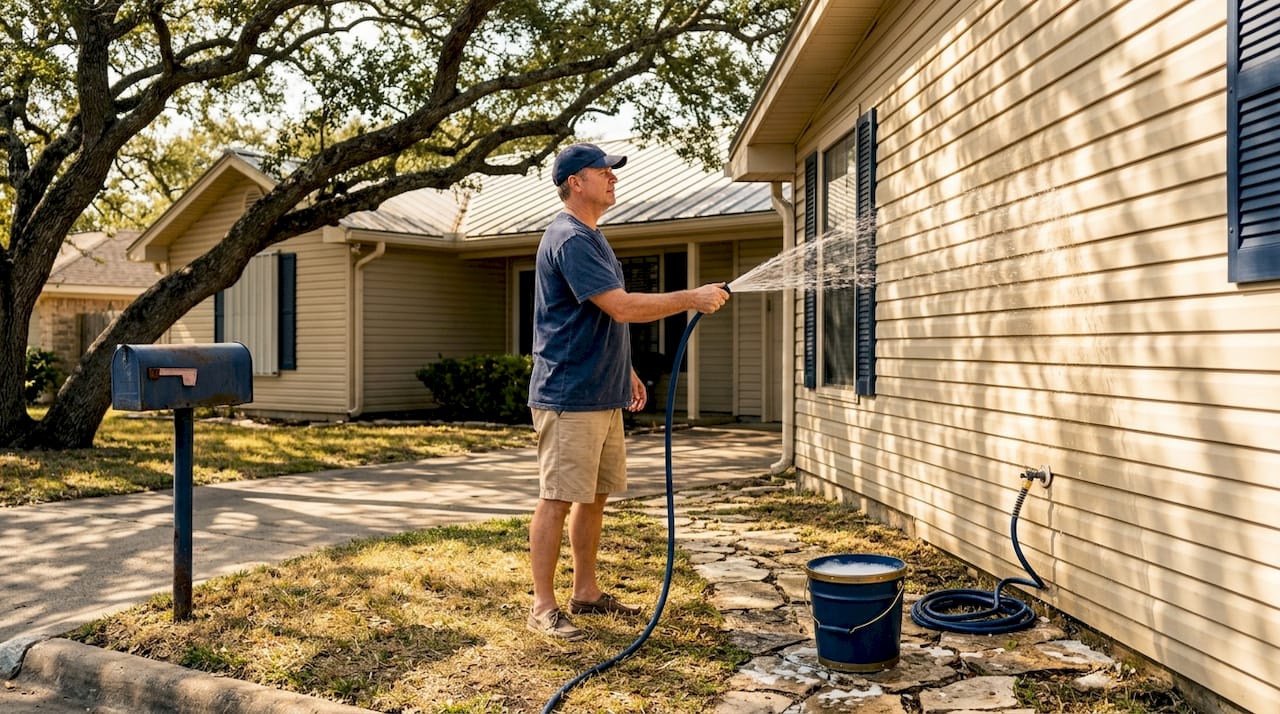
- Rinse the entire surface from top to bottom with your garden hose to loosen loose debris, dirt, and salt residue.
- Mix a solution of one part white vinegar to nine parts water, or use a mild dish soap with water.
- Scrub gently with your soft-bristle brush, working in sections from the bottom up to avoid streaking.
- Rinse each section thoroughly before the solution dries, especially in direct sun.
- Check for any staining or discoloration. If stains persist, investigate further rather than scrubbing harder.
Cleaning fiber cement siding:
- Rinse the surface with a low-pressure garden hose. Avoid pressure washers on fiber cement as they can force water behind panels.
- Apply a mild detergent solution with a soft brush.
- Scrub lightly in the direction of the panel texture.
- Rinse completely, then inspect the paint surface for chips, cracks, or peeling areas.
- Touch up any exposed areas with matching exterior paint to prevent moisture from reaching the material underneath.
Cleaning and caring for wood siding:
- Rinse the wood gently to remove surface dirt.
- Apply a diluted wood cleaner or a solution of one cup of bleach per gallon of water to address mildew.
- Scrub gently along the grain, never across it.
- Rinse thoroughly and allow the wood to dry completely (at least 48 hours) before applying any paint, stain, or sealant.
- Inspect for soft spots, cracks, and areas where paint or stain has lifted, as these are entry points for moisture.
The detailed siding maintenance guide from our team breaks down these steps even further for homes in storm-prone zones and includes a seasonal calendar that works for the Corpus Christi and South Texas climate.
As noted by The Old Farmer’s Almanac, annual cleaning for vinyl is the bare minimum, and any visible streaking should be treated as a possible symptom of a hidden moisture problem, not just a cosmetic issue.
Statistic worth noting: Homes in high-humidity coastal climates can experience moisture-related siding problems up to three times faster than homes in dry inland areas, making routine cleaning more than just an aesthetic task.
Pro Tip: Use mild solutions and always test your cleaning mixture on a small, hidden section of siding first. Harsh chemicals can strip color from vinyl and damage the protective coatings on fiber cement.
Spotting trouble: Inspecting for moisture, storm, and sun damage
Even with routine cleaning, Texas weather can hide significant problems, so inspection is key. Cleaning removes what you can see, but inspection is about finding what you can’t.
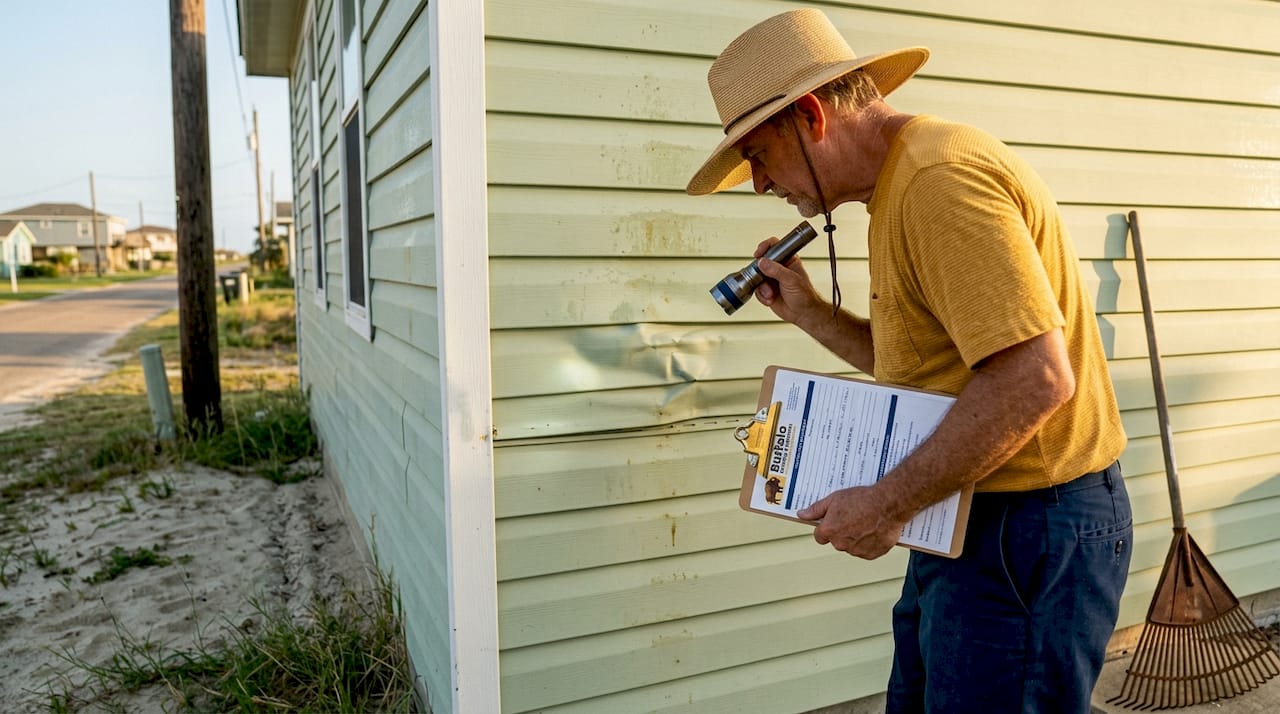
After you clean, do a deliberate walkthrough of your entire exterior. Touch the panels. Look closely at the seams, corners, and areas around windows and doors. These are the spots where water finds its way in.
Warning signs to look for:
- Staining or streaking that won’t clean off
- Bubbling or blistering paint on fiber cement or wood siding
- Soft, spongy, or warped panels when you press gently
- Visible mold or dark mildew patches, especially in shaded areas
- Gaps or separations at panel seams, corners, or trim pieces
- Rust stains from nail heads showing through the surface
- Fading or chalking that appears uneven across panels
“Even ‘low-maintenance’ siding systems like vinyl or fiber cement can hide water problems. Suspicious staining, bubbling paint, or soft or warped areas should trigger investigation, not just a second coat of paint.”
Use a flashlight to examine areas under overhangs or near the foundation where water tends to pool and splash back. If you have a wood probe or even just a sturdy screwdriver, gently press into any area that looks or feels questionable. Healthy wood siding is firm. Soft wood means moisture has been sitting there long enough to cause rot.
Pay close attention to areas directly hit by prevailing Gulf winds. On most South Texas homes, the south and southeast faces take the hardest sun and wind exposure and tend to show damage first.
Knowing the signs you need new siding versus signs you simply need a repair can save you from either over-investing in small fixes or delaying a replacement that’s already overdue. Similarly, understanding weatherproofing siding tips specific to coastal homes gives you a much clearer picture of where vulnerabilities tend to develop.
Safety reminder: When using a ladder for inspection, always have a second person present. Work during cooler morning hours when metal ladders and rooflines aren’t superheated from direct sun. Wear rubber-soled shoes and keep your hips between the ladder rails at all times.
If your inspection turns up soft wood, significant warping, visible mold beyond the surface, or any evidence that water has been entering the wall cavity, that’s the point to call a professional rather than proceed on your own.
Quick fixes and when to call in the pros
Spotting an issue is only part of the solution; here’s how to respond effectively. Not every problem requires a contractor, but knowing the line between a DIY fix and a professional repair is critical, especially in a coastal climate where small problems escalate quickly.
What you can handle yourself:
- Sealing small gaps at seams, trim, and around windows with exterior-grade caulk
- Cleaning surface mildew with a diluted bleach solution
- Touching up paint chips or exposed areas on fiber cement or wood siding
- Replacing a single loose or cracked vinyl panel that isn’t showing signs of moisture damage behind it
When to call a professional:
- Any panel that feels soft, spongy, or shows rot
- Warped or buckled sections that indicate water has entered the wall
- Widespread mold that extends beyond the surface
- Damage to multiple panels or a full wall section following a storm
- Siding that has separated from the structure at corners or around openings
| Repair type | DIY friendly | Needs a pro |
|---|---|---|
| Surface caulk and sealing | Yes | No |
| Touch-up paint | Yes | No |
| Single panel replacement (vinyl) | Sometimes | If moisture is present |
| Water-damaged panels or rot | No | Yes |
| Storm damage to multiple panels | No | Yes |
| Full section or whole-home replacement | No | Yes |
As research consistently shows, even low-maintenance siding systems can conceal serious water problems that aren’t visible from the outside, which is exactly why warped or soft areas always warrant a professional assessment rather than a surface patch.
Weather conditions also influence your repair timing. If a named storm is approaching, address any open gaps or loose panels immediately, even temporarily with weather tape, to prevent wind from getting behind the siding and causing catastrophic damage.
A full siding replacement walkthrough is available if you want to understand what a professional replacement process looks like from start to finish. And when you’re ready to get expert eyes on the situation, our professional siding services cover the full range from single panel repairs to complete exterior overhauls.
Pro Tip: Document every bit of damage with timestamped photos before you make any repairs. This protects you for insurance claims and warranty coverage, both of which can require proof that damage was storm-related rather than long-term neglect.
Maintaining curb appeal and storm resilience year-round
Beyond repairs, a year-round approach delivers both beauty and reliability for your home exterior. Siding maintenance isn’t a one-time event. It’s an ongoing relationship between you and your home’s first line of defense against everything the Gulf Coast throws at it.
Homes with consistently maintained siding hold their value better, resist storm damage more effectively, and cost significantly less to repair over time compared to homes where maintenance is deferred. That’s true across all siding types, but it’s especially pronounced in coastal regions where the weather is relentless.
Year-round habits that pay off:
- Rinse siding with a garden hose after major storms to remove salt and debris before it has time to cause damage or staining
- Check caulking around windows, doors, and trim after each hurricane season and reseal any gaps before winter moisture sets in
- Trim back trees and shrubs that press against the siding, as contact traps moisture and can cause physical damage during wind events
- Repaint or reseal wood siding on its recommended cycle, typically every five to seven years, to maintain its moisture barrier
- Schedule a professional inspection every two to three years to catch what annual walkthroughs might miss
The home protection benefits of well-maintained siding go beyond weather resistance. A clean, well-sealed exterior improves energy efficiency, keeps pests out, and adds real dollar value when it comes time to sell. Understanding why siding matters for your specific coastal setting puts all of this maintenance effort into the right perspective.
Consistency is the key factor. Homeowners who do a little each season avoid the expensive surprises that come from letting problems compound over multiple years.
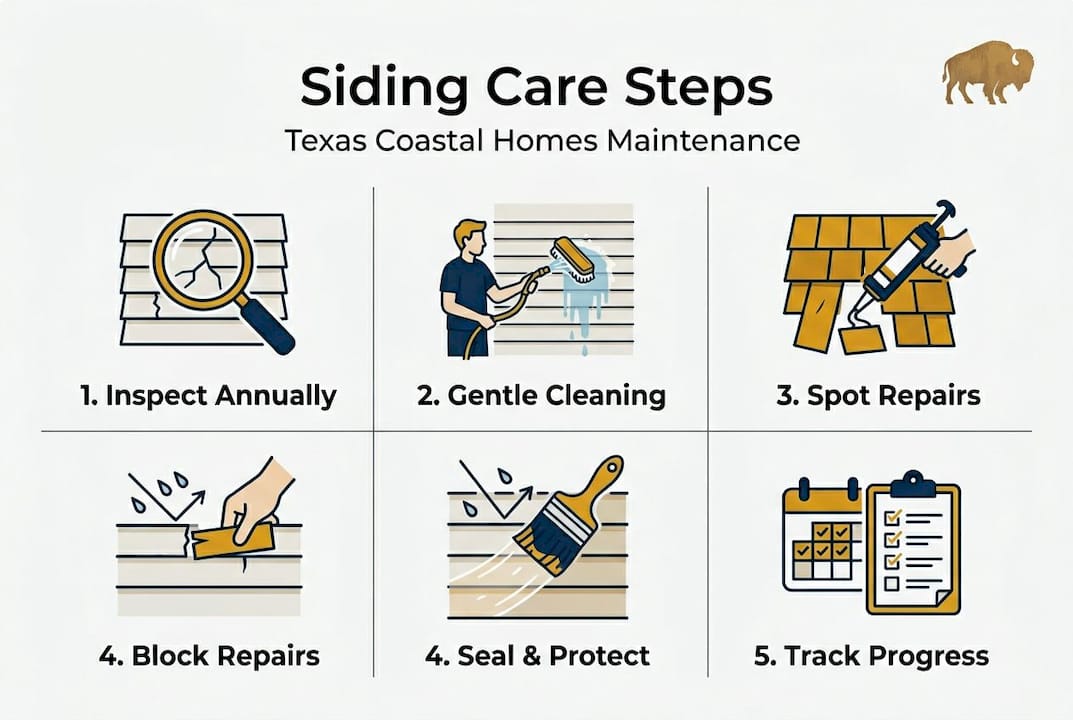
Our take: The real secret to siding durability in coastal Texas
Here’s something the general home improvement guides won’t tell you directly: most siding failures in coastal Texas aren’t caused by one dramatic storm. They’re caused by years of small, unnoticed moisture intrusions that were never caught because the homeowner was only cleaning, never truly inspecting.
Conventional wisdom in home maintenance circles focuses heavily on cleaning schedules and touch-up paint. Those things matter, but they’re not the core issue. The real risk for coastal homeowners is the slow, invisible damage that happens between cleaning sessions, the minor gap behind a piece of trim that lets humid air sit against the wall sheathing for months, the nail head that loses its seal and lets water track down inside the panel.
We’ve seen homes in Corpus Christi and along the coast where the siding looked genuinely fine from the street but had extensive rot and mold problems behind the panels. The owners cleaned regularly. They just didn’t inspect with the same intention.
Accessing advanced siding insights built specifically around storm damage patterns in Texas changes how you approach the whole process. The homeowners who avoid major siding expenses aren’t necessarily doing more work. They’re doing more focused work, with attention on the areas where coastal conditions cause specific, predictable failures.
Treat your inspection like a detective exercise, not a checklist. Touch things. Look in the corners. Question stains instead of scrubbing past them. That mindset shift is worth more than any product or tool you can buy.
Protect your siding and your home with expert help
When routine maintenance isn’t enough, professional solutions can guarantee long-term results and peace of mind.
Keeping up with siding maintenance is genuinely manageable as a homeowner, but there are situations where professional assessment changes everything. A trained eye catches what even the most diligent homeowner will miss, especially when it comes to storm-related damage that compromises the structure behind the panels.

At Buffalo Roofing & Exteriors, we work with coastal Texas homeowners throughout Corpus Christi, San Antonio, and Victoria to evaluate, repair, and upgrade siding for real weather resilience. Whether you’re exploring siding options for Texas coast homes or need guidance on expert siding installation that holds up through hurricane season, our team brings the regional experience to get it right. Contact us for a free estimate and let us help you build an exterior that protects your home for the long haul.
Frequently asked questions
How often should siding be cleaned on Texas coastal homes?
Siding should be rinsed at least once a year, with additional cleanings after major storms to remove salt, debris, and moisture before they cause lasting damage.
What are signs my siding needs repair instead of just cleaning?
Signs include soft or warped panels, bubbling paint, persistent staining, and visible mold, all of which indicate that hidden water problems may already be present behind the surface.
Can I repair minor siding damage myself?
Yes, small gaps and surface mildew are reasonable DIY tasks, but anything involving soft or warped areas or suspected moisture behind the panels warrants a professional inspection.
Is maintenance different for vinyl compared to fiber cement siding?
Vinyl needs regular cleaning and stain investigation because leaks can hide behind it, while fiber cement also requires ongoing paint and caulk maintenance to protect its surface integrity over time.