TL;DR:
- Proper roof ventilation improves energy efficiency, storm resilience, and prevents structural damage.
- Vented attic systems like ridge and soffit vents are ideal for humid Texas climates.
- Regular inspection and maintenance of ventilation systems are essential for long-term home protection.
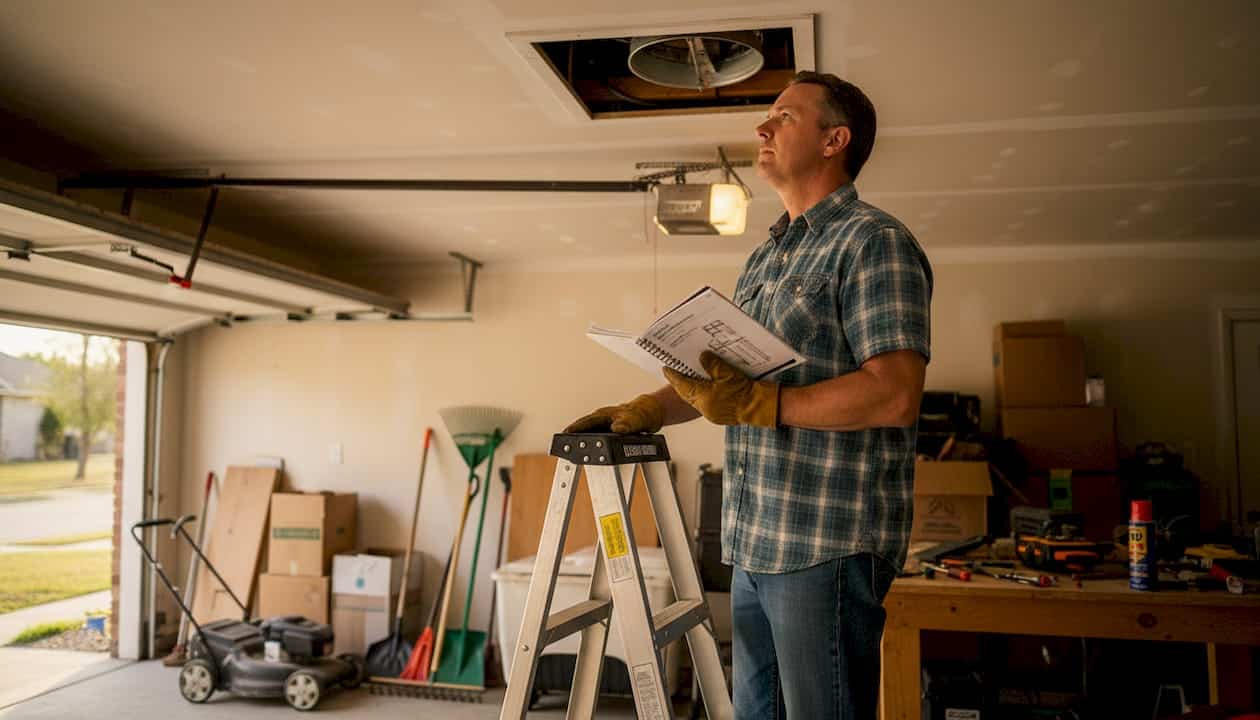
Most Texas homeowners assume roof ventilation is just about keeping the attic cool in summer. That’s only part of the story. Proper roof ventilation is one of the most overlooked factors in home energy efficiency, storm resilience, and long-term structural health. From Corpus Christi’s coastal humidity to San Antonio’s sweltering summers, Texas homes face some of the harshest conditions in the country. Understanding how ventilation works, and how to maintain it, can save you thousands of dollars in repairs and keep your home standing strong through whatever weather rolls in.
Table of Contents
- Understanding roof ventilation: What it is and why it matters
- Key benefits of roof ventilation for Texas homes
- Ventilation options: What works best in Texas
- Storm protection and long-term maintenance: Ventilation’s critical role
- The overlooked truth about roof ventilation in Texas homes
- Upgrade your home’s protection with expert roofing solutions
- Frequently asked questions
Key Takeaways
| Point | Details |
|---|---|
| Critical for Texas homes | Proper roof ventilation is essential for managing heat, humidity, and storms in Texas. |
| Boosts energy efficiency | Good ventilation can reduce your home’s cooling bills and prevent attic moisture issues. |
| Protects against storm damage | Ventilated roofs handle Texas storms better, minimizing costly repairs. |
| Regular maintenance required | Annual vent inspections keep your roof performing at its best and extend its lifespan. |
Understanding roof ventilation: What it is and why it matters
Roof ventilation is a system that allows fresh air to enter and hot or humid air to exit your attic space. It works through two main components: intake vents (usually located at the soffits along the roof’s lower edge) and exhaust vents (positioned near the ridge or peak). Together, they create a steady flow of air that regulates temperature and moisture inside the attic.
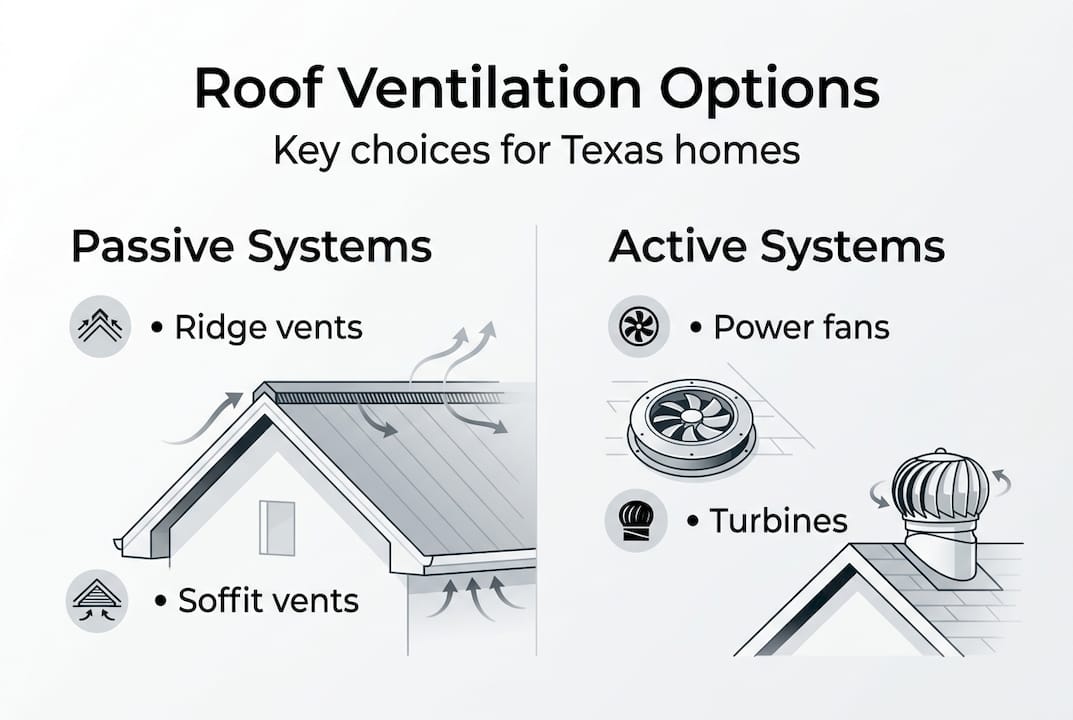
Ventilation systems fall into two broad categories. Passive systems rely on natural airflow, using ridge vents, soffit vents, and gable vents to let air move without any mechanical help. Active systems use powered attic fans or turbine vents to pull air through more aggressively. Both have a place in Texas homes, depending on roof design and local climate conditions.
Balanced airflow is the key concept here. When intake and exhaust work in proportion, you avoid hot spots, condensation buildup, and pressure imbalances. When the system is off, heat and moisture accumulate, and that’s where damage begins. As roof ventilation basics from Buffalo Roofing confirm, proper roof ventilation is critical in residential properties for long-term building health.
Texas makes this even more urgent. The combination of extreme heat, high coastal humidity, and violent storm seasons puts roofs under constant stress. Without adequate ventilation, attics can reach temperatures above 150°F in summer, accelerating shingle degradation and straining your HVAC system. The benefits of home ventilation extend well beyond temperature, touching on air quality, moisture control, and structural longevity.
Common signs that your ventilation is underperforming include:
- Unusually high cooling bills in summer
- Musty or stale odors coming from the attic
- Visible mold or mildew near the roofline
- Warped or buckling decking boards
- Ice dams forming along eaves in rare Texas cold snaps
- Shingles that appear to age or blister faster than expected
Pro Tip: Attic insulation and ventilation must work as a team. Adding insulation without fixing airflow can trap heat and moisture, making problems worse instead of better.
Key benefits of roof ventilation for Texas homes
Once you understand the mechanics, the benefits become obvious. Proper ventilation does much more than keep your attic temperature manageable. It protects nearly every layer of your home, from the shingles down to the rafters.
First, it dramatically reduces moisture buildup. In a humid coastal climate like Corpus Christi, moisture sneaks into attic spaces constantly. Without ventilation, that moisture condenses on wood surfaces, leading to rot, mold, and compromised structural integrity. Vented attics are preferred for maintenance in Texas due to humidity and storm risk, which makes a balanced system not just helpful but essential.
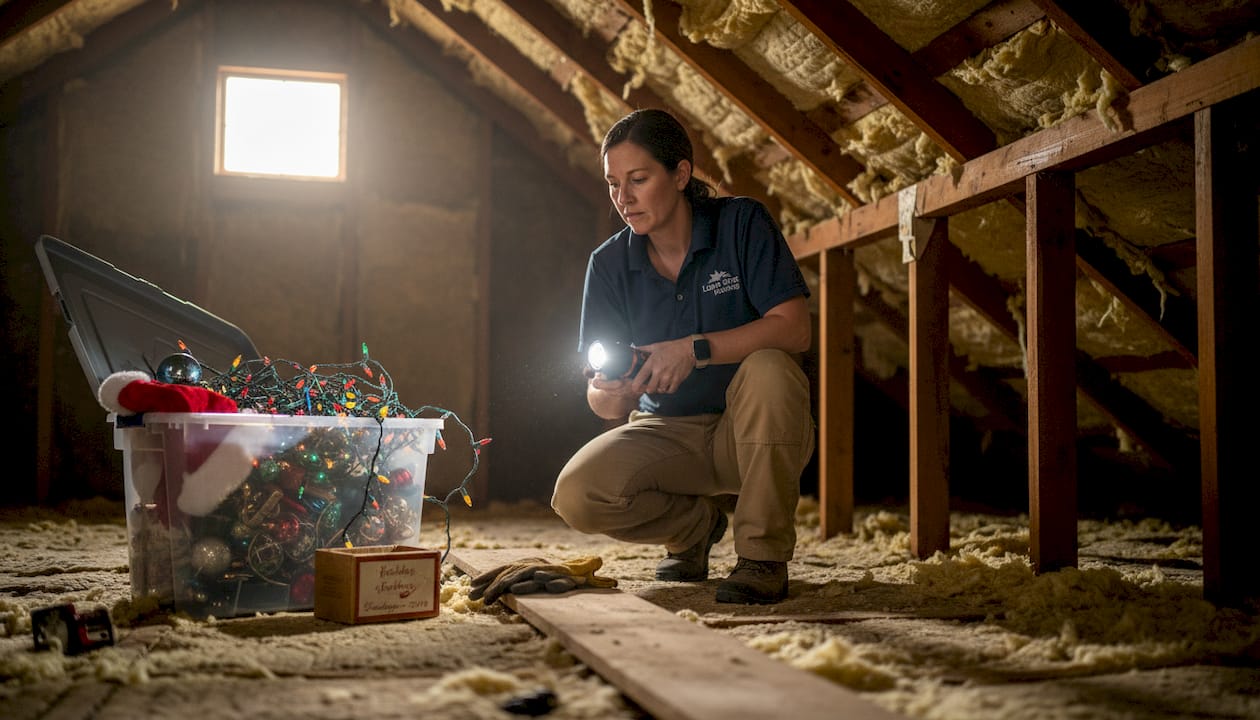
Second, ventilation directly improves energy efficiency. When attic heat is allowed to escape naturally, your air conditioner doesn’t have to work as hard to cool the living spaces below. Well-ventilated attics can reduce cooling energy use by up to 10%, which adds up quickly on a Texas summer electric bill.
Third, it extends the life of your roofing materials. Heat trapped in an unvented attic cooks shingles from below, causing them to crack, curl, and fail years before their expected lifespan. Staying current on roof maintenance checks becomes far more effective when your ventilation system is doing its job properly.
Here’s how the differences stack up:
| Factor | Properly ventilated home | Poorly ventilated home |
|---|---|---|
| Summer cooling costs | Reduced by up to 10% | Significantly higher |
| Roof lifespan | Extended by years | Shortened by heat and moisture |
| Storm resilience | Higher, reduced pressure buildup | Lower, more water intrusion risk |
| Mold and rot risk | Minimal | High |
| Indoor air quality | Improved | Compromised |
Beyond the numbers, consider what roof maintenance in Texas looks like without proper ventilation. Repair calls pile up. Mold remediation is expensive. Structural fixes can cost tens of thousands of dollars. Ventilation is a small investment that prevents a long list of large problems.
Ventilation options: What works best in Texas
Not all ventilation systems are created equal, and Texas conditions favor some options over others. Choosing the right setup depends on your roof design, attic size, and local climate.
Here are the most common types:
- Ridge vents run along the peak of the roof and allow hot air to escape continuously. They work quietly and blend into the roofline.
- Soffit vents sit along the underside of roof overhangs, pulling cool fresh air in at the lowest point of the attic.
- Gable vents are installed on the triangular wall sections at the ends of the attic and work best when combined with other vent types.
- Powered attic fans actively pull air through the attic and can be useful in homes where passive airflow is restricted.
For Texas homes, the ridge and soffit vent combination is widely recommended because it creates the most balanced passive airflow with the fewest mechanical components to fail during a storm.
The debate between vented and unvented attics is worth addressing directly. Unvented (or “conditioned”) attics can offer energy efficiency benefits in some climates, but unvented attics can work for energy efficiency yet carry higher moisture risk in humid Texas conditions. Vented attics remain the recommended standard here.
| Ventilation type | Best for | Texas pros | Texas cons |
|---|---|---|---|
| Ridge and soffit vents | Most homes | Passive, low maintenance, balanced | Requires proper soffit clearance |
| Gable vents | Older homes | Easy to add | Less effective alone |
| Powered attic fans | Restricted airflow homes | Aggressive heat removal | Can fail in storms, higher cost |
| Unvented attic | Tight building envelopes | Energy efficient in dry climates | Moisture risk in coastal Texas |
For flat or low-slope roofs, specialized solutions exist. Reviewing flat roof ventilation options helps ensure your system matches your actual roof design. And before upgrading anything, follow a solid vent installation guide to make sure your setup is properly sized.
Pro Tip: Always identify and fix moisture sources inside the home, like bathroom exhaust fans venting into the attic, before upgrading your roof ventilation system. Adding ventilation over an active moisture source solves nothing.
Storm protection and long-term maintenance: Ventilation’s critical role
Texas homeowners know that storm season is not a question of if but when. Proper roof ventilation plays a quiet but critical role in how well your home handles those storms.
During a major storm, wind and rain create pressure changes around your home. A well-ventilated attic allows those pressures to equalize more effectively, reducing the chance of uplift forces prying your roof apart. Beyond the storm itself, ventilation prevents the moisture accumulation that causes attic leaks, mold growth, and wood rot in the weeks after heavy rain.
Texas-specific threats like Gulf hurricanes, tropical storms, and extended high-humidity periods make vented attics reduce risk in humid climates during heavy storms a well-supported conclusion, not just a selling point. Even ice dams, rare but real during Texas cold snaps, are prevented by proper airflow that keeps roof temperatures consistent.
“Regularly checking your roof’s ventilation system is your best defense against Texas storm damage.”
Maintenance is where most homeowners fall short. Storm damage roof maintenance becomes much simpler when you have a clear routine in place. Here are the priority steps:
- Inspect all vents before storm season for blockages, nesting debris, or damaged screens.
- Check soffit vents for paint buildup or insulation that may have been pushed over the openings.
- Look for moisture stains or mold in the attic after heavy rain events.
- Verify ridge vent integrity after any major storm to confirm no shingles or debris are blocking airflow.
- Schedule a professional inspection annually to catch anything your visual check may miss.
Understanding why investing in roof maintenance pays off is straightforward once you see what deferred maintenance actually costs. Storm repairs without a solid ventilation system in place are just a temporary fix waiting to fail again.
The overlooked truth about roof ventilation in Texas homes
Here’s something we see consistently in our work across Corpus Christi, San Antonio, and Victoria: homeowners invest in ventilation upgrades primarily because they want lower energy bills. That’s a fine reason. But the real return on investment shows up in storm damage prevention and avoided repair costs, not just monthly savings.
A house with a vented, well-maintained attic handles storms differently. The roof deck stays dryer. Structural wood lasts longer. After a bad storm, a properly vented attic’s moisture management advantage becomes visible in what you don’t have to repair. That’s a harder value to quantify but a very real one.
Most roofing conversations focus on materials and cost. Fewer focus on the system working behind the scenes. Getting your ventilation right, then keeping it right through annual checks, is the kind of weather-resistant roofing solutions thinking that separates homeowners who stay ahead of problems from those who react to them.
Pro Tip: An annual ventilation inspection, especially before hurricane season, is one of the highest-value maintenance investments you can make as a Texas homeowner.
Upgrade your home’s protection with expert roofing solutions
If this article has made one thing clear, it’s that roof ventilation isn’t a set-it-and-forget-it feature. Texas homes need systems built for real conditions, and they need regular attention to keep performing.
At Buffalo Roofing & Exteriors, we help Texas homeowners design, install, and maintain ventilation systems that hold up through storm season and beyond. Whether you need storm damage recovery support, a full review of your weather-resistant roofing setup, or guidance on the right roof material options for your home, our team is ready to help. Contact us today for a free estimate and put your roof’s performance on solid ground.
Frequently asked questions
How do I know if my roof ventilation is working properly?
Look for signs like extreme attic heat, musty smells, or mold near the roofline. These are strong indicators of a ventilation problem that can lead to moisture buildup and roof deterioration.
What type of roof ventilation works best for humid Texas climates?
Vented attic systems using ridge and soffit vents are the most reliable choice for humid Texas homes. They manage excess moisture effectively and offer the best protection during Texas storm season.
Does roof ventilation really reduce cooling costs?
Yes. Effective roof ventilation lowers attic temperatures so your AC runs less, and studies show it can cut cooling energy use by up to 10% in well-ventilated homes.
How often should I inspect my roof vents?
Inspect your roof vents at least once a year, ideally before storm season. Catching blockages or damage early through a consistent roof inspection routine prevents costly repairs down the road.
Recommended
- What is roof ventilation? A 2026 guide for coastal Texas
- Protect Your Texas Home: Why Roof Inspections Matter
- Roof Maintenance Workflow to Prevent Storm Damage
- Why is it Important to Get Home Exteriors and Roofing Repaired Quickly? | Buffalo Roofing & Exteriors | San Antonio to Corpus Christi, TX
- Ventilatieglas: onmisbaar voor gezond en energiezuinig wonen