Coastal Texas homeowners often assume standard exterior materials provide adequate protection, but the harsh marine environment tells a different story. Salt air, relentless humidity, and hurricane-force winds degrade typical siding, roofing, and structural components far faster than in inland regions. Many homes built with conventional materials face premature failure, costly repairs, and reduced property values within just a few years of construction. This guide explains exactly how coastal conditions damage standard exteriors and reveals which upgrades deliver proven durability, insurance savings, and long-term value for your Texas coastal home.
Table of Contents
- Coastal Climate Challenges That Threaten Standard Home Exteriors
- Choosing Durable Materials: Fiber Cement Siding And Impact-Resistant Roofing
- Structural Techniques To Protect Against Hurricanes And Moisture Intrusion
- Financial Benefits: Insurance Savings And ROI From Exterior Upgrades
- Explore Professional Exterior Upgrades Tailored To Coastal Texas Homes
Key takeaways
| Point | Details |
|---|---|
| Coastal hazards accelerate damage | Salt air, humidity, and hurricanes cause standard materials to fail prematurely in Texas coastal zones. |
| Durable materials extend lifespan | Fiber cement siding and impact-resistant roofing resist coastal elements for 40-50 years versus 20-40 for vinyl. |
| Structural techniques prevent failure | Elevated foundations, hurricane clips, and proper drainage systems protect against wind and moisture intrusion. |
| Upgrades yield financial returns | FORTIFIED certification reduces wind insurance premiums by roughly 24% in Texas, saving $400-$1,200 annually. |
| Professional installation matters | Expert application ensures weatherproofing and structural integrity that DIY or budget contractors often miss. |
Coastal climate challenges that threaten standard home exteriors
Texas coastal homes endure environmental stresses that inland properties never face. Salt-laden air constantly attacks metal fixtures, fasteners, and standard siding materials, causing corrosion that weakens structural integrity within months. High humidity creates ideal conditions for mold growth and wood rot, particularly in wall cavities and beneath roofing materials where moisture accumulates unnoticed. These conditions make choosing durable materials for coastal home exteriors essential for long-term protection.
Hurricanes bring the most dramatic threats. Wind speeds exceeding 100 mph tear off standard shingles, rip away vinyl siding, and hurl debris that shatters conventional windows. Driving rain penetrates even small gaps in exterior barriers, flooding wall cavities and causing extensive interior damage. The combination of wind uplift and water intrusion often leads to catastrophic structural failure in homes built with typical construction methods.
UV radiation in coastal Texas is particularly intense due to reflective water surfaces and minimal shade. This constant exposure causes standard paint to fade, vinyl siding to become brittle and crack, and asphalt shingles to lose protective granules years ahead of their rated lifespan. Many homeowners discover these degradation patterns only after visible damage appears, when replacement costs far exceed preventive upgrade investments.
“Standard construction methods simply don’t account for the compounding effects of salt, moisture, wind, and UV that coastal homes face daily.”
Structural vulnerabilities compound material weaknesses. Homes built at grade level face flooding risks during storm surges, while those lacking proper drainage systems suffer foundation damage from persistent moisture. Missing hurricane clips allow roof structures to separate from walls during high winds. These weather resistant exteriors Texas coastal homes require go beyond surface materials to include:
- Elevated foundations that raise living spaces above flood zones
- Wind-resistant framing with metal connectors at critical joints
- Sealed roof decks that prevent water penetration
- Comprehensive flashing systems around all openings
- Drainage solutions that channel water away from foundations
The mechanics of coastal protection involve hurricane resistant home design principles that integrate multiple defensive layers. Each system works together to create redundancy, so failure of one component doesn’t compromise the entire structure. Understanding how weatherproof exteriors protect Texas coastal homes helps homeowners prioritize upgrades that deliver maximum protection. Implementing essential exterior improvements coastal climates demand addresses both immediate vulnerabilities and long-term durability concerns.
Choosing durable materials: fiber cement siding and impact-resistant roofing
Material selection determines whether your coastal home withstands decades of harsh conditions or requires constant repairs. Fiber cement siding outperforms vinyl dramatically in coastal environments, resisting rot, impact, salt corrosion, and UV degradation while lasting 40-50 years compared to vinyl’s 20-40 year lifespan. The higher installation cost of $9-14 per square foot versus vinyl’s $5-8 pays for itself through eliminated replacement cycles and reduced maintenance expenses.
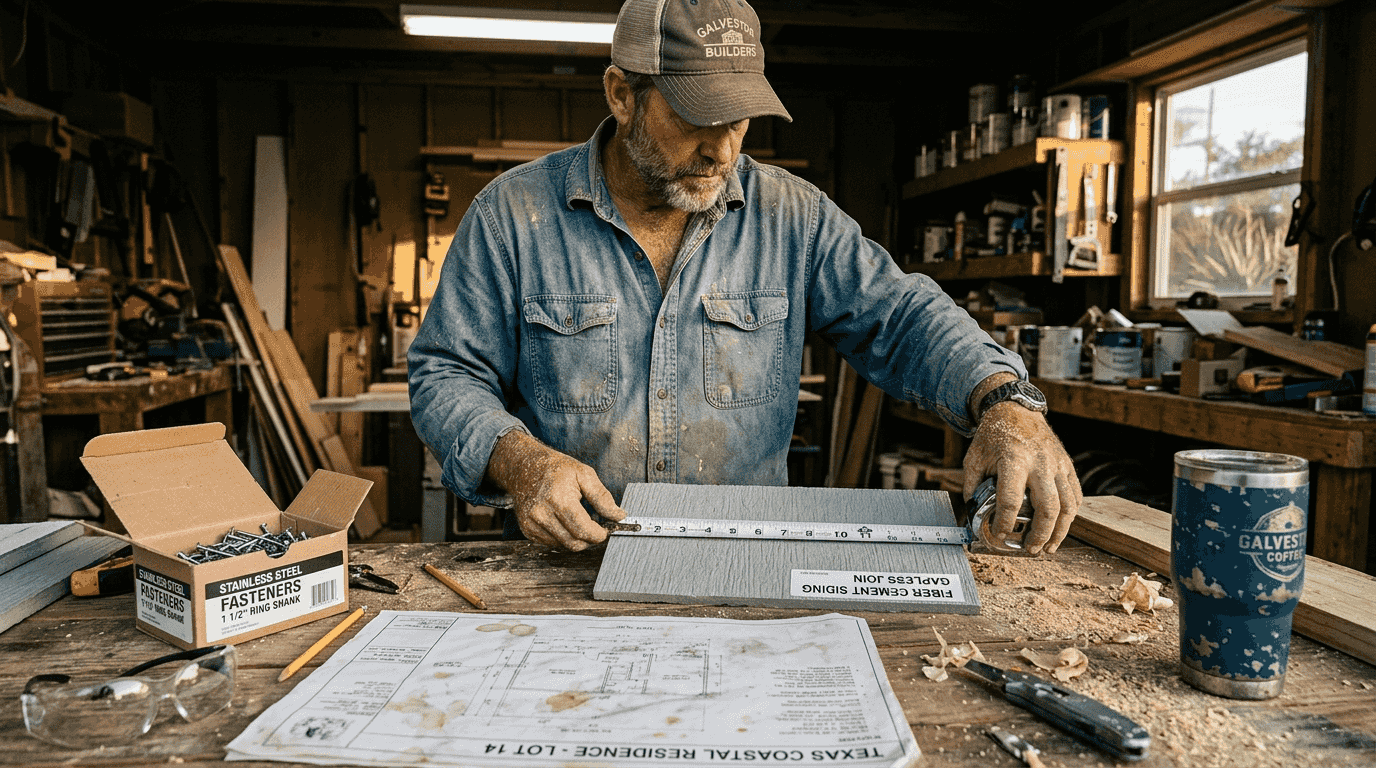
Fiber cement’s composition of cement, sand, and cellulose fibers creates a non-combustible barrier that won’t warp in humidity or crack from temperature fluctuations. The material accepts paint exceptionally well, maintaining color integrity for 15-20 years between repainting versus vinyl’s tendency to fade within 5-7 years in coastal UV exposure. Hurricane-prone regions particularly value fiber cement’s impact resistance, which prevents the punctures and tears that leave vinyl-clad homes vulnerable to water intrusion during storms.
Roofing materials face even more extreme conditions than siding. Impact-resistant shingles rated Class 4 withstand hail and wind-driven debris that destroy standard three-tab shingles. Metal roofing offers superior wind resistance, with properly installed systems rated for winds exceeding 140 mph. The comparison reveals significant performance differences:
| Material | Lifespan | Wind Rating | Salt Resistance | Cost per Sq Ft |
|---|---|---|---|---|
| Standard Asphalt Shingles | 15-20 years | 60-90 mph | Poor | $3-5 |
| Impact-Resistant Shingles | 25-30 years | 110-130 mph | Good | $5-8 |
| Metal Roofing | 40-70 years | 140+ mph | Excellent | $8-14 |
| Fiber Cement Siding | 40-50 years | High impact | Excellent | $9-14 |
| Vinyl Siding | 20-40 years | Moderate | Fair | $5-8 |
Corrosion-resistant hardware extends these benefits throughout the structure. Stainless steel or coated fasteners prevent the rust that causes standard nails and screws to fail, allowing siding panels to detach or roofing to lift during storms. Marine-grade caulks and sealants maintain flexibility in temperature extremes while resisting UV breakdown that causes standard products to crack and leak within 2-3 years.
Pro Tip: When selecting types siding materials coastal Texas homes 2026 require, request samples that have undergone accelerated salt spray testing to verify coastal durability claims.
The roof materials you choose should align with your home’s architectural style while meeting stringent performance requirements. Standing seam metal roofing offers the longest lifespan and best wind resistance but requires professional installation to achieve proper fastening and sealing. Impact-resistant architectural shingles provide a middle ground, delivering enhanced protection at moderate cost while maintaining traditional aesthetics.
Color selection affects more than appearance in coastal environments. Lighter colors reflect solar radiation, reducing cooling costs and extending material lifespan by minimizing thermal cycling stress. Dark colors absorb heat, accelerating degradation of underlying materials and increasing interior temperatures. Understanding how exterior siding home protection integrates with roofing, windows, and structural elements helps you create a comprehensive defense system rather than isolated upgrades.
Structural techniques to protect against hurricanes and moisture intrusion
Material quality means nothing without proper installation and structural reinforcement. Hurricane resistant home design incorporates elevated foundations, wind-resistant framing with hurricane clips, sealed roof decks, proper flashing, and drainage systems that prevent moisture intrusion and structural failure during extreme weather events. Each technique addresses specific failure modes observed in coastal storms.
Elevated foundations raise living spaces above storm surge levels, preventing flood damage that destroys ground-level homes. Pier and beam construction allows water to flow beneath structures rather than accumulating inside walls and floors. The elevation also improves ventilation, reducing humidity-related damage in crawl spaces. Building codes in many Texas coastal areas now mandate minimum elevation heights based on flood zone maps, but exceeding these minimums provides additional protection as sea levels rise.
Wind-resistant framing transforms standard construction into hurricane-proof structures:
- Hurricane clips connect roof trusses to wall plates with metal straps rated for specific wind loads
- Continuous load paths transfer wind forces from roof through walls to foundation without weak points
- Reinforced wall sheathing uses structural panels rather than standard boards to resist racking
- Ring shank nails penetrate framing members deeper and resist withdrawal better than smooth nails
- Sealed roof decks apply adhesive under shingles to prevent wind-driven rain penetration
Proper flashing installation prevents the water intrusion that causes most long-term structural damage. Window and door openings require integrated flashing systems that overlap in specific sequences, creating drainage planes that channel water outward. Many contractors skip these details, leading to hidden moisture damage that appears years after installation. Step flashing at roof-wall intersections and drip edges at roof perimeters direct water away from vulnerable areas.
Pro Tip: Verify that your contractor follows proper siding installation coastal Texas homes protocols, including back-wrapping corners and maintaining proper expansion gaps that prevent buckling in humidity.
Drainage systems complete the moisture protection strategy. French drains around foundations intercept groundwater before it saturates soil and creates hydrostatic pressure against basement walls. Gutters and downspouts sized for intense coastal rainfall prevent overflow that saturates siding and foundation plantings. Grading that slopes away from structures ensures surface water flows to drainage areas rather than pooling against exterior walls.
“The difference between a home that survives a hurricane and one that suffers catastrophic damage often comes down to these hidden structural details that most homeowners never see.”
Timing upgrades strategically maximizes benefits. Why summer is the best time for exterior upgrades relates to optimal curing conditions for sealants and adhesives, plus the ability to complete work before hurricane season peaks. Scheduling major projects during dry periods prevents moisture from becoming trapped in wall assemblies during construction.
Financial benefits: insurance savings and ROI from exterior upgrades
Exterior upgrades deliver measurable financial returns that extend far beyond avoided repair costs. Insurance discounts on wind premiums range from 10-35% with FORTIFIED certification, and Texas insurers offer approximately 24% savings that translate to $400-$1,200 annually for typical coastal homeowners. These reductions continue year after year, creating cumulative savings that often exceed upgrade costs within 7-10 years.
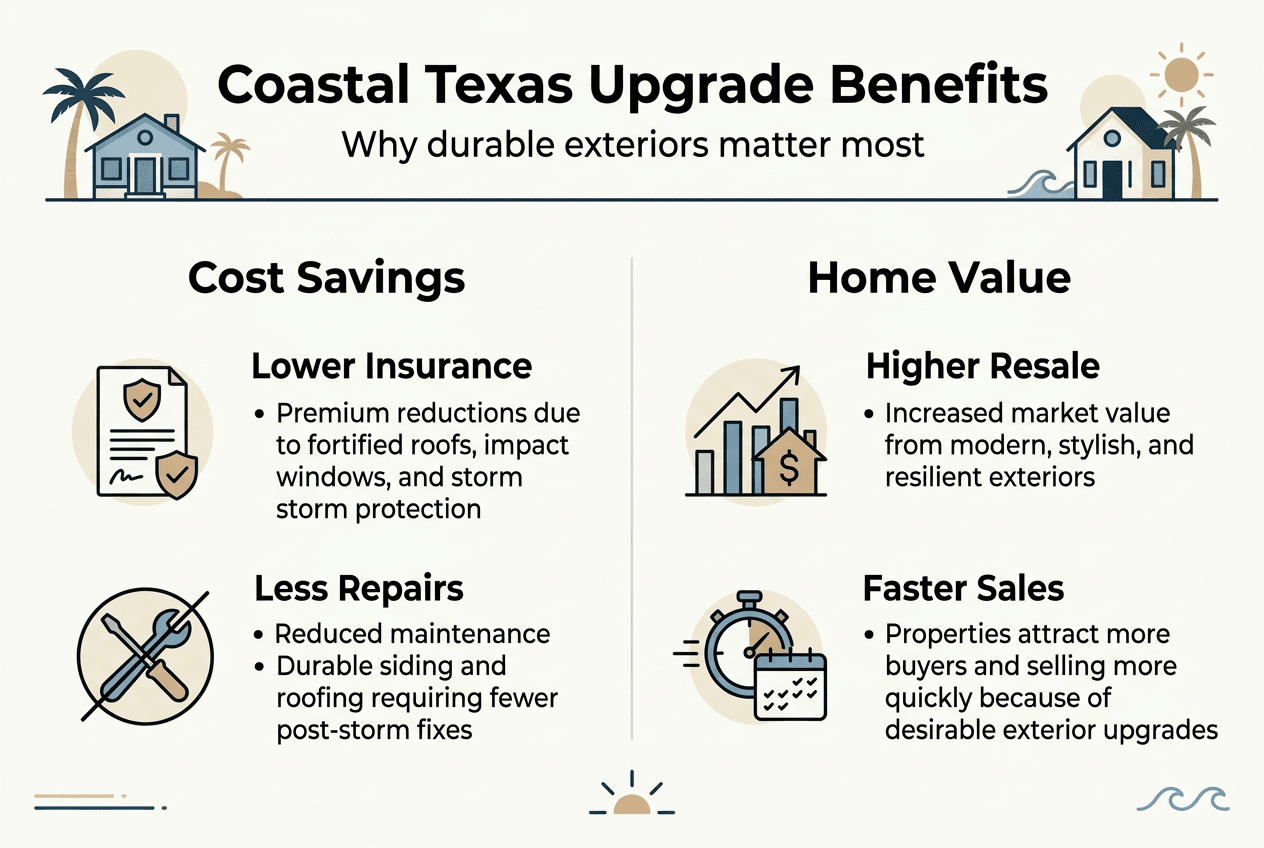
FORTIFIED certification requires specific construction standards verified by independent inspectors. The program focuses on roof integrity, sealed roof decks, and proper attachment methods that reduce hurricane damage by approximately 20% compared to standard construction. Insurance companies recognize this reduced risk with premium discounts that make certification financially attractive even without considering other benefits.
Resale value increases provide additional returns. Exterior upgrades recoup investment exceptionally well in Texas markets:
| Upgrade Type | Average Cost | Resale Value Added | ROI Percentage |
|---|---|---|---|
| Fiber Cement Siding | $15,000-25,000 | $12,000-22,000 | 75-90% |
| Impact-Resistant Roofing | $12,000-20,000 | $10,000-18,000 | 80-95% |
| Hurricane-Rated Windows | $8,000-15,000 | $7,000-13,000 | 85-90% |
| Stone Veneer Accents | $8,000-12,000 | $16,000-24,000 | 180-210% |
ROI high for exteriors continues beyond these immediate returns. Homes with upgraded exteriors sell faster in competitive markets because buyers recognize reduced maintenance requirements and lower insurance costs. Curb appeal improvements from fresh siding and modern roofing materials attract more potential buyers and support higher asking prices.
Reduced maintenance costs compound these benefits. Fiber cement siding requires repainting every 15-20 years versus vinyl’s replacement every 20-30 years. Metal roofing eliminates the 15-20 year replacement cycle that asphalt shingles demand. Hurricane-rated windows and doors prevent the frequent repairs that standard products require after each storm season. Over a 30-year ownership period, these avoided costs often exceed the initial upgrade investment.
Energy efficiency improvements reduce utility bills. Properly installed siding with continuous insulation reduces air infiltration that accounts for 25-40% of cooling costs in coastal homes. Reflective roofing materials lower attic temperatures by 20-30 degrees, decreasing air conditioning loads and extending HVAC system lifespan. These operational savings begin immediately and continue throughout the materials’ service life.
Understanding what is exterior renovation Texas homeowners prioritize helps focus investments on upgrades that deliver maximum returns. Not all improvements provide equal value. Focusing on weather protection, structural integrity, and curb appeal ensures that every dollar spent contributes to multiple benefit categories. Learning why exterior renovations matter coastal Texas homes face reveals how these investments protect your largest financial asset while improving daily comfort and long-term security.
Explore professional exterior upgrades tailored to coastal Texas homes
Transforming your coastal home’s exterior requires expertise that goes beyond standard construction practices. Buffalo Roofing & Exteriors specializes in the durable materials and proven techniques that protect Texas coastal properties from salt air, hurricanes, and relentless humidity. Our team guides you through selecting fiber cement siding, impact-resistant roofing, and corrosion-resistant components that deliver decades of reliable performance.
Professional installation ensures proper weatherproofing, structural reinforcement, and drainage integration that DIY approaches and inexperienced contractors consistently miss. We understand the specific challenges coastal homes face and implement solutions that address both immediate vulnerabilities and long-term durability. Our exteriors services encompass comprehensive upgrades that boost your home’s resilience, curb appeal, and market value while reducing insurance costs and maintenance requirements. Discover how weather resistant roofing Texas homes benefit from transforms protection and aesthetics. Explore types siding materials coastal Texas homes 2026 standards demand to make informed decisions about your investment.
FAQ
How long do fiber cement siding materials last in coastal Texas?
Fiber cement siding lasts 40-50 years in coastal Texas environments, significantly outperforming vinyl siding’s 20-40 year lifespan. The material resists salt corrosion, impact damage, and UV degradation that destroy standard products. Proper installation with corrosion-resistant fasteners and marine-grade sealants ensures the full lifespan potential. Hurricane-prone regions particularly value this longevity because it eliminates replacement cycles during the home’s most vulnerable decades.
What structural upgrades help protect against hurricane damage on Texas coast?
Important hurricane-resistant construction includes elevated foundations that prevent flood damage, wind-resistant framing with hurricane clips connecting roof to walls, sealed roof decks stopping water penetration, proper flashing systems around all openings, and effective drainage preventing moisture accumulation. These techniques work together to create redundant protection so single-point failures don’t compromise the entire structure. Professional installation ensures each component integrates properly with others to achieve rated wind resistance.
Can upgrading home exteriors reduce my insurance premiums in Texas?
Insurance discounts on wind premiums range from 10-35% with FORTIFIED certification, and Texas insurers typically offer approximately 24% savings on windstorm coverage. These reductions translate to $400-$1,200 in annual savings for most coastal homeowners. The certification requires specific construction standards verified by independent inspectors, focusing on roof integrity and proper attachment methods. Savings continue year after year, often recouping upgrade costs within 7-10 years through premium reductions alone.
What are common mistakes to avoid when upgrading exteriors in coastal areas?
Avoid cheap materials that fail within 3 years, causing replacement costs that far exceed quality product investments. Delaying material selection until construction starts creates supply delays and forces compromise choices. Hiring inexperienced contractors saves money initially but leads to improper installation that negates material benefits. Skipping proper flashing, drainage integration, or corrosion-resistant fasteners creates hidden vulnerabilities that appear years later as expensive structural damage requiring comprehensive remediation.