As you prepare your home for storm season, understanding key prevention strategies is critical. Coastal Texas homeowners face relentless threats from hurricanes, tropical storms, and severe weather that can devastate roofs and exteriors in minutes. The good news is that implementing proven storm damage prevention measures dramatically reduces repair costs and extends your home’s lifespan. This article delivers research-backed, actionable tips specifically designed for Texas coastal conditions, helping you fortify your property against nature’s fury while potentially lowering insurance premiums and protecting your investment for years to come.
Table of Contents
- Understanding Fortified Roofing Standards For Coastal Homes
- Maintain Your Home Exterior To Minimize Storm Damage Risks
- Reinforce Windows, Doors, And Foundations For Comprehensive Protection
- Selecting And Maintaining Roof Types For Optimal Wind Resistance
- Protect Your Coastal Texas Home With Expert Roofing And Exterior Services
- Frequently Asked Questions
Key takeaways
| Point | Details |
|---|---|
| Fortified roofing cuts claims | FORTIFIED certification reduces storm damage claims by 73% and qualifies for insurance discounts. |
| Regular maintenance prevents damage | Clearing gutters and trimming trees minimizes roof punctures and water intrusion during storms. |
| Impact-resistant features protect | Upgrading windows, doors, and siding to impact-resistant materials enhances wind and debris protection. |
| Texas codes drive resilience | Windstorm inspections and building codes in coastal counties promote stronger construction standards. |
| Proper drainage stops flooding | Grading yards away from foundations and installing French drains prevents costly water damage. |
Understanding fortified roofing standards for coastal homes
FORTIFIED roofing represents the gold standard for storm protection in coastal Texas. This certification program requires specific construction methods that dramatically improve your roof’s ability to withstand hurricane-force winds and flying debris. The core elements include hurricane clips or straps that anchor your roof structure to wall frames, preventing the catastrophic uplift that tears roofs off during intense storms.
Sealed roof decks with waterproof underlayment create a secondary barrier against water intrusion when shingles fail. This layer protects your home’s interior even if surface materials get damaged. Impact-resistant Class 4 shingles or metal roofing systems can resist winds exceeding 130 mph, providing the durability coastal properties desperately need.
The financial benefits are compelling. FORTIFIED roofing reduces claims by 73% according to recent studies, and Texas insurance companies offer substantial discounts for homes meeting these standards. While the upfront investment runs higher than conventional roofing, you recoup costs through lower premiums and avoided repair expenses over time.
Consider these FORTIFIED roofing essentials:
- Hurricane clips connecting roof trusses to wall plates
- Sealed roof deck with adhesive underlayment
- Impact-resistant shingles rated Class 4 or metal roofing
- Enhanced edge protection with starter strips
- Proper attic ventilation to prevent moisture buildup
Pro Tip: Schedule a windstorm certification inspection to document your roof’s storm readiness and unlock insurance savings before the next storm season arrives.
Maintain your home exterior to minimize storm damage risks
Regular exterior maintenance forms your first line of defense against storm damage. Simple actions performed consistently throughout the year prevent minor vulnerabilities from becoming catastrophic failures when severe weather strikes. Start by clearing gutters and downspouts at least twice yearly, removing leaves, twigs, and debris that cause water backup and roof edge deterioration.
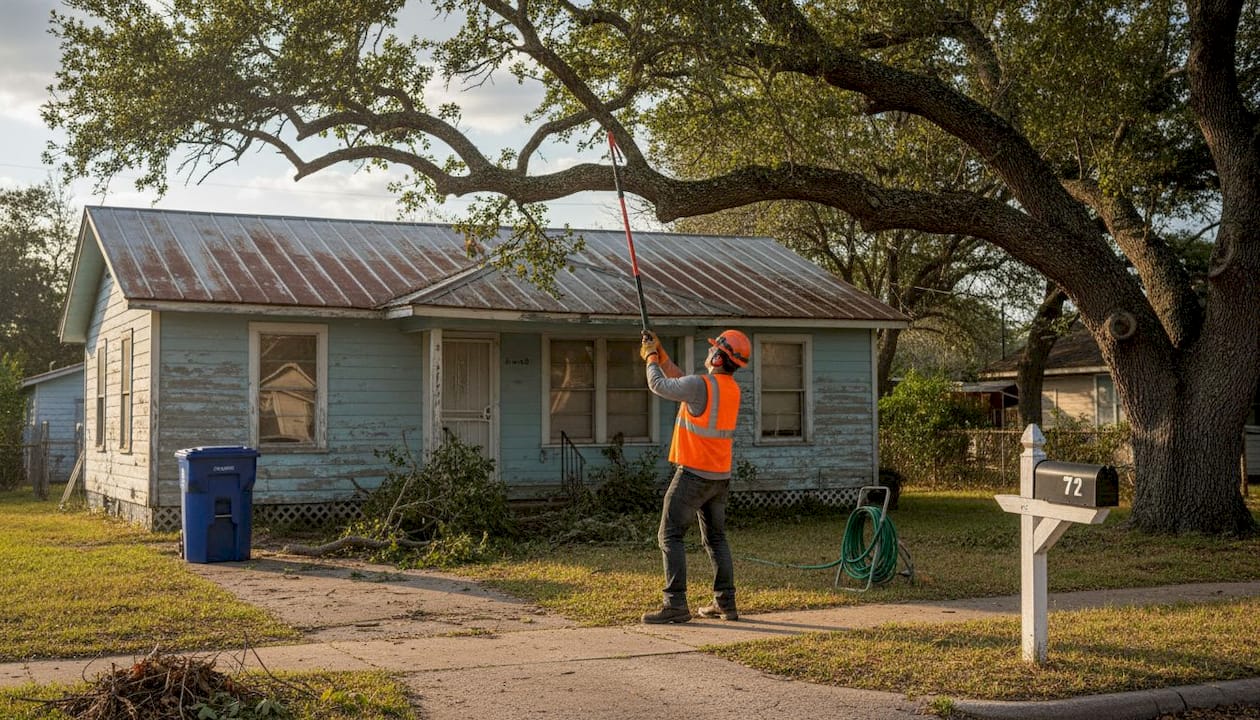
Tree maintenance deserves serious attention in coastal areas. Tree limbs cause frequent roof punctures during Texas storms, transforming nearby vegetation into dangerous projectiles. Trim branches extending within 10 feet of your roof, removing dead limbs and weak growth that could break loose in high winds. Focus especially on large trees with overhanging canopies that could crash through your roof structure.
Securing loose yard items prevents them from becoming missiles during storms. Store patio furniture, grills, planters, and decorative items in your garage or shed when severe weather approaches. Anchor permanent fixtures like sheds and playsets with ground anchors or concrete footings.
Establish a roof maintenance workflow that includes these critical tasks:
- Inspect flashing around chimneys, vents, and skylights quarterly
- Check for loose, cracked, or missing shingles after each storm
- Clean debris from roof valleys where water concentrates
- Examine soffit and fascia boards for rot or pest damage
- Test attic ventilation systems for proper airflow
Research shows maintenance extends roof life by up to 50%, making it one of the most cost-effective storm prevention strategies available. A siding maintenance guide 2026 approach applies the same proactive philosophy to your exterior walls, addressing small issues before they escalate.
Pro Tip: Create a pre-storm checklist you can execute in 2 hours when tropical systems form in the Gulf, ensuring you never scramble at the last minute.
Reinforce windows, doors, and foundations for comprehensive protection
Windows and doors represent critical weak points in your home’s storm defense system. Standard glass shatters easily under debris impact, allowing wind and rain to enter and pressurize your home’s interior, which can literally blow your roof off from the inside. Installing impact-resistant windows and doors rated for high winds creates a protective barrier that maintains structural integrity during hurricanes.
Impact-resistant products use laminated glass with a polymer interlayer that holds fragments together even when cracked. Look for products rated for wind speeds matching your area’s design requirements, typically 130-150 mph for coastal Texas. Hurricane shutters provide an affordable alternative, offering removable protection you deploy when storms threaten.
Exterior siding material selection matters tremendously for storm resilience. Proper drainage and elevated features reduce flood damage while impact-resistant exteriors improve wind performance. Fiber cement siding resists rot, fire, and impact better than vinyl or wood, maintaining its protective function through multiple storm seasons. Brick veneer offers even greater durability but costs significantly more.
Foundation and drainage improvements prevent the water damage that often exceeds wind damage costs. Grade your yard to slope away from your foundation at least 6 inches over the first 10 feet, directing water away from your home. Install French drains around the perimeter if you experience standing water or basement seepage.
Consider these exterior renovation texas upgrades:
- Impact-resistant windows with laminated glass
- Reinforced entry doors with multi-point locking systems
- Fiber cement or brick siding for superior durability
- French drain systems with perforated pipe and gravel
- Elevated HVAC units above projected flood levels
| Feature | Standard Option | Storm-Resistant Upgrade | Benefit |
|---|---|---|---|
| Windows | Single-pane glass | Impact-resistant laminated | Prevents shattering and interior pressurization |
| Doors | Hollow core | Solid core with reinforced frame | Resists wind pressure and debris impact |
| Siding | Vinyl | Fiber cement or brick | Withstands high winds and flying debris |
| Drainage | Basic gutters | French drains plus sump pump | Manages heavy rainfall and prevents flooding |
Explore comprehensive exteriors solutions that address multiple vulnerability points simultaneously, creating a coordinated defense system rather than piecemeal improvements.
Selecting and maintaining roof types for optimal wind resistance
Roof geometry dramatically affects wind performance during storms. Hip roofs, with slopes on all four sides, resist wind uplift better than gable roofs because they lack large flat surfaces for wind to push against. The aerodynamic shape deflects wind over and around the structure rather than catching it like a sail. If you’re building new or replacing your roof, choosing a hip design provides inherent storm advantages.
Material selection matters just as much as shape. Metal roofs withstand winds up to 130 mph and last 40-70 years compared to 15-30 years for asphalt shingles. Metal’s interlocking panel design and mechanical fastening system resist uplift forces that peel away individual shingles. Standing seam metal roofs perform best, though they cost 2-3 times more than quality asphalt installations.
Asphalt shingles older than 10 years become increasingly vulnerable to storm failure as adhesive strips deteriorate and granules wash away. The sun’s UV radiation and thermal cycling weaken the material over time, making older roofs prime candidates for replacement before major storms arrive. If your shingles show curling, cracking, or significant granule loss, prioritize replacement over minor repairs.
Edge sealing around roof perimeters prevents uplift initiation during high winds. Wind forces are strongest at roof edges and corners where air accelerates around the structure. Installing starter strips with enhanced adhesive and sealing the first three feet of roof edge with ice and water shield creates a protective barrier against the peeling action that starts roof failures.
| Roof Type | Wind Resistance | Lifespan | Cost Factor | Best For |
|---|---|---|---|---|
| Hip roof with metal | Excellent (130+ mph) | 50-70 years | High | Maximum protection, long-term value |
| Hip roof with Class 4 shingles | Very good (110-130 mph) | 25-30 years | Medium | Balanced cost and performance |
| Gable roof with metal | Good (120+ mph) | 50-70 years | High | Existing gable homes needing upgrade |
| Gable roof with standard shingles | Fair (90-110 mph) | 15-25 years | Low | Budget-conscious, lower risk areas |
Annual inspections before storm season detect early issues while they’re still manageable. Look for these warning signs:
- Loose or missing shingles exposing underlayment
- Damaged flashing around penetrations
- Sagging sections indicating structural problems
- Granule accumulation in gutters from shingle deterioration
- Daylight visible through roof boards from inside attic
Explore different roof materials to understand which options best match your budget, aesthetic preferences, and storm protection needs. Even flat roof options can achieve excellent wind resistance with proper membrane selection and attachment methods.
Pro Tip: Document your roof’s condition with photos before each storm season, creating a visual record that supports insurance claims if damage occurs and helps you track deterioration over time.
Protect your coastal Texas home with expert roofing and exterior services
Implementing these storm damage prevention strategies requires expertise and quality materials to achieve lasting protection. Buffalo Roofing & Exteriors specializes in weather-resistant roofing texas homes need, installing fortified roofing systems designed specifically for coastal conditions. Our team understands the unique challenges Gulf Coast weather presents and delivers solutions that withstand repeated storm seasons.
Comprehensive exteriors services address every vulnerability point from roof to foundation, including impact-resistant windows, durable siding, and proper drainage systems. When storms do cause damage, prompt storm damage restoration texas homes services minimize further deterioration and get your property secured quickly. Contact us to schedule a storm readiness assessment and protect your investment before the next severe weather event arrives.
Frequently asked questions
How often should I inspect my roof for storm damage risk?
Inspect annually before storm season, especially if your shingles are over 10 years old or after any severe weather event. Schedule professional inspections every 3-5 years to catch issues invisible from ground level. A thorough roof maintenance workflow includes checking flashing, underlayment exposure, and structural integrity beyond just surface shingles.
What are the most cost-effective storm damage prevention upgrades?
FORTIFIED roofing upgrades provide strong returns through insurance discounts and damage reduction, often paying for themselves within 10-15 years. Regular maintenance like gutter cleaning, tree trimming, and minor repairs costs little but prevents expensive failures. Review smart tips for storm damage repair to prioritize investments that deliver maximum protection per dollar spent.
How do Texas building codes affect storm damage prevention requirements?
Post-2003 IRC code adoption significantly improved hurricane damage outcomes across Texas. First-tier coastal counties require TDI windstorm inspections following IRC and IBC standards for TWIA insurance eligibility, ensuring minimum construction quality. Upgrading beyond minimum code requirements offers added protection and potential insurance discounts. Schedule windstorm certification services to verify compliance and document your home’s storm readiness.
Can landscaping choices really impact storm damage risk?
Absolutely. Strategic landscaping reduces wind speed around your home and prevents debris damage. Plant native, wind-resistant species with strong root systems rather than shallow-rooted trees prone to toppling. Maintain 10-foot clearances between large trees and structures, and remove dead or diseased trees that could fall during storms. Low-growing shrubs near foundations actually help by reducing wind turbulence at ground level.
What should I do immediately after a storm passes?
Document all damage with photos and videos before making temporary repairs to prevent further deterioration. Contact your insurance company within 24-48 hours to start the claims process. Cover exposed areas with tarps secured properly to prevent additional water intrusion. Avoid walking on damaged roofs, as structural integrity may be compromised. Professional assessment identifies hidden damage that could worsen if left unaddressed.