TL;DR:
- Metal roofs suffer significantly less damage than shingles during hurricanes with about 12% damage versus 50%. They offer superior wind resistance, corrosion durability, and can last 40 to 70 years in coastal environments. Properly coated aluminum or steel roofs provide long-term savings, energy efficiency, and storm protection.
When a hurricane tears through a Texas coastal neighborhood, the difference between a metal roof and asphalt shingles can mean the difference between walking back into your home and filing a total loss claim. Post-Hurricane Ian research found that metal roofs suffered roughly 12% damage compared to nearly 50% for shingle roofs under the same wind conditions. That gap is enormous. If you live along the Gulf Coast, from Corpus Christi to Victoria, your roof faces salt air, intense heat, and storm seasons that shorten the life of ordinary materials fast. This guide breaks down exactly why metal roofing earns its reputation, and what you need to know before making a decision.
Table of Contents
- Metal roofs versus traditional shingles: Durability in coastal storms
- Energy efficiency and home comfort: How metal roofs save you money
- Maintenance, longevity, and costs over time
- Choosing the right metal roof for your Texas coastal home
- Our take: Why the conventional wisdom about coastal roofs is outdated
- Protect your home with expert-installed metal roofing
- Frequently asked questions
Key Takeaways
| Point | Details |
|---|---|
| Superior storm protection | Metal roofs dramatically outlast shingles in hurricane and high-wind conditions. |
| Lower energy bills | Cool roof coatings and metal’s reflectivity keep Texas homes cooler and more efficient. |
| Long-term value | Properly chosen metal roofing lasts decades with minimal maintenance, saving money over time. |
| Coastal-friendly choices | Aluminum and quality coatings prevent rust and maintain performance in salty environments. |
Metal roofs versus traditional shingles: Durability in coastal storms
Let’s start by examining how metal roofing stacks up against standard options in a coastal storm.
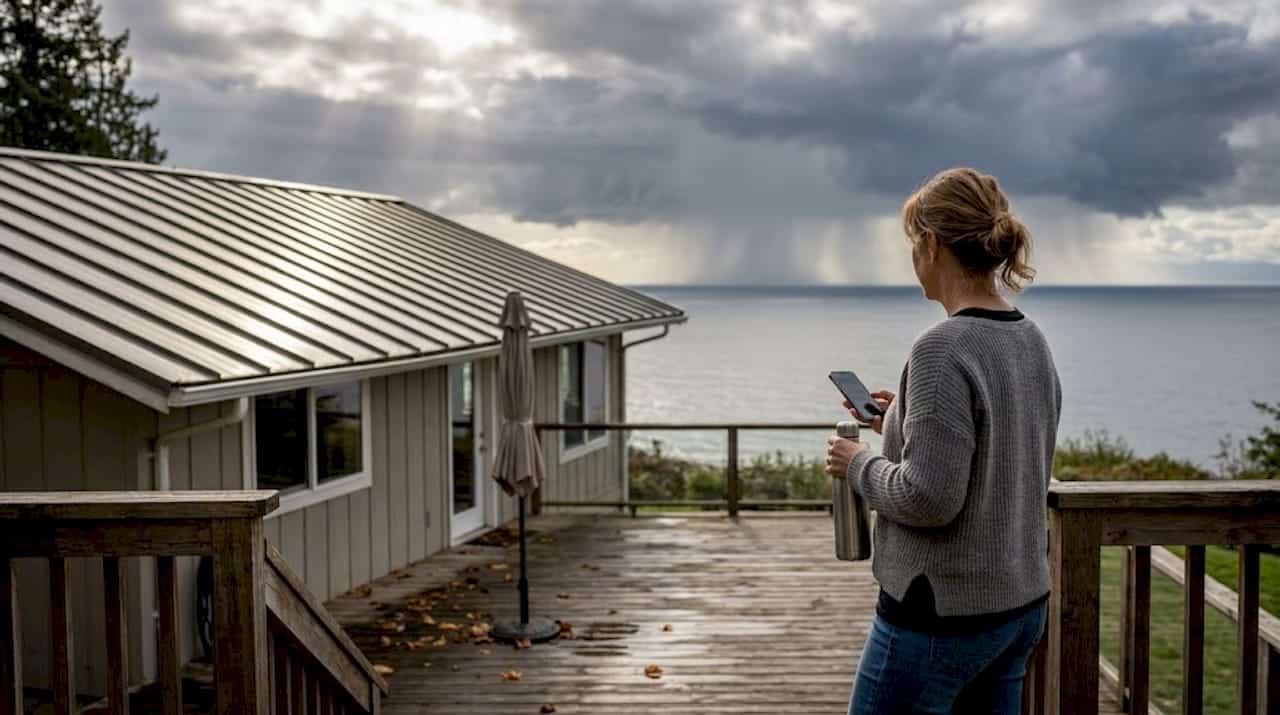
Texas coastal homeowners deal with a specific set of threats that inland properties simply do not face at the same intensity. High-speed hurricane winds, flying debris, heavy rain, and relentless salt air create conditions that wear down roofing materials faster than anywhere else in the state. Choosing the right storm-ready roof materials is not just a financial decision. It is a safety decision.
Asphalt shingles are the most common roofing material in the U.S., but they have real weaknesses in coastal environments. Salt air accelerates granule loss, which strips away the shingle’s protective layer. Wind uplift peels shingles from the edges inward, and once water gets under even one lifted tab, you have a leak. Shingles also have many seams, and each seam is a potential entry point for water during a storm.
Metal roofing addresses these vulnerabilities directly. Standing seam metal panels lock together along concealed fastener seams, which dramatically reduces wind uplift risk. Fewer exposed seams mean fewer places for water to penetrate. The panels themselves are rigid and do not curl, crack, or lose granules the way shingles do.
| Feature | Metal roofing | Asphalt shingles |
|---|---|---|
| Hurricane damage rate | ~12% | ~50% |
| Wind resistance rating | Up to 140+ mph | 60–130 mph (varies) |
| Salt air resistance | High (aluminum/coated) | Low to moderate |
| Seam exposure | Minimal | Many |
| Lifespan in coastal areas | 40–70 years | 15–25 years |
The ~12% vs 50% damage rate comparison from post-Hurricane Ian data is striking, but it makes sense when you understand the mechanics. Metal panels distribute wind load across a larger surface area. They do not rely on adhesive strips or nails through exposed tabs the way shingles do.
Common storm threats along the Texas Gulf Coast include:
- Category 1 to 4 hurricane winds ranging from 74 to 156 mph
- Windborne debris from trees, signs, and neighboring structures
- Storm surge and driving rain that exploits any gap in roofing
- Hail that dents softer materials and breaks shingle granules
- Rapid pressure changes that create suction forces on roof panels
For a deeper look at how different materials hold up near the water, the guide on roofing materials for coastal properties covers the full picture.
Energy efficiency and home comfort: How metal roofs save you money
Storm resilience is just one part of the value. Let’s look at how metal roofs help with Texas heat and energy costs.
Texas summers are brutal. Corpus Christi regularly sees temperatures above 95°F, and a dark asphalt shingle roof can absorb so much heat that attic temperatures climb past 150°F. That heat radiates into your living space and forces your air conditioner to work overtime. Metal roofing changes that equation significantly.
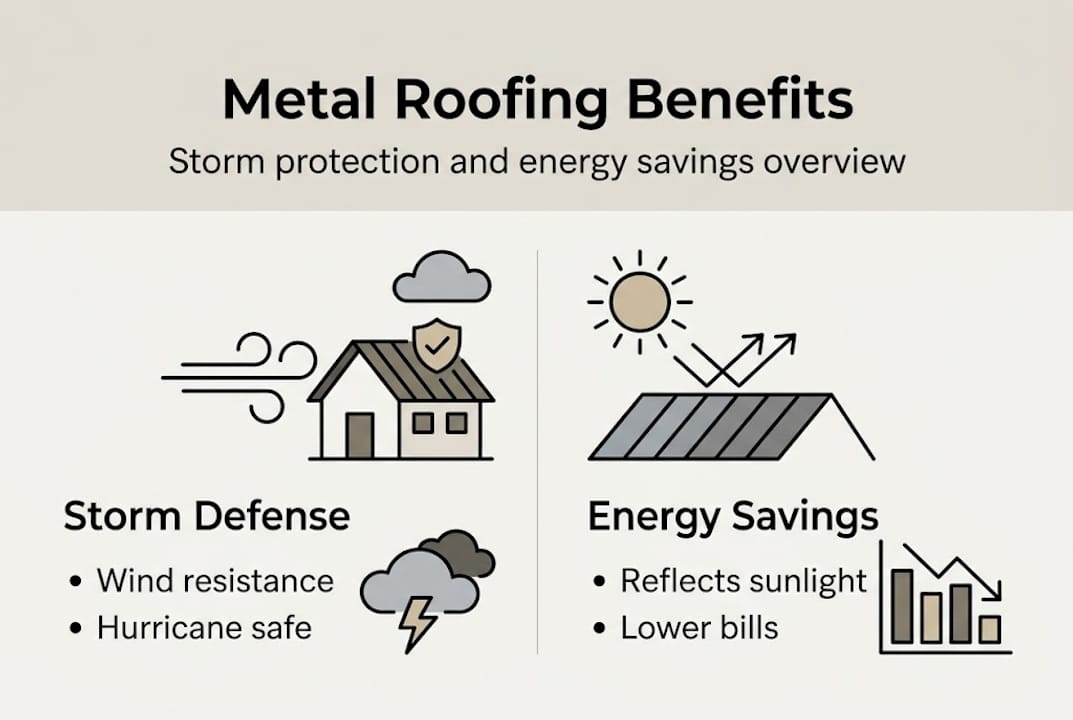
Metal roofs reflect solar radiation rather than absorbing it. A coated metal roof can reflect 70% or more of incoming solar energy, compared to roughly 5–15% for standard dark asphalt shingles. That reflectivity directly reduces the heat load on your home.
“A properly coated metal roof is not just a roof. It is an active part of your home’s cooling system.”
The coating matters enormously. PVDF (polyvinylidene fluoride) coatings, often sold under the brand name Kynar, are the gold standard for metal roofing in coastal environments. These coatings retain 95% reflective power over time, meaning your energy savings do not fade as the roof ages. Aluminum panels with these coatings also resist the rust and corrosion that salt air causes, making them ideal for homes near the Gulf.
| Roofing type | Solar reflectance | Estimated cooling savings |
|---|---|---|
| Dark asphalt shingles | 5–15% | Baseline |
| Light asphalt shingles | 25–35% | 5–10% reduction |
| Coated metal roof | 65–75%+ | 15–25% reduction |
Pro Tip: Pairing a new metal roof with upgraded attic insulation gives you a compounding benefit. The metal reflects heat from above while the insulation blocks what little does get through. Many homeowners see their summer cooling bills drop noticeably within the first full season.
For homeowners focused on building weather-resistant exteriors, energy efficiency and storm protection go hand in hand. A roof that keeps your home cooler also tends to be built from materials that hold up better in extreme conditions.
Maintenance, longevity, and costs over time
Beyond immediate performance, think about what your roof will require and cost in the decades to come.
One of the strongest arguments for metal roofing is its lifespan. A quality metal roof installed correctly can last 40 to 70 years. A standard asphalt shingle roof in a coastal Texas climate typically lasts 15 to 25 years, and often less when salt air and storm damage accelerate wear. That means you could replace shingles two or three times before a metal roof needs replacement.
Maintenance needs differ significantly between the two:
Metal roofing maintenance:
- Annual visual inspection for loose fasteners or panel movement
- Clearing debris from valleys and gutters
- Checking sealant around penetrations (vents, skylights) every few years
- Touch-up coating if surface scratches expose bare metal
Asphalt shingle maintenance:
- Replacing cracked, curled, or missing shingles after every major storm
- Treating algae and moss growth that thrives in humid coastal air
- Monitoring granule loss in gutters as an early warning sign
- Full replacement more frequently due to salt air degradation
Here are the key steps for maintaining a metal roof in a coastal environment:
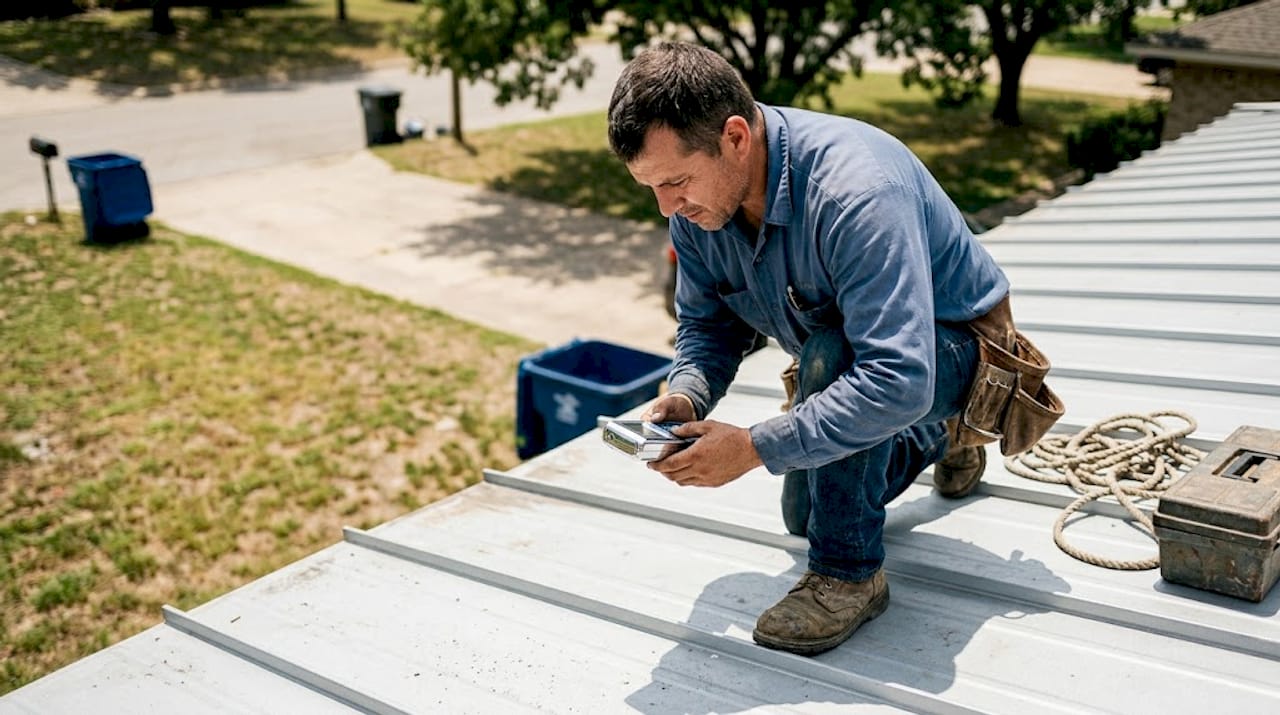
- Inspect after every storm for dents, loose panels, or compromised sealant
- Rinse the roof surface once or twice a year to remove salt deposits
- Check all penetrations including vents, chimneys, and HVAC connections
- Confirm gutters are clear so water drains away from the roof edge
- Schedule a professional inspection every three to five years
Pro Tip: Avoid basic galvanized steel panels on coastal properties. Salt air will corrode them faster than you expect. Aluminum in salt-heavy air outperforms basic steel significantly because it does not rust. If you prefer steel, insist on a high-quality PVDF coating.
For a full breakdown of how metal compares to other options in storm-prone areas, the guide on best roofing materials for storm damage and the roof materials overview are worth reading before you commit.
Choosing the right metal roof for your Texas coastal home
With the big-picture benefits in mind, let’s break down how to select the best option for your unique home.
Not all metal roofing is the same, and the differences matter a lot in a coastal environment. Here are the main options:
- Aluminum panels: The top choice for salt-air environments. Aluminum does not rust, making it ideal within a few miles of the Gulf. It costs more than basic steel but lasts far longer near the coast. Aluminum in salt-heavy air paired with reflective coatings gives you the best combination of durability and energy performance.
- Standing seam steel with PVDF coating: A strong option when properly coated. The concealed fastener design resists wind uplift, and the Kynar coating protects against corrosion and UV degradation.
- Corrugated metal panels: Lower cost but exposed fasteners can be a weak point in high-wind events. Better suited for outbuildings than primary residences in hurricane zones.
- Stone-coated steel: Combines metal’s strength with a shingle-like appearance. Heavier than standard metal panels and can be a good middle ground for homeowners concerned about aesthetics.
When choosing, weigh these factors:
- Budget: Aluminum and standing seam steel cost more up front but deliver better long-term value in coastal conditions
- Appearance: Metal roofing now comes in dozens of profiles and colors to match any architectural style
- Hurricane resistance: Look for products rated for 130 mph or higher wind speeds
- Warranty: A manufacturer’s warranty of 40 years or more signals a quality product. Installer workmanship warranties matter just as much.
- Installer experience: Coastal installations require specific knowledge about corrosion-resistant fasteners, proper underlayment, and panel attachment methods
For homeowners also concerned about impact damage from hail and debris, the hail-resistant roofing guide and the impact-resistant roofing overview explain how metal panels compare to other impact-rated options.
Our take: Why the conventional wisdom about coastal roofs is outdated
With all the facts on the table, here is what most people and even some contractors still get wrong about metal roofing in coastal Texas.
The old objections to metal roofing, that it rusts, dents too easily, or sounds like a drum in the rain, come from a time when metal roofing meant thin corrugated tin sheets held down with exposed nails. Modern metal roofing is a completely different product. Thick aluminum panels with engineered coatings and concealed fastener systems bear almost no resemblance to what your grandparents had on a barn.
The real mistake we see homeowners make is not choosing metal over shingles. It is choosing the wrong metal. A builder who installs basic galvanized steel panels on a home two blocks from the Gulf is setting that homeowner up for rust problems within five to ten years. The up-front savings disappear fast when you factor in coating failures and early replacement.
Investing in the right material from the start means fewer emergency calls after storms, better insurance rates in many cases, and genuine peace of mind during hurricane season. If you want to understand the full picture of why the right exterior choices protect your investment long-term, the article on upgrading home exteriors in coastal Texas lays it out clearly. The conventional wisdom that metal is too expensive is simply not accounting for the full cost of the alternative.
Protect your home with expert-installed metal roofing
Ready to take the next step? Here is how our coastal-focused team can help.
At Buffalo Roofing & Exteriors, we have installed metal roofing on homes across Corpus Christi, San Antonio, and Victoria. We know what salt air, Gulf storms, and Texas heat demand from a roof, and we only recommend materials and systems that hold up to those conditions. You can see our recent metal roofs to get a sense of the quality and variety of options we install.
Whether you are replacing a storm-damaged roof or planning ahead before hurricane season, our team offers free estimates and financing options to make the process straightforward. Explore our weather-resistant roofing solutions or browse the full roof materials lineup to start building your plan today.
Frequently asked questions
How does metal roofing hold up in hurricanes and high winds?
Metal roofing performs significantly better than shingles in hurricane conditions, with ~12% vs 50% damage rates recorded after Hurricane Ian. Interlocking panels and concealed fasteners reduce the wind uplift risk that causes shingle roofs to fail.
How long does a metal roof last on coastal homes?
With the right material and coating, a metal roof in a Texas coastal environment can last 40 to 70 years. PVDF coatings retain 95% reflectivity over time, and aluminum panels resist the rust that shortens the life of basic steel in salt air.
Are metal roofs more expensive than shingles?
Metal roofs do cost more up front, but the longer lifespan, lower maintenance, and energy savings typically make them less expensive over time. You may also qualify for lower homeowner’s insurance premiums with a wind-rated metal roof.
Which type of metal roof is best for salt air near the coast?
Aluminum panels or steel with PVDF/Kynar coatings are the best choices because they resist rust and maintain their reflective properties for decades, even in heavy salt-air environments.