TL;DR:
- Wind ratings determine a roof’s ability to withstand Gulf Coast hurricanes and are crucial for insurance coverage.
- Proper zone-specific design, installation, and reinforcement are essential to prevent storm-related roof failures.
- Certification and inspections are vital for code compliance, insurance discounts, and long-term storm readiness.
Not all roofs are built to handle a Texas Gulf Coast hurricane, and the difference between a roof that survives and one that fails often comes down to something most homeowners never think to ask about: wind ratings. If you live in Corpus Christi, Aransas Pass, Rockport, or anywhere along the first-tier coastal counties, your roof isn’t just a weather shield. It’s a legal requirement, an insurance document, and your first line of defense when a major storm rolls in. This guide breaks down what wind ratings actually mean, how they’re enforced, and what steps you can take to make sure your home is protected and insurable.
Table of Contents
- Why wind ratings matter in coastal Texas
- How wind ratings are determined: Codes, zones, and roof design
- Key factors: Materials, installation, and real-world performance
- Bringing your roof up to code: Steps for new and existing homes
- Beyond the numbers: Insurance, discounts, and long-term protection
- What most homeowners miss about roof wind ratings
- Get expert help for wind-rated roofing in coastal Texas
- Frequently asked questions
Key Takeaways
| Point | Details |
|---|---|
| Wind ratings are code-mandated | Homes near the Texas coast must meet strict wind ratings to qualify for insurance and prevent storm losses. |
| Installation trumps materials | Proper fasteners, edge reinforcement, and certified installation are crucial for wind resistance—not just shingle choice. |
| Insurance ties to compliance | Insurance discounts and eligibility hinge on meeting or exceeding local wind code standards, so documentation matters. |
| Focus on system, not part | A wind-rated roof means every component and connection—especially at edges and corners—works together against storms. |
Why wind ratings matter in coastal Texas
Texas coastal homeowners face wind risks that most of the country simply doesn’t deal with. A summer thunderstorm in Dallas is nothing like a Category 3 hurricane making landfall near Port Aransas. That difference is exactly why the state created a separate regulatory framework for coastal roofing.
The 14 first-tier coastal counties, running from Aransas to Willacy, require compliance with the Texas Department of Insurance (TDI) Windstorm Inspection Program. To qualify for Texas Windstorm Insurance Association (TWIA) coverage, your roof must earn a WPI-8 certificate, which confirms it was built to meet 2021 IBC and ASCE 7-16 standards. In the High Velocity Hurricane Zone (HVHZ), defined as within one mile of the Gulf, design wind speeds range from 120 to 160 mph.
Here’s what surprises most homeowners: a brand-new roof does not automatically earn a WPI-8. The materials, installation methods, and structural connections must all meet specific standards before a TDI-certified inspector will sign off. If your contractor skips steps or uses the wrong fastener pattern, your roof can fail inspection even if it looks perfect from the street.
Common misconceptions worth clearing up:
- “My roof is new, so it’s covered.” Not true. Age doesn’t determine compliance. Code compliance does.
- “Any licensed roofer knows the coastal requirements.” Unfortunately, not all contractors are familiar with TDI windstorm rules.
- “Standard homeowner’s insurance covers wind damage.” In coastal Texas, most carriers exclude windstorm. That’s what TWIA is for.
Proactive storm damage prevention starts with understanding these requirements before a storm hits, not after. And knowing what your roofing warranties actually cover is equally important when it comes to long-term protection.
The hard truth: A roof that doesn’t meet TDI windstorm standards isn’t just a safety risk. It’s a financial liability. Without a valid WPI-8, you may be ineligible for TWIA coverage entirely, leaving you uninsured in the most storm-prone region of the state.
How wind ratings are determined: Codes, zones, and roof design
Understanding the risks leads into how wind ratings are established and enforced in building codes. Wind ratings aren’t a single number stamped on a shingle package. They’re the result of a detailed engineering process that accounts for your specific location, roof shape, building height, and more.
The foundation of this process is ASCE 7 (American Society of Civil Engineers Standard 7), the national standard for calculating structural loads. When it comes to roofs, ASCE 7 divides the surface into three pressure zones based on how wind actually behaves as it moves across a structure.
The three roof zones:
- Zone 1 (Field): The large central area of the roof. Wind pressure here is the lowest because air flows more smoothly over the middle of the surface.
- Zone 2 (Edge/Perimeter): Pressure increases significantly here due to flow separation as wind wraps around the roof’s edges.
- Zone 3 (Corner): The highest-pressure zone. Vortices form at roof corners, creating uplift forces that can be two to three times greater than what the field experiences.
This is why corner and edge failures are so common after major storms. Most homeowners assume the roof either holds or it doesn’t. In reality, the corners are under dramatically more stress than the rest of the surface.
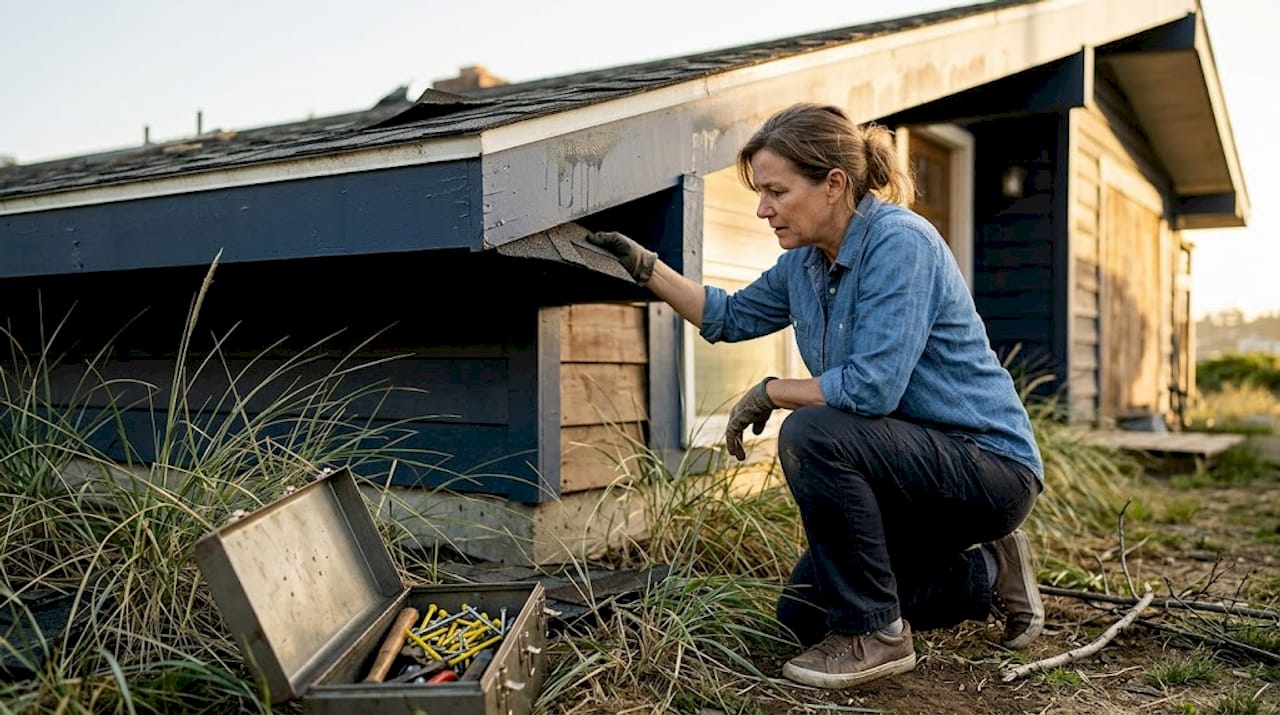
Sample design pressure comparison for a coastal Texas home:
| Zone | Location | Relative pressure | Why it matters |
|---|---|---|---|
| Zone 1 | Roof field (center) | Baseline | Standard fastener spacing applies |
| Zone 2 | Perimeter edges | 1.5x to 2x field | Requires increased fastener density |
| Zone 3 | Roof corners | 2x to 3x field | Highest failure risk, most reinforcement needed |
Beyond zones, roof geometry plays a major role. Hip roofs, which slope on all four sides, perform significantly better than gable roofs in high winds because they present less flat surface area for wind to push against. Building height and coastal exposure category (Exposure C or D for open coastal terrain) also drive up the design pressure calculations.
Pro Tip: When reviewing a roofing proposal, ask the contractor to specify which exposure category and wind zone calculations they used. If they can’t answer that question, find someone who can.
Choosing the right roof material types is only one piece of the puzzle. The zone-based design requirements must shape every decision from the start.
Key factors: Materials, installation, and real-world performance
Now that you understand roof zones, let’s see which choices and practices can keep your home safer under extreme winds. The single biggest misunderstanding in coastal roofing is treating wind resistance as a material property. It isn’t. It’s a system property.
Wind creates uplift through a pressure differential. As air speeds up over the roof surface, pressure drops on top while pressure inside the attic pushes upward. This is the same principle that lifts an airplane wing. The roof assembly must resist that upward force as a complete system, not just as individual shingles or panels.
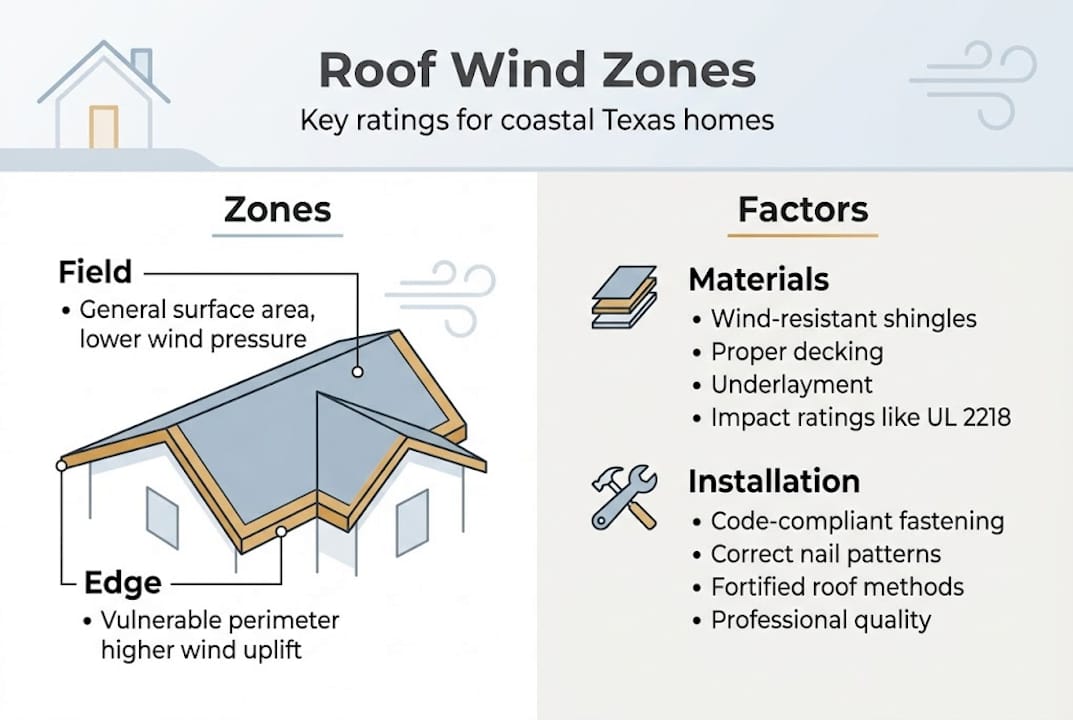
Testing standards like ASTM E330 and UL 1897 evaluate roof assemblies under static pressure loads. Dynamic testing, which simulates the fluctuating pressures of a real storm, is less common but more realistic. What both methods confirm is that installation quality determines whether a rated assembly actually performs as advertised.
In coastal Texas, nailing patterns are stricter than inland. Inland roofs may use four nails per shingle. Coastal installations require six to eight nails per shingle, with specific placement requirements near edges and corners. Hurricane clips and metal straps connecting the roof deck to the wall framing are also mandatory in many coastal applications.
Installation features that improve wind performance:
- 6-nail fastening patterns on shingles throughout the field, with increased density at perimeter zones
- Hurricane clips and H-clips connecting rafters to top plates, preventing the roof structure from lifting off the walls
- Sealed roof decks using self-adhering underlayment to prevent water intrusion if shingles are lost
- Hip roof geometry over gable ends wherever possible to reduce wind load exposure
- Reinforced ridge caps using starter strips and additional adhesive in high-wind areas
Installation upgrade impact on wind performance:
| Feature | Standard installation | Coastal-grade installation |
|---|---|---|
| Shingle nailing | 4 nails per shingle | 6-8 nails per shingle |
| Roof-to-wall connection | Toe-nailed | Hurricane clips/straps |
| Underlayment | Felt paper | Self-adhering membrane |
| Ridge cap | Standard | Reinforced with adhesive |
| Corner shingle treatment | Standard | Enhanced fastening pattern |
Pro Tip: Ask your contractor to walk you through the nail pattern they plan to use before work begins. A reputable wind-resistant roofing installer will have this documented and will welcome the question.
Bringing your roof up to code: Steps for new and existing homes
But understanding wind ratings and best practices means little unless you know what it takes to bring your roof up to code. Whether you’re building new or working with an older home, the process has clear steps.
For new construction or a full re-roof:
- Confirm your wind zone. Use the TDI’s county maps to identify your design wind speed and whether you’re in the HVHZ.
- Hire a TDI-certified contractor. Only contractors registered with the TDI Windstorm Inspection Program can perform work that qualifies for WPI-8 certification.
- Select code-compliant materials. Products must meet the applicable ASCE 7-16 and IBC standards for your zone.
- Schedule inspections at key stages. TDI inspectors must observe the work at specific points, including deck attachment and underlayment installation, before the roof is closed up.
- Obtain your WPI-8 certificate. This document is your proof of compliance and your ticket to TWIA coverage.
For existing homes, especially pre-1988 construction:
Older homes present a real challenge. Pre-1988 structures built before modern windstorm codes were adopted may need upgrades to meet current BC-10-85 standards or newer requirements before they qualify for TWIA. This often means adding hurricane clips, replacing the roof deck, and upgrading fastener patterns throughout.
Expert insight: Don’t assume a partial repair qualifies for WPI-8. TDI requires that the entire roof system meet current standards, not just the sections that were replaced. If you’re replacing 40% of your roof after storm damage, the other 60% may need to be brought up to code at the same time.
Corner and edge reinforcement should be your top priority in any upgrade project. These zones carry the highest uplift loads and are where failures almost always begin. Reinforcing them first gives you the most protection per dollar spent.
Reviewing a full exterior upgrades guide can help you plan a phased approach if you’re working through improvements over time, and understanding why homeowners upgrade home exteriors in coastal Texas gives you the broader picture of how roofing fits into overall storm readiness.
Beyond the numbers: Insurance, discounts, and long-term protection
Ensuring your roof is wind-rated isn’t just about code. It’s key for peace of mind and financial returns. A properly certified roof can directly reduce what you pay for windstorm insurance and may be the difference between having coverage at all.
TWIA offers premium discounts for homes that meet or exceed IRC and IBC wind standards. Debris-resistant openings and enhanced perimeter fastening can qualify your home for additional reductions. Over a 10 or 20-year period, those savings add up to real money.
Key insurance-related benefits of a wind-rated roof:
- TWIA eligibility for homes in the 14 first-tier coastal counties
- Premium discounts for meeting IRC/IBC compliance thresholds
- Reduced out-of-pocket risk from storm damage that a non-compliant roof would leave uncovered
- Faster claims processing when documentation is in order and the roof was built to a certified standard
One thing that catches homeowners off guard: wind ratings apply to the entire roofing assembly, not just the shingles. A shingle rated for 130 mph winds installed over an undersized deck with inadequate fasteners does not give you a 130 mph roof. The whole system must be rated and installed correctly for the certification to hold.
Pro Tip: Keep a folder with your WPI-8 certificate, contractor documentation, product data sheets, and inspection reports. When you file a claim or renew your policy, having this paperwork ready can speed up the process significantly and prevent disputes over coverage eligibility.
Investing in weather-resistant exteriors as a complete system, rather than patching individual components, is the approach that actually pays off over the long term.
What most homeowners miss about roof wind ratings
Here’s what rarely gets said when it comes to long-term, storm-proof roofing in coastal Texas. After years of working in this region, the pattern we see over and over is this: roof failures during major storms almost never come down to a material defect. They come down to zone design and installation shortcuts.
A shingle manufacturer can certify a product for 150 mph winds. But if the contractor doesn’t apply the correct fastener pattern at the corners and edges, that certification is meaningless in a real storm. Hurricane failures trace back to underestimated corner and edge uplift. Proper zoning and testing can prevent up to 90% of those failures. Yet many homeowners never ask whether their contractor addressed zone-specific requirements.
The second thing that gets overlooked is documentation. A verbal assurance from a contractor that your roof “meets code” is not the same as a WPI-8 certificate. Without that certificate, you may find yourself in a coverage dispute after a storm, at the worst possible time.
Finally, inspections after major weather events are not optional maintenance. They’re a compliance issue. A storm that doesn’t visibly damage your roof can still compromise the fastener connections and underlayment in ways that won’t show up until the next storm hits harder. Scheduling a professional inspection after any significant weather event keeps your storm-ready roof materials performing as intended and keeps your certification current.
The homeowners who come through hurricane season with the least damage and the smoothest insurance experience are the ones who treated wind ratings as a system requirement, not a marketing label.
Get expert help for wind-rated roofing in coastal Texas
Navigating TDI requirements, zone-specific design pressures, and TWIA eligibility on your own is a lot to take on. That’s where working with a contractor who specializes in coastal Texas roofing makes a real difference.
At Buffalo Roofing & Exteriors, we work with homeowners across Corpus Christi, Victoria, and San Antonio to install, inspect, and certify roofs that meet the full range of coastal wind requirements. Whether you’re building new, re-roofing after storm damage, or trying to bring an older home up to code, we know the TDI process and the specific demands of Gulf Coast weather. Our team handles everything from protecting Texas homes through proper installation to storm damage restoration after a major event. If you want to understand exactly what your project involves from start to finish, our roof installation guide walks you through the full process. Contact us for a free estimate and let’s make sure your roof is ready for whatever the Gulf throws at it.
Frequently asked questions
What is the minimum wind rating required for roofs in coastal Texas?
Most homes in the 14 first-tier coastal counties must meet design wind speeds of 120 to 160 mph, with the higher end applying to properties within one mile of the Gulf in the HVHZ.
How do I know if my roof meets the current windstorm requirements?
Look for a WPI-8 certificate issued through the TDI Windstorm Inspection Program. If you don’t have one, a certified inspector can assess your roof’s assembly compliance and identify what upgrades are needed.
Do newer, more wind-resistant roofs qualify me for insurance discounts?
Yes. Roofs that meet or exceed IRC/IBC wind standards often qualify for TWIA premium discounts, and adding debris-resistant features can increase those savings further.
What type of roof design is best for maximum wind resistance?
Hip roofs with reinforced edges and hurricane clips consistently outperform gable designs in high-wind conditions because they reduce the flat surface area exposed to direct wind pressure.