TL;DR:
- Effective weatherproof decking in coastal Texas requires a complete system of water-resistant surfaces, proper drainage, and corrosion-resistant hardware to withstand high humidity, salt air, and storms. Selecting capped composite or PVC boards with four-sided capping, along with vigilant system design, significantly extends deck lifespan beyond surface durability. Proper installation of flashing, drainage, seals, and annual inspections are crucial to prevent moisture intrusion and structural failure over time.
If you think picking the right deck board is all it takes to weatherproof your outdoor space, you’re not alone — but that assumption costs coastal Texas homeowners thousands of dollars every storm season. Living along the Gulf Coast means your deck faces a relentless combination of high humidity, salt air, tropical storm surges, and intense UV radiation that no single product can fully handle on its own. True weatherproof decking is a complete system, not just a material choice, and understanding that difference is exactly what separates a deck that lasts 30 years from one that needs replacing after the first major hurricane.
Table of Contents
- What does weatherproof mean for decking?
- How weatherproof decking materials work
- Beyond boards: The weatherproofing system approach
- Making the right choices for coastal Texas
- Why most weatherproof decking fails in coastal Texas
- Protect your deck — and your home — with expert solutions
- Frequently asked questions
Key Takeaways
| Point | Details |
|---|---|
| Decking alone isn’t enough | Weatherproofing requires both resistant boards and proper water-management system design. |
| Material matters in Texas | Capped composite and PVC outperform wood in resisting humidity, salt, and storms. |
| System integration prevents rot | Using flashing, drainage, and joist wraps protects the underlying structure from moisture. |
| Heat and UV require smart color choices | Lighter deck colors and UV-resistant technologies improve comfort in coastal Texas sun. |
| Professional expertise saves money | Relying on local experts for integrated weatherproofing reduces storm risk and future repair costs. |
What does weatherproof mean for decking?
Most marketing materials use “weatherproof” as a catch-all term for decks that resist rain and don’t rot quickly. Walk into any big box store and you’ll see composite boards advertised as waterproof, weather-resistant, and built to last. But that language is doing a lot of heavy lifting without telling you the full story.
True weatherproofing for a coastal Texas deck means two things working together: a board surface that resists water and rot, AND an engineered water-management system underneath that keeps moisture from ever reaching the structural frame.
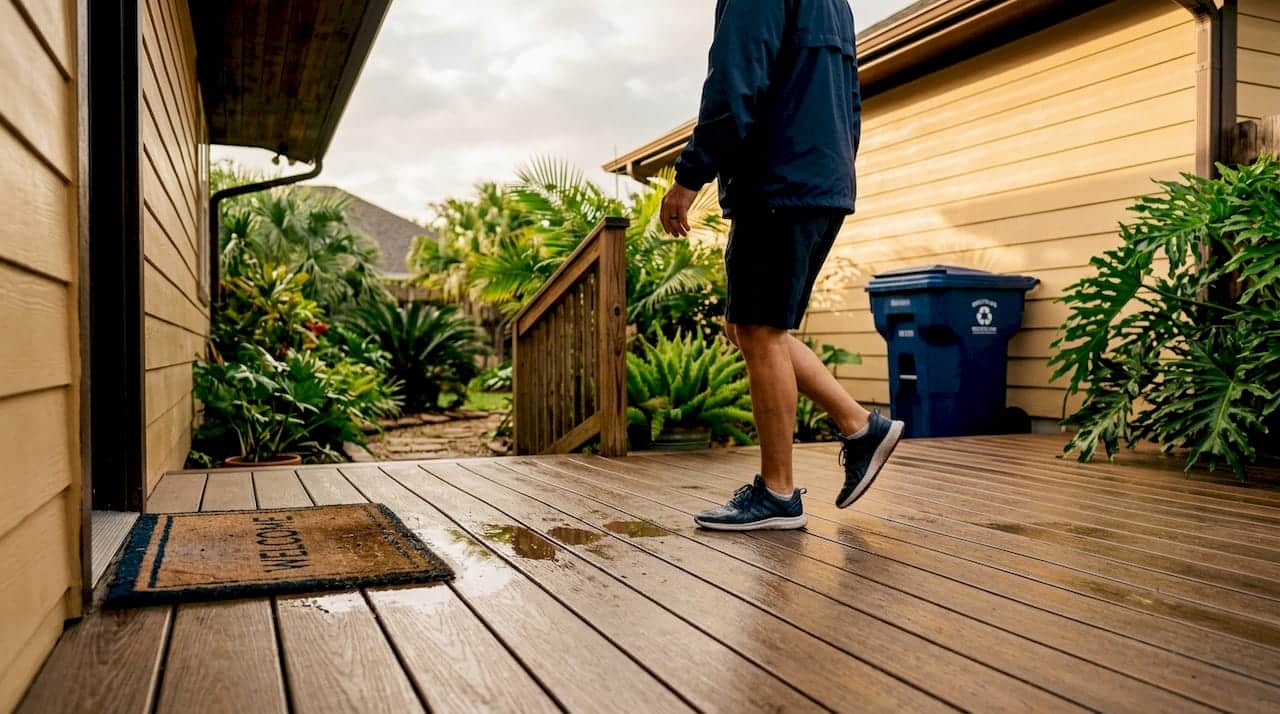
Here’s what most product descriptions skip over. Capped composite and PVC boards offer solid surface protection and reduced water absorption, but they cannot keep your joists, ledger board, and substructure dry without proper flashing, drainage channels, and joist wraps. Moisture that slips past the boards and sits on untreated framing will cause rot, mold, and structural failure just as reliably as if you had used untreated pine.
The coastal Texas climate raises the stakes even higher. Humidity in Corpus Christi regularly sits above 80% from May through October. Salt air accelerates corrosion on metal fasteners and eats into exposed wood grain within a single season. A tropical storm can dump several inches of rain in hours, overwhelming any deck that wasn’t designed with drainage in mind.
What does a truly weatherproof deck system actually include?
- Capped composite or PVC board surfaces that resist water absorption and surface deterioration
- Proper flashing at the ledger board where the deck meets the house
- Drainage gaps between boards or a dedicated under-deck drainage system
- Joist tape or wraps to seal the top surfaces of framing members
- Stainless steel or hot-dipped galvanized fasteners to resist salt air corrosion
- Sloped framing to direct water away from the house rather than pooling on the structure
Manufacturers often market composite decking with capped technology that reduces water absorption compared with older uncapped versions, but warranty coverage typically targets fade, stain, and structural integrity rather than guaranteeing full waterproofing for every installation. That gap between marketing language and warranty reality is where most homeowners get caught off guard.
Building a coastal weather deck requires understanding both sides of that equation. And making sure your entire home exterior is built to the same standard means looking at weather-resistant home exteriors as a unified project rather than isolated upgrades.
How weatherproof decking materials work
Now that you understand the full scope of what weatherproofing requires, it helps to know exactly how the leading materials perform in real coastal conditions. Not all boards are created equal, and the differences matter a lot when a Category 2 storm is headed toward Corpus Christi.
Capped composite decking uses a protective polymer shell wrapped around a wood-fiber and plastic core. That shell dramatically reduces moisture absorption compared to uncapped versions and adds resistance to staining and UV fading. TimberTech, Trex, and similar brands each market their shell technology and waterfront handling capabilities, but the real-world difference comes down to whether the capping covers all four sides of the board, not just the top.
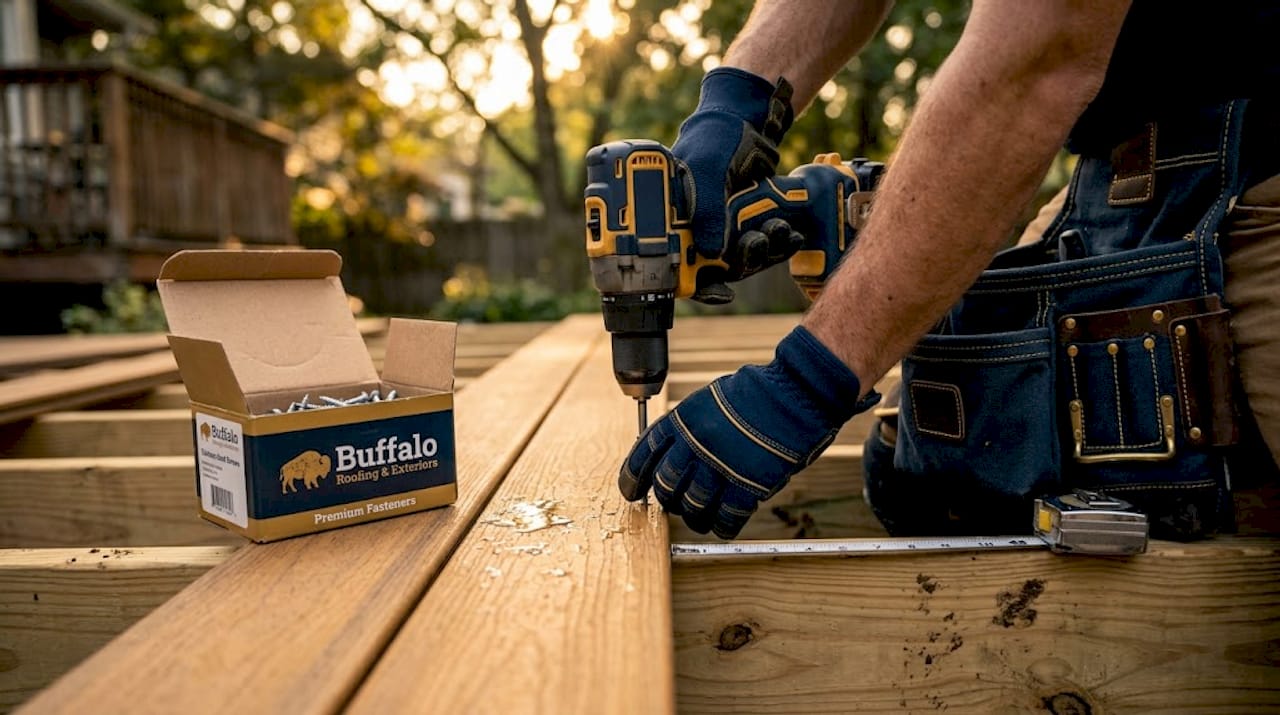
PVC decking skips wood fiber entirely, making it completely impervious to moisture absorption throughout the board. PVC boards won’t swell, shrink, or rot even when standing water pools on them temporarily. The tradeoff is cost and feel: PVC tends to run 15 to 30 percent more expensive than comparable capped composites, and some homeowners find the surface less natural-looking.
Here’s a comparison to help you make sense of the most common options:
| Material | Water resistance | Rot resistance | Salt air durability | Heat retention | Typical cost (per sq. ft.) |
|---|---|---|---|---|---|
| Pressure-treated wood | Moderate | Moderate | Low | Low | $2 to $5 |
| Capped composite | High | High | High | Moderate to high | $5 to $12 |
| PVC | Very high | Very high | Very high | High | $8 to $15 |
| Uncapped composite | Low to moderate | Moderate | Low | Moderate | $3 to $7 |
One factor most homeowners overlook is thermal comfort. Darker-colored boards absorb significantly more heat in direct sunlight, sometimes reaching surface temperatures above 150°F on a Texas summer afternoon. That’s not just uncomfortable barefoot — it can affect how quickly boards expand and contract, which stresses fasteners over time. Lighter board colors and products with heat-dispersing technology keep surface temps meaningfully lower.
Pro Tip: If you love the look of dark boards, ask your contractor about shading structures or pergola designs that reduce direct sun exposure on the deck surface. You get the aesthetic without the foot-burning temperatures in July.
Key things to look for when evaluating materials:
- Four-sided capping is more protective than top-only capping
- Fade and stain warranties of 25 years or more signal manufacturer confidence
- Slip resistance ratings matter for wet coastal conditions
- Board weight affects structural load calculations, especially for elevated decks
No matter how good the board is, system design is what actually protects your deck from hurricane and tropical storm damage. Boards are just one layer of a much bigger protection strategy.
Beyond boards: The weatherproofing system approach
Here’s where most deck projects go wrong. A homeowner picks a premium capped composite product, pays for professional installation of the boards, and feels confident they’ve done everything right. Then a tropical storm rolls through, water infiltrates the ledger connection, and six months later the framing is rotting from the inside out.
The boards themselves rarely fail first. It’s the system around them that gives way.
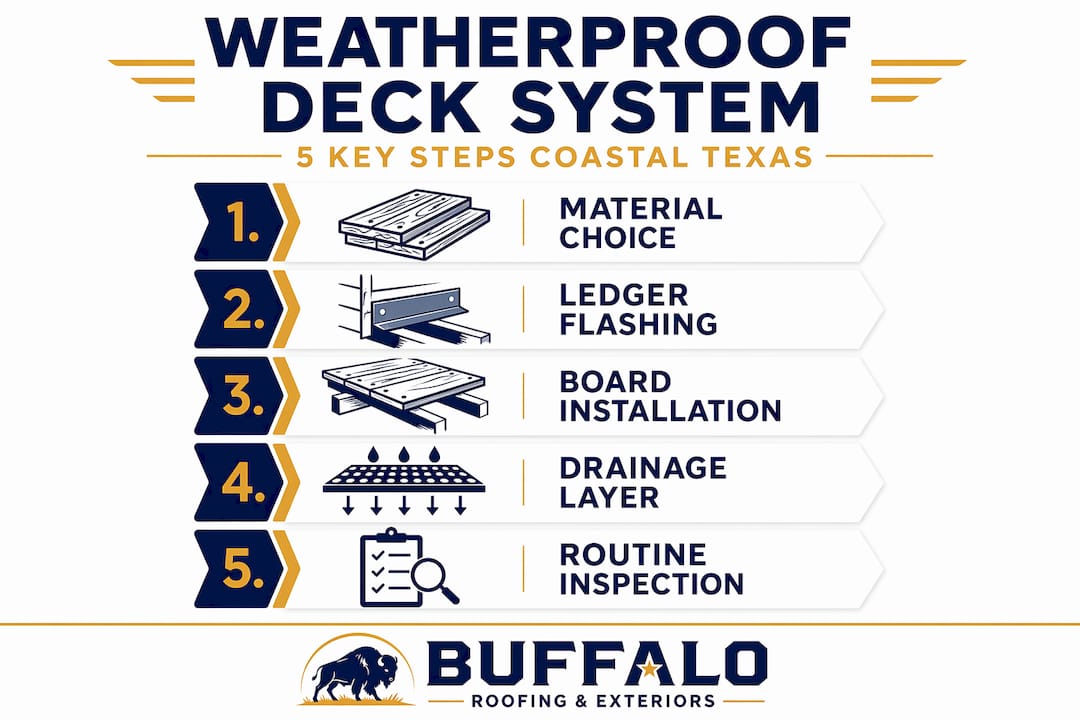
Waterproof guarantees require correct system design, which means integrating multiple protection layers from the ground up. Here’s how a proper weatherproof deck system gets built:
- Plan the drainage slope first. Before any boards go down, the framing should be sloped a minimum of 1/8 inch per foot away from the house. Water that drains off the deck surface needs somewhere to go.
- Flash the ledger board properly. The ledger is where the deck attaches to the house wall. It’s the most common moisture entry point on any deck. Proper flashing means layering weather-resistant barrier material, metal flashing, and sealant to create a continuous barrier.
- Tape the joist tops before decking. Self-adhesive joist tape applied to the top of every framing member prevents water that passes between boards from sitting on wood surfaces. This one step dramatically extends framing life.
- Install drainage hardware if building an elevated deck. Under-deck drainage systems capture water that passes through board gaps and redirect it away from the area below, turning the space under an elevated deck into usable dry storage.
- Use corrosion-resistant fasteners throughout. Every screw, joist hanger, and post base should be rated for ground contact or saltwater exposure. Standard zinc-coated hardware fails within a few years in coastal salt air.
- Seal all penetrations. Every fastener hole, post anchor, and utility penetration is a potential moisture entry point. Use appropriate sealants rated for outdoor use in high-humidity environments.
| System component | Failure without it | Protection provided |
|---|---|---|
| Ledger flashing | Rot and structural separation | Moisture barrier at house connection |
| Joist tape | Framing rot from water pooling | Seals top of structural members |
| Drainage slope | Water pooling, ice damage (rare in TX) | Directs water away from house |
| Corrosion-resistant fasteners | Hardware failure in salt air | Structural integrity over time |
| Under-deck drainage | Wet usable space below | Captures and redirects water |
Pro Tip: During your planning phase, ask your contractor to walk you through the water path. Literally follow the path water would take if it landed on your deck during a major rainstorm. If there’s any point where that water could pool on framing or enter the wall assembly, it needs to be addressed before a single board gets installed.
The same discipline that applies to decks also applies to your whole home envelope. The weatherproofing principles for siding and the exterior weatherproofing standards for coastal Texas homes follow the same logic: layers, drainage, and sealed penetrations working together.
Making the right choices for coastal Texas
Translating all of this into practical decisions for your own home means getting specific about the threats you’re actually facing in your location.
Coastal Texas homeowners deal with four primary deck threats that don’t apply the same way inland:
- High sustained humidity that keeps moisture levels elevated even between rain events
- Salt air corrosion that attacks metal fasteners, railings, and any exposed metal hardware
- Intense UV radiation that degrades surface coatings, fades colors, and can cause thermal expansion issues
- Tropical storm events that deliver high winds and rapid heavy rainfall in combinations that test every seam and connection
A detailed water-management system with proper flashing, drainage, and joist protection is not optional in this environment — it’s the baseline requirement. Building to a lower standard means paying for repairs after every major weather event.
Here are the practical decisions that matter most for a coastal Texas deck:
- Choose capped composite or full PVC boards as your surface material. Pressure-treated wood requires ongoing maintenance that most homeowners won’t sustain, and untreated wood is simply not appropriate for this climate.
- Specify stainless steel or hot-dipped galvanized hardware throughout. This is non-negotiable within 10 miles of the coast.
- Budget for a full drainage system, not just the boards. A complete weatherproof system typically adds 15 to 25 percent to material costs but can double the effective lifespan of the deck structure.
- Plan for annual inspections. Walk the deck every spring before storm season. Check for loose fasteners, compromised sealant, and any signs of moisture staining on framing members visible from below.
- Don’t skip permits and code compliance. Local building codes in coastal counties often require specific wind resistance ratings for deck structures. A deck built to code is also a deck built to survive a storm better.
Pro Tip: If your deck is attached to the house, have a roofing or exterior contractor inspect the connection point every few years. The ledger-to-house connection is where deck weatherproofing and home weatherproofing overlap — a failure there affects both systems.
Thinking about how weatherproof exteriors protect coastal Texas homes as a unified investment helps you prioritize where each dollar of your maintenance and renovation budget goes.
Why most weatherproof decking fails in coastal Texas
After years of working on coastal Texas decks, we’ve seen the same pattern repeat itself over and over. A homeowner invests in quality boards, skips the system design details because the contractor didn’t offer them or the budget got tight, and ends up with beautifully surfaced boards sitting on rotting joists within five to eight years.
Here’s the uncomfortable truth most marketing won’t tell you: the boards almost never fail first. The industry has gotten very good at manufacturing durable surfaces. What hasn’t kept pace is the industry-wide push to sell homeowners on complete system design rather than just premium materials.
The lessons from storm recovery work are clear. Decks that survive major hurricane events intact share one trait: they were built as integrated systems with attention to every connection point, not just the visible surface. We’ve seen significant storm damage reduction on homes where the exterior was treated as a system from day one compared to those where upgrades were made piecemeal over time.
Local expertise matters enormously here. A contractor who works primarily in inland markets won’t think instinctively about salt air fastener specs or the specific drainage demands of a Gulf Coast tropical storm. That’s not a criticism — it’s just a reflection of how climate-specific good outdoor construction really is. When you’re spending serious money on a deck that needs to last through decades of Gulf Coast weather, the contractor’s local track record in coastal conditions is one of the most important factors in your decision.
Protect your deck — and your home — with expert solutions
If reading through this guide has made you realize your current deck may have some system-level gaps, you’re not alone — and there’s no reason to wait until a storm reveals them the hard way.
At Buffalo Roofing & Exteriors, we bring the same system-level thinking to decks that we apply to roofing and full exterior renovation projects across Corpus Christi, San Antonio, and Victoria. Whether you’re building a new deck, upgrading an existing one, or recovering from storm damage, our team understands the specific demands of coastal Texas construction. Explore our storm recovery guidance if recent weather has already affected your outdoor spaces, or browse exterior renovation examples to see what a fully integrated weatherproof exterior upgrade looks like for Texas homes like yours. Reach out for a free estimate and let’s build something that actually lasts.
Frequently asked questions
Is weatherproof decking fully waterproof?
Most weatherproof decking resists water at the surface level but is not fully waterproof on its own. True waterproofing requires both the right boards and a complete water-management system, including proper drainage and structural protection.
Which decking materials are best for coastal Texas?
Capped composite and PVC boards are the top choices for coastal Texas because of their resistance to water, rot, and salt air. Capped technology reduces water absorption significantly compared to uncapped or traditional wood options, making them the most durable long-term choice in coastal conditions.
How do you keep a deck cool in the Texas sun?
Choose lighter-colored boards and look for products with UV-resistant surface technology designed to reflect rather than absorb heat. Darker board colors get significantly hotter in direct sunlight, which affects both comfort and long-term board performance in Texas summers.
Will weatherproof decking prevent storm damage?
Weatherproof decking reduces risk significantly but only prevents storm damage when paired with complete water management and structural protection. Proper flashing, drainage, and joist protection are required to keep moisture from reaching structural components even when the surface performs perfectly.
How often should weatherproof decks be maintained?
Plan on a thorough annual inspection every spring before storm season begins. Check the board surface, all fasteners, flashing connections, drainage paths, and any visible framing for early signs of moisture damage or corrosion to catch problems before they become expensive repairs.