TL;DR:
- Most homeowners mistakenly believe insurance adjusters serve their best interests, but they primarily protect insurer profits. Public adjusters, who work directly for homeowners, often secure significantly higher settlements, especially in catastrophic storm claims. Proper documentation, understanding adjuster roles, and strategic responses can maximize repair coverage and prevent costly out-of-pocket expenses.
Most homeowners assume the insurance adjuster who shows up after a storm is there to help them get a fair deal. That assumption is wrong, and it costs coastal Texas homeowners thousands of dollars every year. Adjusters play very specific roles in the claims process, and who they work for shapes every recommendation they make, every estimate they write, and every dollar they approve. Understanding those roles, and knowing how to respond strategically, is the difference between a repair that restores your home fully and a settlement that leaves you covering the gap out of pocket.
Table of Contents
- Types of adjusters: Who they serve and what they do
- The adjuster process in Texas storm repairs
- Why public adjusters matter in storm repair disputes
- Hidden repair factors: Estimates, supplements, and policy nuances
- What most homeowners miss about adjusters after storms
- Connect with reliable storm repair experts in coastal Texas
- Frequently asked questions
Key Takeaways
| Point | Details |
|---|---|
| Adjuster roles differ | Insurance adjusters serve the carrier, while public adjusters advocate for homeowners seeking fair settlements. |
| Document damage thoroughly | Comprehensive documentation and presence during adjustment increase successful repair outcomes. |
| Consider public adjuster for large claims | When facing complex or disputed storm repairs, public adjusters secure better settlements, especially for losses over $10,000. |
| Texas claim timelines matter | Insurers must respond swiftly, and homeowners should act fast to meet legal requirements after storms. |
| Handle hidden damage wisely | Request supplements for mold or code upgrades and avoid agreeing to settlements before full inspection. |
Types of adjusters: Who they serve and what they do
Not all adjusters are the same, and confusing them is one of the most costly mistakes a storm-damaged homeowner can make. There are three main types you’ll encounter: staff adjusters, independent adjusters, and public adjusters. The first two serve your insurance company. The third one serves you.
Insurance adjusters, whether staff or independent, are hired by the insurance company to investigate damage, evaluate scope, prepare repair estimates, and authorize claim payments. Their paycheck comes from the carrier, and that relationship shapes their priorities. Staff adjusters are direct employees of the insurer. Independent adjusters are contractors brought in during high-volume events like major hurricanes, when staff can’t handle the caseload alone.
Public adjusters work on a completely different model. They are licensed professionals hired by homeowners to document damage, prepare claim packages, and negotiate directly with the insurance company. They earn a 10 to 15 percent contingency fee based on your final settlement, which means they only get paid more when you get paid more.
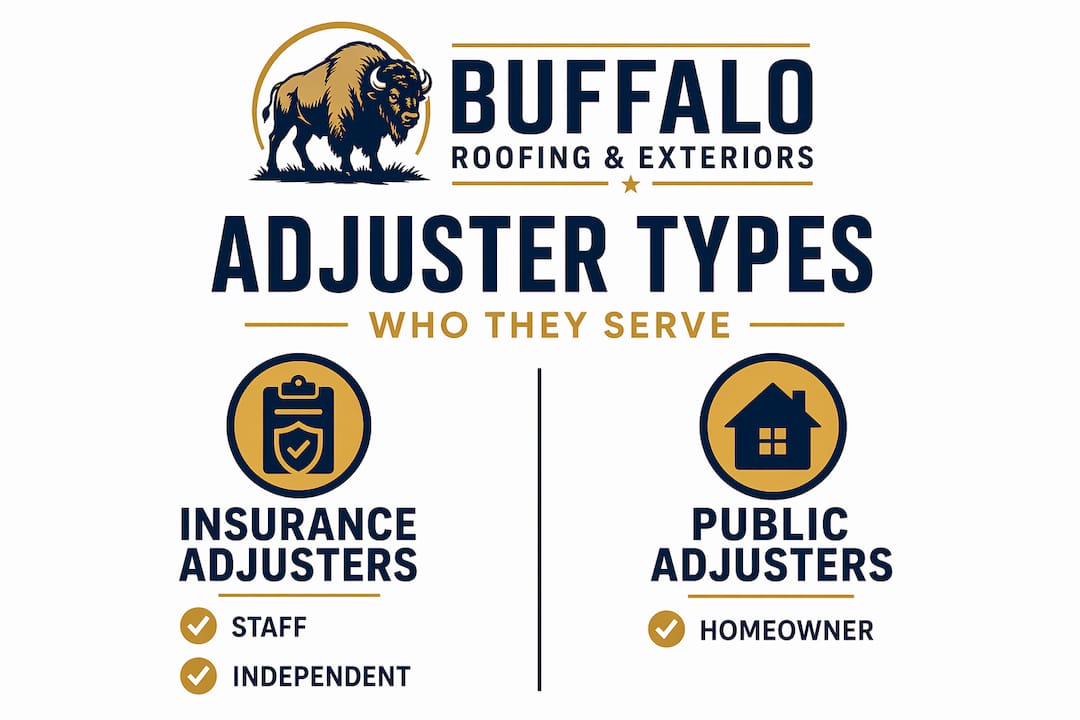
The name “independent adjuster” trips up a lot of people. It sounds neutral, like an independent third party. But as claims adjusters work in practice, independent adjusters still serve the insurer’s interests. The insurer hires them, pays them, and sends them back for more work based on how efficiently they manage claims. Public adjusters are the only type whose financial interest is aligned with yours.
Here’s a quick comparison to make those differences concrete:
| Adjuster type | Hired by | Goal | Fee structure |
|---|---|---|---|
| Staff adjuster | Insurance company | Minimize claim payouts | Salary from insurer |
| Independent adjuster | Insurance company | Manage claim volume | Per-claim fee from insurer |
| Public adjuster | Homeowner | Maximize settlement | 10 to 15% of settlement |
Before you meet any adjuster on site, it helps to read a storm damage restoration guide so you know what full restoration should actually include. Knowing the scope of legitimate repairs puts you in a much stronger position during inspection.
The adjuster process in Texas storm repairs
With adjuster types clear, let’s look at the exact repair claim process you can expect in coastal Texas after a storm event.
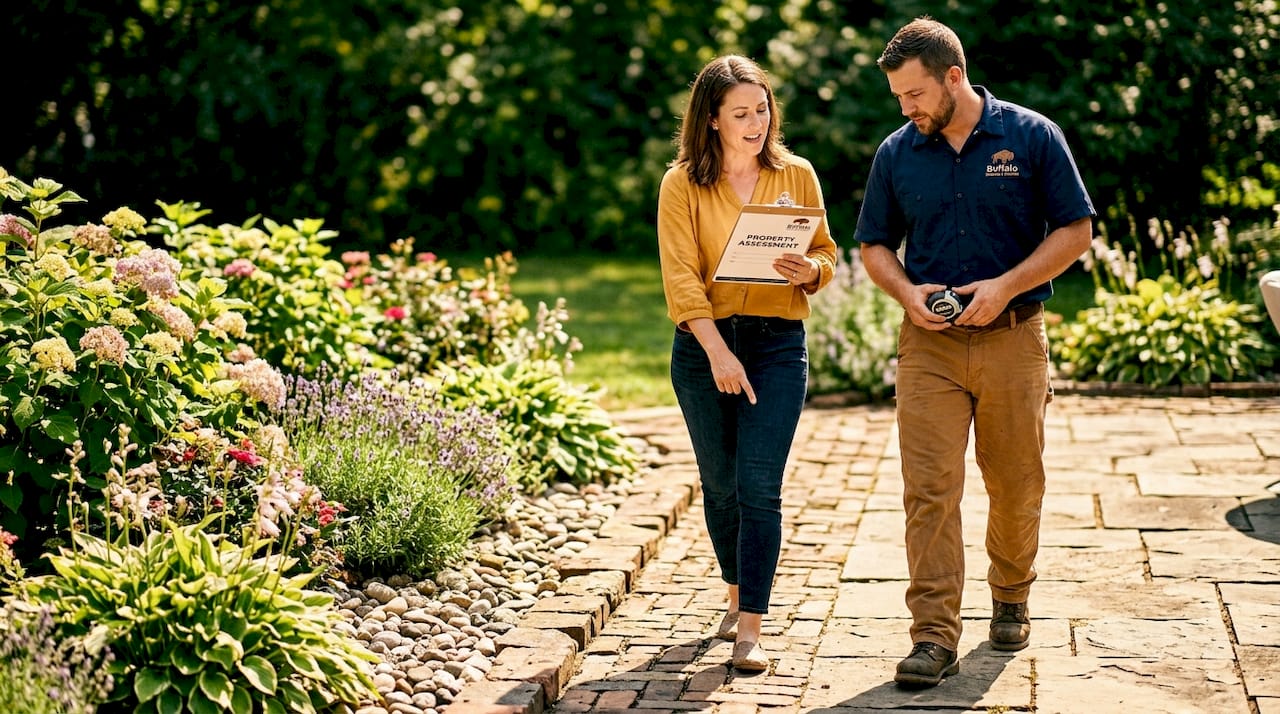
The Texas Department of Insurance sets strict legal deadlines that insurers must follow. Texas storm recovery rules require insurers to acknowledge your claim within 15 days of filing and then make a coverage decision within 15 business days after receiving all supporting documentation. Those are not suggestions. They are legally binding timelines, and knowing them prevents your claim from stalling indefinitely.
Here is the step-by-step sequence most claims follow:
- Document everything immediately. Before anyone touches the damaged areas, photograph and video every affected surface. Roofing, siding, windows, gutters, interior ceilings, and walls. Timestamps matter.
- Make temporary repairs to prevent further damage. Tarping a damaged roof or boarding broken windows is expected by insurers and does not harm your claim. Keep all receipts.
- File your claim promptly. Do not wait weeks hoping the damage isn’t as bad as it looks. Texas insurers must respond within tight windows once the clock starts.
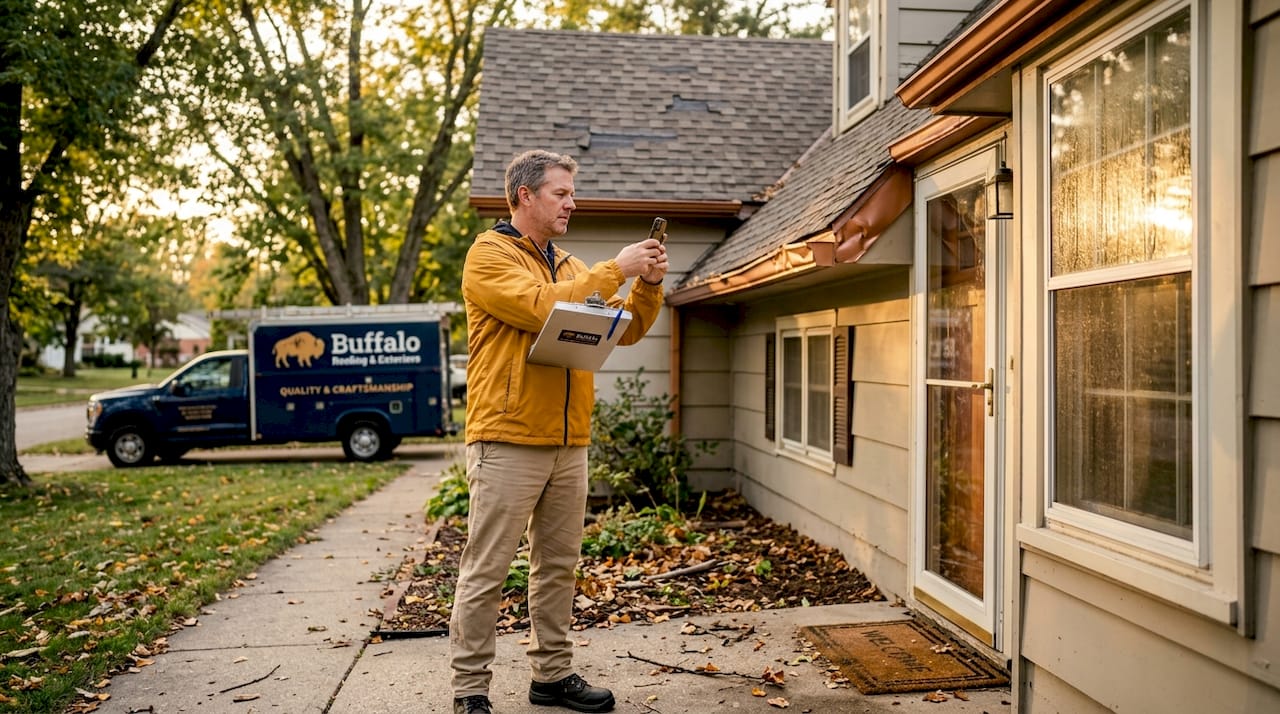
- Be present during the adjuster inspection. This is non-negotiable. Walk every damaged area with the adjuster and point out every issue, including things that are not immediately visible from the ground.
- Get your own inspection from a licensed contractor. Their written estimate gives you documentation to compare against the adjuster’s scope of work.
- Review the estimate line by line. Look for missing items, undervalued materials, and omitted labor costs.
“Document damage extensively before adjuster inspection, make temporary repairs, and be present during inspection to point out issues.” Texas Department of Insurance storm recovery guidance.
Pro Tip: Before the adjuster arrives, walk your property with a contractor and get a written inspection report. When the adjuster misses something, you have a professional document to reference on the spot, not after the fact when reopening a claim is much harder.
Your roof claim checklist can help you organize your documentation before the adjuster visit. And if you’re still unsure about initial damage assessment, reviewing post-storm steps and identifying storm damage will help you know what to look for and what language to use with the adjuster.
Why public adjusters matter in storm repair disputes
Understanding the general process, you may wonder when a public adjuster is actually worth hiring. The short answer is: more often than most homeowners realize, particularly after large coastal storm events.
During catastrophic storms (what the industry calls CAT events), insurance companies deploy large numbers of adjusters quickly to handle massive claim volumes. These CAT adjusters are often working dozens of properties per week. During catastrophes, inspections get rushed, damage gets undervalued, and the homeowner ends up with a settlement that doesn’t cover actual repair costs. Texas law does restrict what public adjusters can do during declared disasters, specifically prohibiting them from acting as contractors or soliciting homeowners door-to-door immediately following an event. That’s important to know so you can identify legitimate professionals.
The financial case for public adjusters is compelling. Settlement data shows that public adjusters have secured settlements as high as seven times the initial insurer offer in some dispute cases. CAT adjusters handling storm surges earn $500 to $900 per day based on volume throughput, not claim accuracy. Claims over $15,000 in particular tend to benefit most significantly from public adjuster involvement.
Here’s a breakdown of when hiring a public adjuster makes the most sense:
| Situation | Public adjuster recommended? |
|---|---|
| Claim over $10,000 | Yes, strongly |
| Claim denied | Yes |
| Disputed scope of damage | Yes |
| Straightforward claim under $5,000 | Probably not |
| Mold or structural concerns | Yes |
| Large commercial property damage | Yes |
Beyond the financial threshold, consider hiring a public adjuster when:
- Your initial settlement seems far below contractor estimates. A gap of 20 percent or more is a red flag.
- The adjuster missed visible damage. If your estimate doesn’t include gutters, fascia, or interior water intrusion that you clearly showed during inspection, something went wrong.
- Your claim was denied. Denials are not final decisions. A public adjuster can reopen and renegotiate.
- Your damage involves structural components. Roof decking, framing, or foundation issues require detailed documentation to get full coverage.
You can also review storm repair tips and a storm assessment guide tailored to coastal Texas homes to better understand what a thorough claim should cover in your area.
Hidden repair factors: Estimates, supplements, and policy nuances
Beyond adjuster types and timelines, there are layers inside the claims process that can significantly change your final repair outcome. Most homeowners never hear about these until they’re already in trouble.
The most common estimating tool used by insurance adjusters in Texas is called Xactimate. It’s software that calculates repair costs based on regional pricing databases. The problem is that Xactimate estimates don’t always reflect real-world contractor costs in coastal markets, and they can miss hidden damage entirely. Supplements are the mechanism for correcting this. A supplement is a formal request to add line items to an existing estimate, typically submitted when a contractor opens a wall or tears off a roof and finds damage that wasn’t visible during initial inspection.
Mold is one of the biggest hidden cost factors in coastal Texas claims. When storm water intrudes through damaged roofing or siding, it can saturate insulation, wall cavities, and attic spaces. That moisture creates mold growth within 24 to 48 hours. Policy language typically requires prompt mitigation, meaning you have a responsibility to act quickly, but that mitigation work must also be documented and submitted as part of your claim.
Code upgrade coverage is another area where homeowners leave money behind. If your roof is being replaced after storm damage, local building codes may require upgraded materials, additional underlayment, or improved fastening patterns. Your policy may include “ordinance or law” coverage that pays for these upgrades. If the adjuster doesn’t include them in the estimate, you need to request it.
The appraisal process is a relatively new but powerful option for Texas homeowners in disputes. Texas property damage law now provides a formal appraisal mechanism where both sides hire independent appraisers and an umpire settles disagreements. This process bypasses litigation and can resolve disputes faster than lawsuits.
Pro Tip: Never sign anything until the adjuster has completed a full inspection and you’ve had a contractor independently review the scope. Signing early often locks in a low estimate and removes your ability to supplement or dispute.
Key areas to watch in your estimate and policy:
- Depreciation calculations. Actual cash value (ACV) versus replacement cost value (RCV) can mean tens of thousands of dollars difference.
- Deductible types. Many coastal Texas policies have separate hurricane or windstorm deductibles that are calculated as a percentage of insured value, not a flat dollar amount.
- Exclusions buried in endorsements. Read every page, not just the declarations sheet.
Exterior damage beyond roofing matters too. Reviewing how to restore siding after storms and applying siding maintenance strategies can help you document and communicate siding-related claim items accurately.
What most homeowners miss about adjusters after storms
Here’s what years of working Texas storm restoration consistently reveal: most homeowners treat the adjuster visit like a passive event. They let the adjuster walk the property, hand over the estimate, and accept whatever comes back. That approach is the single most expensive mistake you can make.
Documentation is not paperwork. It’s leverage. Every photograph, every contractor note, every repair receipt is evidence that supports a higher settlement. Homeowners who document obsessively before, during, and after the adjuster visit consistently fare better than those who rely on the adjuster to identify everything on their own.
Multiple contractor bids are not just useful for comparing prices. They give you independent, professional documentation of what the repairs actually cost in the current market. If three licensed contractors all estimate $45,000 for a roof replacement and the adjuster is offering $27,000, that’s not a negotiating point. That’s grounds for a formal dispute.
The rush to settle is real, and it’s something insurance companies count on. After a major storm, homeowners are stressed, displaced in some cases, and eager to see repairs start. Accepting a quick settlement feels like progress. But a quick settlement on an incomplete estimate means you’ll spend years paying out of pocket for work that should have been covered. Don’t confuse speed with resolution.
One last point that most guides skip entirely: the adjuster’s initial estimate is rarely their final word. Especially on larger claims, the first number is often a starting position. Contractors who are experienced with insurance work know how to write supplement requests that get approved. Partnering with a restoration contractor who understands this process is as valuable as anything else you can do after a storm. Storm prep advice before the next storm season keeps you ahead of the process entirely.
Connect with reliable storm repair experts in coastal Texas
Now that you understand adjuster roles and the pitfalls that cost homeowners real money, the practical next step is getting professional support for your restoration.
At Buffalo Roofing & Exteriors, we work with homeowners across Corpus Christi, San Antonio, and Victoria every storm season. We understand how adjusters write estimates, what supplements get approved, and how to document damage in a way that supports your claim. Our team provides free inspections, written estimates, and direct support through the insurance process. When you’re ready to restore your home the right way, our comprehensive storm repair guide is a great place to start, and our team is a phone call away for everything after that.
Frequently asked questions
Should I hire a public adjuster for storm damage in Texas?
Consider hiring a public adjuster for complex or disputed claims over $10,000, since large losses and denials are exactly the cases where their expertise and negotiating leverage deliver the most financial benefit.
How much do public adjusters typically charge?
Public adjusters usually charge a 10 to 15 percent contingency fee based on the final settlement amount, meaning they only earn more when you receive more.
How quickly must insurance companies respond to storm claims in Texas?
Texas insurers must acknowledge your claim within 15 days and then make a coverage decision within 15 business days after receiving all required documentation.
What is the difference between staff, independent, and public adjusters?
Staff and independent adjusters serve the insurance company regardless of their label, while public adjusters are the only type legally and financially motivated to maximize your settlement.
Can adjusters help with hidden damage like mold or code upgrades?
These items often require supplemental claims and documentation since mold, code upgrades, and hidden structural damage are not always captured in the initial adjuster estimate.