Many homeowners in coastal Texas believe their standard roof can handle whatever nature throws at it, but hailstorms tell a different story. With insurance losses from severe convective storms exceeding $50 billion in 2023 and climbing, the financial stakes of inadequate roof protection have never been higher. This guide breaks down what hail-resistant roofing actually means, which materials deliver real protection, and how coastal Texas homeowners can make informed choices to safeguard their homes and wallets against increasingly frequent hail events.
Table of Contents
- Understanding Hail-Resistant Roofing: Materials And Standards
- How Hail Impacts Roofs: Risks And Damage Patterns
- Benefits Of Hail-Resistant Roofing For Coastal Texas Homeowners
- Choosing The Right Hail-Resistant Roofing: Practical Considerations
- Protect Your Home With Buffalo Roofing & Exteriors
- Frequently Asked Questions
Key takeaways
| Point | Details |
|---|---|
| Material matters | Not all roofing materials offer equal hail protection, with impact-resistant options rated by UL 2218 standards |
| Cumulative damage | Frequent sub-severe hailstorms cause hidden damage that compounds over time, reducing roof lifespan |
| Financial protection | Hail-resistant roofing reduces repair costs and may qualify homeowners for insurance discounts |
| Smart selection | Choosing the right material requires evaluating budget, local climate, and resistance ratings |
Understanding hail-resistant roofing: materials and standards
Hail-resistant roofing refers to materials engineered to withstand impact from hailstones without sustaining significant damage. In hail-prone regions like coastal Texas, where spring and summer storms bring golf ball-sized hail, this protection becomes essential rather than optional. The difference between standard and hail-resistant roofing lies in material composition, thickness, and structural design.
Several materials dominate the hail-resistant market. Impact-resistant asphalt shingles feature modified asphalt formulations and reinforced backing that absorbs impact energy. Metal roofing, particularly steel and aluminum panels, deflects hail strikes effectively. Synthetic slate and rubber roofing products combine durability with flexibility, allowing them to absorb impacts without cracking. Each material brings distinct advantages for coastal environments.
The UL 2218 standard classifies impact resistance into four classes, with Class 4 representing the highest protection level. Testing involves dropping steel balls of increasing diameter onto roofing samples to simulate hail impact. Class 3 materials withstand a 1.75-inch diameter ball, while Class 4 handles 2-inch impacts. These ratings help homeowners identify genuine protection levels when selecting types of roof materials for storm-ready homes.
Despite asphalt shingles comprising approximately 80% of residential roof coverings nationwide, not all asphalt products qualify as hail-resistant. Standard three-tab shingles offer minimal impact protection, while architectural shingles with impact-resistant features provide Class 3 or Class 4 ratings. Understanding these distinctions prevents costly assumptions about existing roof capabilities.
Material comparison for hail resistance:
| Material | Hail Resistance Rating | Average Lifespan | Cost Range (per sq ft) |
|---|---|---|---|
| Impact-resistant asphalt | Class 3-4 | 25-30 years | $3.50-$5.50 |
| Metal roofing | Class 4 | 40-70 years | $7.00-$12.00 |
| Synthetic slate | Class 4 | 50+ years | $9.00-$15.00 |
| Rubber roofing | Class 3-4 | 30-50 years | $4.00-$8.00 |
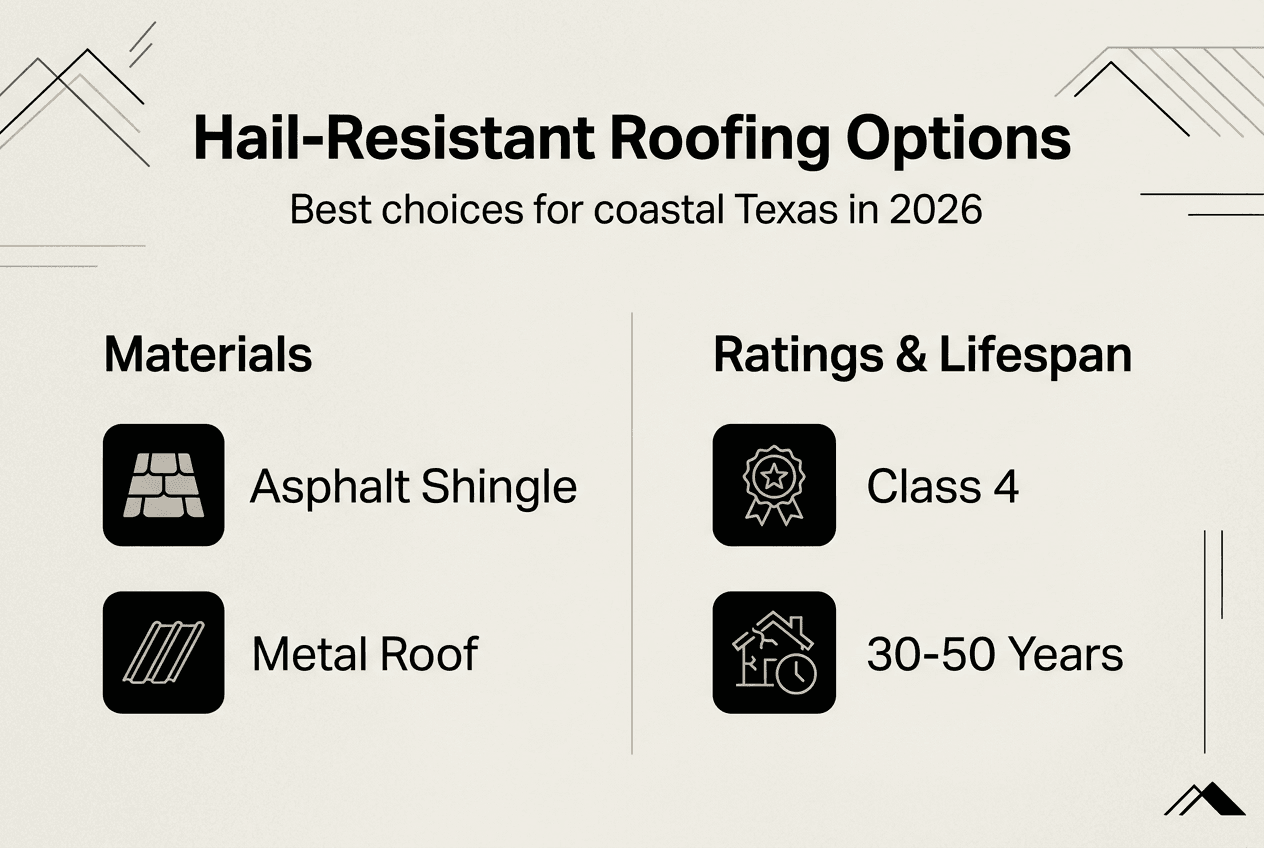
Pro Tip: Coastal Texas typically sees hailstones ranging from quarter to golf ball size. Prioritize Class 4 materials if your area experiences frequent severe storms, as the upfront investment pays off through reduced damage and potential insurance savings.
The coastal environment adds complexity beyond hail resistance. Salt air accelerates corrosion on metal components, high humidity promotes algae growth on organic materials, and strong winds test fastener integrity. Selecting weather-resistant roofing for Texas homes requires balancing multiple environmental factors alongside hail protection.
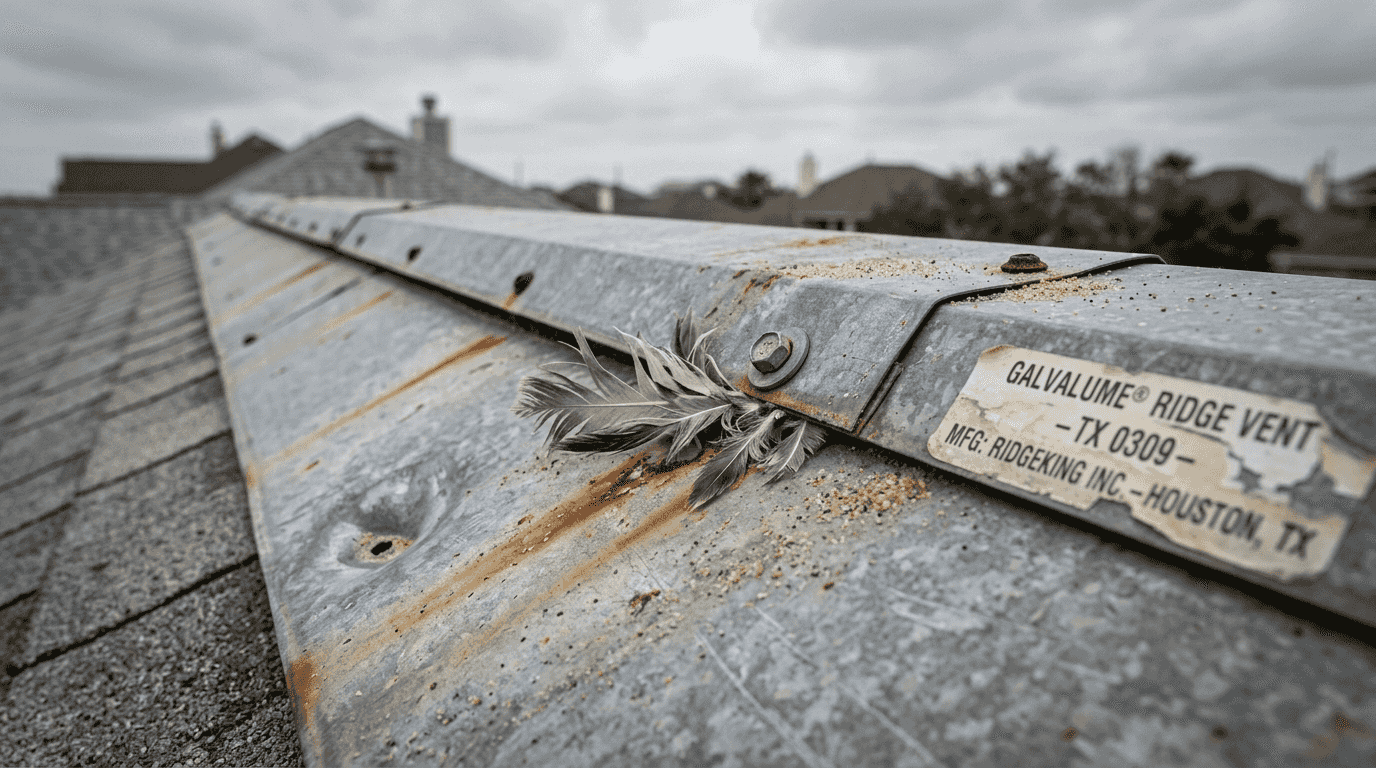
Standards provide objective benchmarks, but real-world performance depends on proper installation and maintenance. Even Class 4 materials fail prematurely if installed incorrectly or neglected. Homeowners should verify contractor certifications and material warranties to ensure rated protection translates into actual durability. The growing adoption of roofing trends 2026 Texas coast reflects increasing awareness of comprehensive storm protection.
How hail impacts roofs: risks and damage patterns
Hail damage manifests in several distinct ways depending on roofing material, hailstone size, and impact velocity. Understanding these patterns helps homeowners recognize problems before they escalate into major failures. Asphalt shingles show granule loss, exposing the underlying mat to UV degradation and moisture penetration. Metal roofing develops dents that compromise aesthetic appeal and potentially create weak points. Tile and slate materials crack or shatter on impact, requiring individual piece replacement.
Bruising represents subtle damage invisible from ground level but critical for long-term performance. Hailstones compress shingle layers without breaking through, weakening the bond between components. Over time, these bruised areas allow moisture infiltration, leading to rot in underlying decking. Punctures create immediate leak pathways, though they occur less frequently except with severe hail or already degraded materials.
Research reveals that frequent sub-severe hailstorms pose a greater threat to roof longevity than previously recognized. Multiple smaller events cause cumulative damage that homeowners often overlook until catastrophic failure occurs. Each storm chips away protective granules, weakens adhesive seals, and creates micro-cracks that expand with temperature cycling.
“The cumulative effect of repeated sub-severe hail events can reduce a roof’s effective lifespan by 30 to 40 percent compared to single severe storm damage, yet most homeowners never file claims for these incremental losses.”
Recognizing roof hail damage in Texas requires knowing what to look for after storms:
- Dark spots where granules have dislodged, exposing black asphalt substrate
- Shiny areas on shingles indicating impact compression
- Dents on metal flashing, vents, or gutters suggesting hail size and force
- Cracked or missing pieces on tile or slate installations
- Interior water stains appearing days or weeks after storms
The consequences extend beyond immediate repair costs. Undetected damage accelerates deterioration, shortening replacement timelines and increasing emergency repair likelihood. Leaks damage insulation, framing, and interior finishes, multiplying repair expenses. Reduced curb appeal affects property values, particularly important for coastal homes in competitive real estate markets.
Pro Tip: Schedule professional inspections within 72 hours of any hailstorm, even if you see no obvious damage from the ground. Early detection allows timely insurance claims and prevents minor issues from becoming major problems. Following a structured roof maintenance workflow to prevent storm damage catches developing issues before they require expensive interventions.
Documenting damage immediately after storms strengthens insurance claims and establishes baseline conditions for future comparisons. Photograph affected areas, note storm dates and severity, and maintain records of all inspections and repairs. This documentation proves invaluable when filing claims or negotiating with insurance adjusters. Understanding storm damage repair tips streamlines the recovery process and maximizes claim outcomes.
Benefits of hail-resistant roofing for coastal Texas homeowners
Installing hail-resistant roofing delivers tangible financial benefits that compound over time. Reduced repair frequency lowers lifetime maintenance costs significantly. Standard roofing might require partial replacement every 5 to 7 years after major storms, while Class 4 materials often survive multiple hail events without intervention. This durability translates directly into thousands of dollars saved over a roof’s lifespan.
Insurance companies recognize the risk reduction hail-resistant materials provide and frequently offer premium discounts ranging from 10 to 35 percent. Some carriers require Class 4 roofing for coverage in high-risk zones, making it a prerequisite rather than an option. Verifying discount eligibility during material selection ensures homeowners capture all available savings. The combination of reduced claims and lower premiums creates substantial long-term financial advantages.
The financial stakes continue rising. The United States reported over $50 billion in severe convective storm related insured losses in 2023, with projections indicating 2024 surpassed that record. Coastal Texas contributes significantly to these totals, with hail damage representing a major component. Homeowners who invest in protection avoid contributing to these statistics while maintaining stable insurance costs.
Property values benefit from visible storm protection. Buyers in coastal markets prioritize homes with documented hail resistance, recognizing the reduced maintenance burden and insurance advantages. Real estate listings highlighting Class 4 roofing command premium prices and sell faster than comparable properties with standard materials. This appreciation offsets initial installation costs when homeowners eventually sell.
Peace of mind represents an intangible but valuable benefit. Coastal Texas residents endure weeks of storm season anxiety, watching weather forecasts and worrying about damage. Hail-resistant roofing eliminates much of this stress, allowing homeowners to focus on family safety rather than property protection. The psychological relief of knowing your home can withstand typical hail events proves difficult to quantify but universally appreciated.
Key benefits for coastal Texas homeowners:
- Dramatically reduced repair costs from hail damage over the roof’s lifetime
- Insurance premium discounts of 10 to 35 percent with qualifying materials
- Enhanced property values and faster sales in competitive markets
- Protection against the rising frequency and severity of coastal storms
- Improved curb appeal with modern, attractive hail-resistant options
- Extended roof lifespan reducing replacement frequency
- Reduced stress during storm season knowing your home is protected
Exploring weather-resistant roofing benefits for Texas homes reveals additional advantages beyond hail protection, including wind resistance and moisture management. The comprehensive protection these systems offer makes them essential investments rather than optional upgrades for coastal properties.
Navigating insurance claims after storm damage becomes simpler with documented hail-resistant materials. Adjusters recognize Class 4 roofing and process claims more efficiently when damage does occur. Understanding the process of filing roofing claims after Texas storms helps homeowners maximize coverage and minimize out-of-pocket expenses. Combining preventive materials with proactive maintenance through a roof maintenance workflow to prevent storm damage creates the most robust protection strategy.
Choosing the right hail-resistant roofing: practical considerations
Selecting appropriate hail-resistant roofing requires evaluating multiple factors specific to your property and circumstances. Budget constraints influence material choices, but focusing solely on initial costs ignores long-term value. A Class 4 metal roof costs more upfront than impact-resistant asphalt but delivers decades of additional service life and superior protection. Calculating total cost of ownership over 30 to 50 years reveals the true economic picture.
Roof pitch affects material suitability and installation complexity. Steep slopes limit some material options and increase labor costs, while low slopes require enhanced waterproofing measures. Coastal Texas building codes mandate specific wind ratings and installation standards that interact with hail-resistance requirements. Verifying code compliance during material selection prevents costly corrections and ensures insurance coverage remains valid.
Warranty coverage varies dramatically between manufacturers and material types. Some Class 4 shingles include 50-year limited warranties with transferable coverage, adding resale value. Metal roofing often carries lifetime warranties against manufacturing defects and decades of coverage for finish integrity. Reading warranty fine print reveals exclusions, maintenance requirements, and claim procedures that impact long-term value.
Material selection comparison:
| Factor | Impact-Resistant Asphalt | Metal Roofing | Synthetic Slate | Rubber Roofing |
|---|---|---|---|---|
| Initial cost | Moderate | High | Highest | Moderate-High |
| Lifespan | 25-30 years | 40-70 years | 50+ years | 30-50 years |
| Hail rating | Class 3-4 | Class 4 | Class 4 | Class 3-4 |
| Aesthetic options | Wide variety | Modern/Traditional | Premium look | Limited styles |
| Maintenance needs | Moderate | Low | Very low | Low |
Step-by-step selection process:
- Assess your budget including installation, underlayment, and removal of existing materials
- Evaluate your roof’s pitch, complexity, and any structural limitations
- Research local building codes and HOA requirements for approved materials
- Compare Class 3 versus Class 4 options based on local hail frequency data
- Request detailed warranty information and verify transferability for resale value
- Obtain multiple quotes from certified installers specializing in your chosen material
- Verify insurance discount eligibility and required documentation for premium reductions
- Schedule installation during optimal weather windows to ensure proper adhesion and sealing
When interviewing contractors about hail resistance, ask these critical questions:
- What certifications do you hold for installing Class 4 roofing materials?
- Can you provide references from coastal Texas projects completed in the last two years?
- How do you handle underlayment and flashing to maximize hail protection?
- What warranty do you offer on installation workmanship separate from material warranties?
- How do you document installation for insurance purposes and future claims?
Pro Tip: Time roof replacement to coincide with insurance claim settlements after documented damage, or schedule preventive replacement just before hurricane season when contractors offer competitive rates. Avoid peak storm recovery periods when quality contractors are overbooked and prices spike.
Coastal Texas conditions demand additional considerations beyond hail resistance. Salt air corrodes fasteners and metal components, requiring stainless steel or specially coated hardware. High humidity promotes algae and mold growth, making algae-resistant shingles or naturally resistant metal preferable. Strong coastal winds test fastener patterns and edge details, necessitating enhanced installation specifications beyond manufacturer minimums.
Exploring various roof materials options helps visualize how different products perform in coastal environments. Following a comprehensive roof installation workflow guide ensures contractors execute every step correctly for maximum longevity. Understanding impact resistant roofing for Texas coastal homes provides deeper insight into how these systems protect against multiple environmental threats simultaneously.
Protect your home with Buffalo Roofing & Exteriors
Choosing hail-resistant roofing represents a significant investment in your coastal Texas home’s future. Buffalo Roofing & Exteriors brings decades of experience helping homeowners select and install the right materials for maximum storm protection. Our team understands the unique challenges coastal environments present and recommends solutions tailored to your specific location, budget, and aesthetic preferences.
We offer comprehensive consultations to evaluate your current roof condition, discuss roof materials suited to hail resistance, and provide detailed cost comparisons. Our certified installers specialize in Class 4 systems and follow manufacturer specifications precisely to ensure warranty coverage remains valid. From initial assessment through final inspection, we manage every aspect of your roofing project with the professionalism and attention to detail that coastal Texas homeowners deserve. Our weather-resistant roofing solutions combine hail protection with wind resistance and moisture management for comprehensive storm defense. When damage does occur, our storm damage restoration guide helps you navigate repairs and insurance claims efficiently.
Pro Tip: Schedule your roof inspection before storm season begins each year. Early detection of developing issues allows repairs during calm weather when contractors have capacity and materials are readily available, avoiding the rush and premium pricing that follows major storms.
Frequently asked questions
What makes roofing hail-resistant?
Hail-resistant roofing uses materials engineered to absorb or deflect impact energy from hailstones without cracking, puncturing, or losing protective granules. These materials undergo UL 2218 testing where steel balls simulate hail impacts, with Class 4 rated products withstanding 2-inch diameter strikes. The resistance comes from modified asphalt formulations, reinforced backing materials, metal composition, or synthetic polymer construction that maintains integrity under impact stress.
How do impact resistance ratings affect real-world performance?
Class 4 rated materials demonstrate significantly better performance in actual hailstorms compared to Class 1 or 2 products. Field studies show Class 4 asphalt shingles survive golf ball-sized hail with minimal damage, while standard shingles require replacement after similar events. The rating directly correlates with reduced repair frequency, lower insurance claims, and extended roof lifespan in hail-prone regions like coastal Texas.
Will hail-resistant roofing reduce my insurance premiums?
Most insurance carriers offer premium discounts ranging from 10 to 35 percent for Class 4 roofing installations. The exact discount depends on your carrier, location, and overall policy structure. You must provide documentation of material ratings and installation dates to qualify, and some carriers require pre-approval before installation. Contact your insurance agent before selecting materials to verify discount eligibility and required documentation procedures.
What maintenance extends hail-resistant roof lifespan?
Regular inspections after storms catch minor damage before it escalates, while annual professional assessments identify developing issues. Keep gutters clean to prevent water backup that compromises roof edges. Trim overhanging branches that could impact the roof during storms. Remove debris that traps moisture and promotes algae growth. Replace damaged or missing shingles immediately to maintain system integrity. Most Class 4 materials require minimal maintenance beyond these basics, but neglecting them voids warranties and accelerates deterioration.
How can I identify hail damage requiring professional inspection?
Look for dark spots on shingles where granules have dislodged, shiny areas indicating impact compression, or visible cracks and breaks. Check metal components like flashing and vents for dents suggesting hail size and force. Interior water stains appearing after storms signal potential roof penetration. Even without visible damage, schedule professional inspection after any hailstorm, as subtle damage invisible from ground level often causes problems months later when detection becomes more expensive to address.