Living along the Texas coast brings unique roofing challenges. High winds, salt spray, and intense moisture constantly test your home’s first line of defense. A properly installed roof protects your investment, reduces energy costs by up to 30%, and withstands the harsh coastal environment for decades. This comprehensive guide walks you through every critical step of roof installation specifically designed for coastal Texas conditions, from initial inspection through final weatherproofing, helping you make informed decisions and avoid costly mistakes that compromise your home’s protection.
Table of Contents
- Understanding The Importance Of Proper Roof Installation In Coastal Texas
- Choosing The Right Roofing Materials For Texas Coastal Homes
- Step-By-Step Roof Installation Process For Coastal Texas Homes
- Common Mistakes And How To Avoid Them During Roof Installation
- Explore Expert Roofing Solutions For Texas Coastal Homes
- Frequently Asked Questions
Key takeaways
| Point | Details |
|---|---|
| Material selection impacts longevity | Metal roofing and architectural shingles offer superior wind and salt resistance for coastal environments. |
| Installation quality affects energy efficiency | Proper roof installation significantly impacts a home’s energy efficiency and can reduce cooling costs substantially. |
| Coastal codes require special compliance | Wind speed categories and ASCE 7 standards dictate reinforcement requirements for Texas coastal installations. |
| Inspection prevents hidden damage | Thorough pre-installation assessment identifies structural issues before new materials go on. |
| Professional execution ensures warranty coverage | Following manufacturer specifications and local codes protects your investment and insurance eligibility. |
Understanding the importance of proper roof installation in coastal Texas
Proper roof installation significantly impacts a home’s energy efficiency and long-term durability, especially in coastal regions where environmental factors accelerate wear. Your roof does more than keep rain out. It regulates interior temperature, prevents moisture intrusion, and protects structural integrity against wind forces that regularly exceed 100 mph during tropical storms.
Texas coastal conditions create a perfect storm of challenges. Salt air corrodes fasteners and degrades materials faster than inland environments. High humidity promotes mold growth in poorly ventilated attic spaces. Intense UV radiation breaks down shingle adhesives. These factors combine to reduce typical roof lifespans by 20 to 30% compared to inland installations, making installation quality absolutely critical.
Quality installation directly impacts your insurance premiums and coverage eligibility. Many carriers require wind mitigation inspections that verify proper fastening patterns, sealed deck systems, and code-compliant installation methods. Failing these inspections can increase premiums by thousands annually or result in coverage denial. Investing in weather-resistant roofing texas homes solutions protects both your property and financial security.
Pro Tip: Schedule your pre-installation inspection during or immediately after rain to identify active leaks and water damage that dry conditions might hide.
Consider these critical factors before installation begins:
- Existing structural damage from previous storms
- Attic ventilation adequacy for moisture control
- Deck condition and fastener withdrawal resistance
- Local wind speed requirements and exposure categories
- Insurance requirements for wind mitigation credits
“The difference between a 15-year roof and a 30-year roof in coastal Texas often comes down to installation details invisible from the ground. Proper fastening patterns, sealed underlayment, and code-compliant flashing make all the difference when hurricane-force winds test your home.”
Inspection before installation identifies potential problems that compromise new roof performance. Hidden water damage weakens deck boards, creating soft spots that cannot hold fasteners properly. Rotten fascia boards fail to support gutter systems during heavy rainfall. Compromised structural members require repair before new materials go on, preventing premature failure and warranty voidance.
Choosing the right roofing materials for Texas coastal homes
Different roofing materials have varying lifespans and performance, especially in coastal environments where salt, wind, and moisture accelerate deterioration. Material selection represents your most important decision, directly affecting durability, maintenance requirements, energy efficiency, and total cost of ownership over the roof’s lifetime.
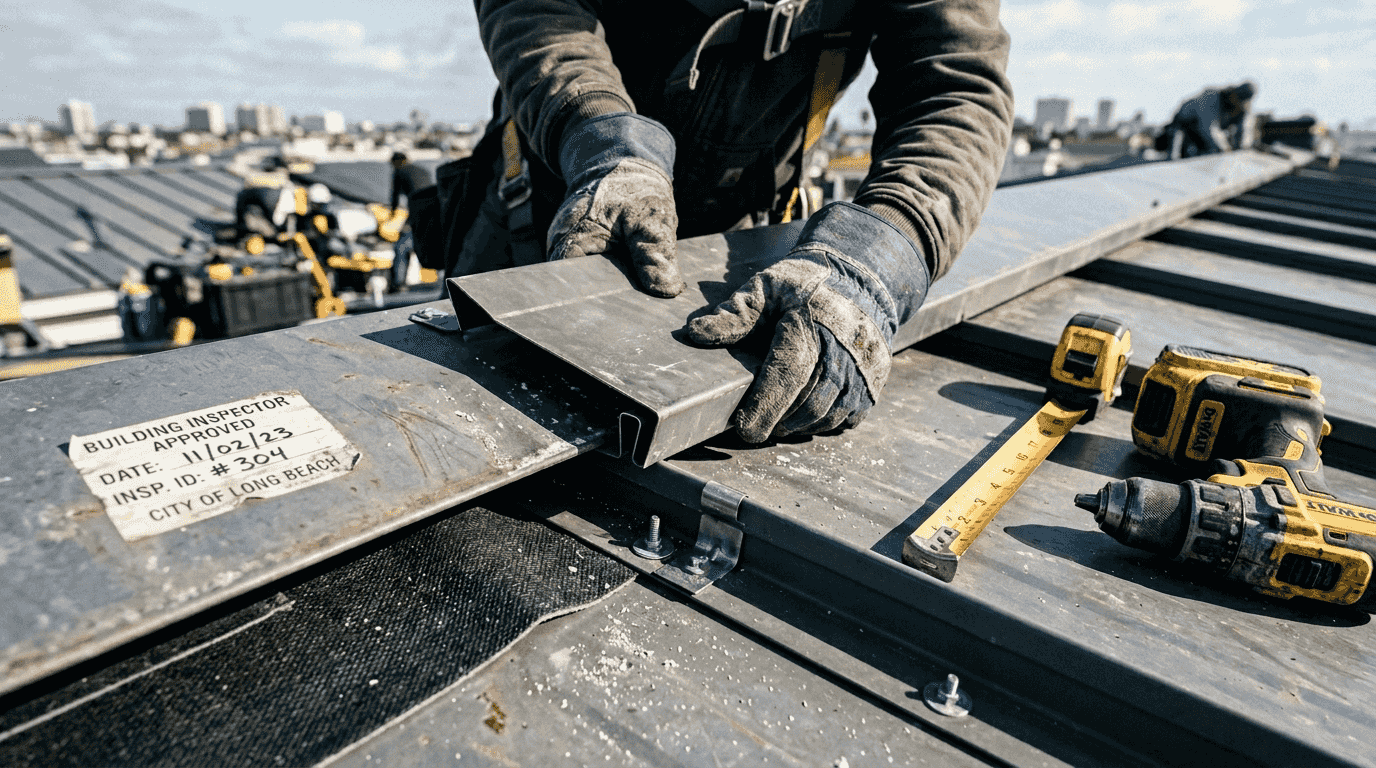
Metal roofing offers exceptional longevity and wind resistance for coastal applications. Standing seam metal systems withstand winds exceeding 140 mph when properly installed, making them ideal for high-risk coastal zones. Metal reflects solar radiation, reducing cooling costs by 25% compared to asphalt shingles. Salt-resistant coatings prevent corrosion in marine environments. Expected lifespan reaches 50 years or more with minimal maintenance, offsetting higher initial costs.
Architectural shingles provide excellent performance at moderate cost when manufactured for coastal conditions. Impact-resistant shingles rated Class 4 resist hail damage and qualify for insurance discounts. Algae-resistant formulations prevent black streaking common in humid coastal climates. Wind ratings up to 130 mph meet most coastal building codes. Proper installation techniques become critical, as improper fastening voids warranties and reduces actual wind resistance by 50% or more.
| Material Type | Expected Lifespan | Wind Resistance | Salt Resistance | Cost Range per Square |
|---|---|---|---|---|
| Standing Seam Metal | 40-50 years | Up to 140 mph | Excellent with coating | $800-$1,200 |
| Architectural Shingles | 25-30 years | Up to 130 mph | Good | $350-$550 |
| Clay/Concrete Tile | 50+ years | Up to 150 mph | Excellent | $900-$1,400 |
| Modified Bitumen | 20-25 years | Up to 110 mph | Fair | $400-$650 |
Wind speed requirements directly affect material selection and installation methods. Texas coastal zones fall into different wind exposure categories based on distance from the coast and local topography. Category requirements dictate minimum fastener spacing, edge reinforcement, and underlayment specifications. Types of roof materials for storm ready homes must meet or exceed these standards to pass inspection and maintain warranty coverage.
Consider these material factors for coastal installations:
- Manufacturer wind rating matching or exceeding local code requirements
- Salt spray resistance ratings for marine environments
- UV stability for intense Texas sun exposure
- Thermal expansion characteristics in high heat
- Warranty coverage specific to coastal installations
- Availability of matching replacement materials for future repairs
Pro Tip: Request manufacturer installation manuals before purchasing materials and verify your contractor follows every specification, as deviations void warranties even if the roof performs well initially.
Warranty coverage varies dramatically between materials and manufacturers. Standard warranties often exclude coastal installations or require upgraded installation methods. Enhanced warranties covering wind damage and material defects provide valuable protection but require certified installer participation and strict adherence to specifications. Understanding warranty terms before purchase prevents disputes when claims arise. Wind-resistant roofing storm protection features often carry separate coverage terms requiring documentation of proper installation techniques.
Step-by-step roof installation process for coastal Texas homes
A thorough inspection of the existing roof is crucial before starting installation, revealing hidden damage that compromises new roof performance. Modern inspection techniques using drone technology and thermal imaging identify problems invisible from ground level, including moisture intrusion, inadequate ventilation, and structural deficiencies requiring repair before new materials go on.
Conduct comprehensive roof and attic inspection documenting existing damage, ventilation adequacy, and structural condition with photos and measurements.
Remove all existing roofing materials down to the deck, inspecting each section for rot, delamination, or fastener withdrawal as materials come off.
Repair or replace damaged decking, ensuring proper fastener spacing and structural integrity meeting current code requirements for your wind exposure category.
Install wind barrier underlayment meeting or exceeding local code requirements, with proper overlap and sealed seams preventing moisture intrusion during installation and throughout the roof’s life.
Apply ice and water shield to all valleys, penetrations, and eaves as required by manufacturer specifications and local building codes for coastal installations.
Install drip edge and starter strips using corrosion-resistant fasteners spaced according to wind speed requirements for your specific location and exposure category.
Place roofing materials following manufacturer fastening patterns exactly, with enhanced edge fastening in high-wind zones and proper alignment maintaining straight courses.
Install ridge venting and caps using specialized fasteners and sealants, ensuring adequate attic ventilation preventing moisture accumulation and heat buildup.
Flash all penetrations, valleys, and transitions using materials compatible with your roofing choice, sealed against wind-driven rain characteristic of coastal storms.
Install gutters and downspouts sized for intense coastal rainfall, with proper slope and secure fastening withstanding high winds.
Windstorm engineering involves calculating loads per ASCE 7 standards and ensuring compliance with local building codes, particularly critical in coastal Texas where wind exposure categories dictate specific reinforcement requirements. Understanding your property’s wind speed rating and exposure category determines fastener spacing, edge reinforcement, and underlayment specifications that meet code and maintain warranty coverage.
| Installation Phase | Coastal-Specific Requirement | Why It Matters |
|---|---|---|
| Deck Preparation | H-clips between sheets or tongue-and-groove decking | Prevents deck movement in high winds |
| Underlayment | Self-adhering polymer-modified membranes | Creates sealed barrier against wind-driven rain |
| Fastening Pattern | 6-inch spacing on perimeter, 12-inch field | Meets wind uplift requirements for coastal zones |
| Edge Treatment | Double starter course with enhanced fastening | Prevents wind from getting under roof edge |
| Valley Installation | Closed-cut valleys with sealant | Eliminates water entry points in heavy rain |
Pro Tip: Document every installation phase with dated photos showing fastener patterns, underlayment overlap, and flashing details, creating a permanent record proving code compliance if insurance or warranty claims arise.
Specialized fasteners and sealants prevent moisture intrusion in coastal environments. Stainless steel or hot-dipped galvanized fasteners resist salt corrosion extending roof life. Butyl-based sealants maintain flexibility through temperature extremes while preventing water penetration at vulnerable points. Using standard fasteners and sealants in coastal applications guarantees premature failure and potential water damage.
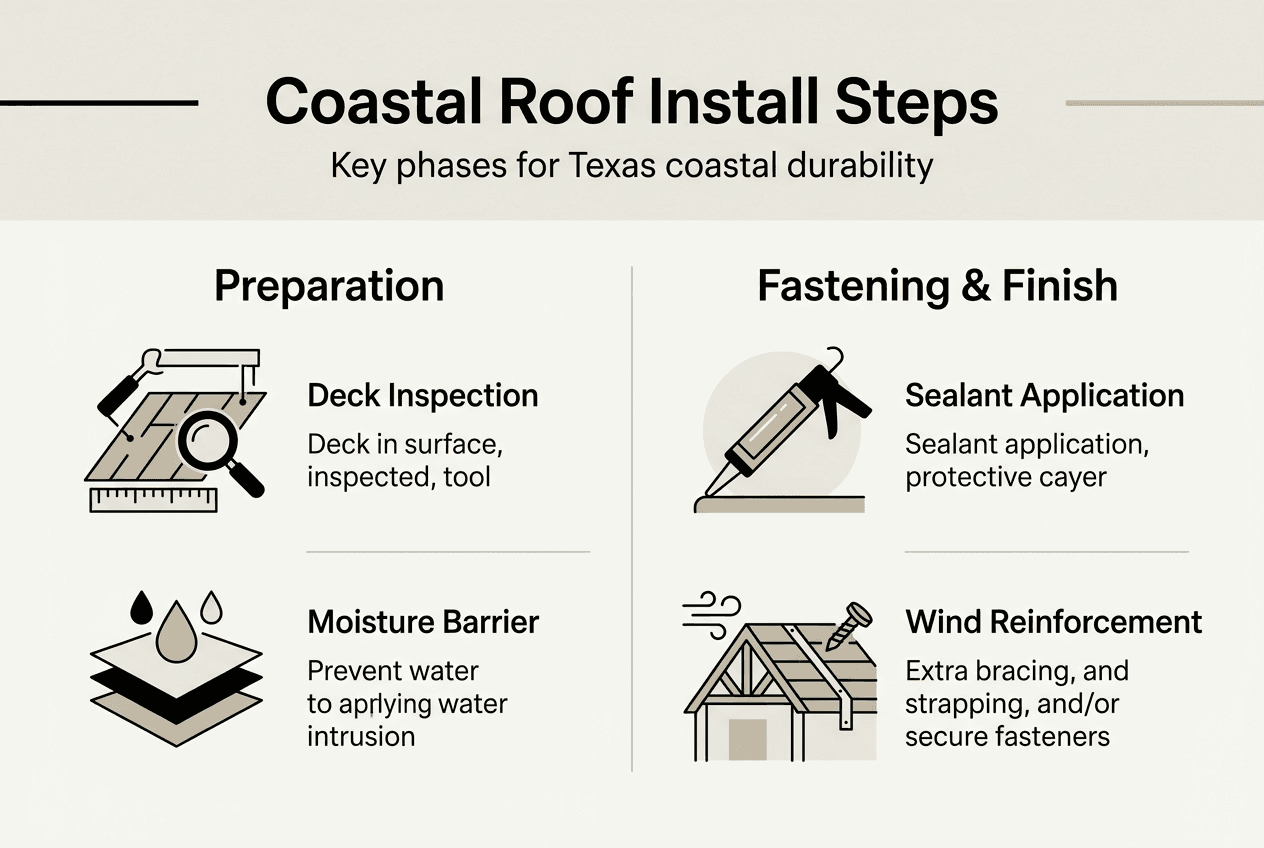
Risk categories and wind speed ratings dictate additional reinforcement steps beyond standard installation practices. High Velocity Hurricane Zones require enhanced fastening, sealed deck systems, and engineered truss connections. Understanding these requirements before installation begins prevents costly corrections and ensures your roof installation workflow step guide meets all applicable standards for your specific location and exposure level.
Common mistakes and how to avoid them during roof installation
Skipping or rushing inspections leads to hidden damage remaining unaddressed beneath new materials. Water-damaged decking appears solid until fasteners pull through under wind stress. Inadequate ventilation trapped beneath new roofing accelerates shingle deterioration and promotes mold growth. Comprehensive pre-installation assessment identifies these issues when correction costs remain minimal compared to post-installation repairs.
Ignoring local code and wind speed requirements risks catastrophic failure during storms. Understanding the roof installation process allows homeowners to ask better questions and ensure steps are completed correctly, particularly regarding wind exposure categories and fastening requirements specific to coastal locations. Many contractors trained in inland techniques underestimate coastal requirements, using standard fastening patterns inadequate for high-wind zones.
Common installation errors that compromise coastal roof performance:
- Using incorrect fastener types or lengths for decking thickness
- Inadequate fastener spacing on roof perimeter and high-stress areas
- Improper underlayment overlap allowing water penetration
- Missing or inadequate flashing at valleys and penetrations
- Insufficient ventilation creating moisture and heat problems
- Neglecting manufacturer specifications for coastal installations
- Installing materials in unsuitable weather conditions
- Failing to seal deck seams in high-wind zones
Improper sealing allows water damage and mold growth that remains hidden until significant damage occurs. Coastal storms drive rain horizontally, finding every unsealed gap and penetration. Valley flashing without sealant channels water into attic spaces. Unsealed deck seams allow wind-driven moisture between layers. These problems manifest gradually, often after warranty periods expire and insurance coverage questions arise.
“The most expensive roof repairs we see involve water damage from installation shortcuts taken years earlier. A $50 tube of sealant skipped during installation becomes a $5,000 deck replacement when moisture rots structural members over time.”
Using incorrect fasteners or missing flashing causes leaks and wind damage that appear suddenly during storms. Smooth-shank nails pull out under wind uplift where ring-shank fasteners hold. Missing step flashing at wall intersections allows water behind siding. Inadequate drip edge lets water wick back under shingles. These installation defects void warranties and create liability issues when damage occurs, making proper technique critical for long-term performance.
Not accounting for coastal salt exposure accelerates material deterioration dramatically. Standard fasteners corrode within years in salt air. Non-coastal-rated shingles lose granules faster. Flashing materials incompatible with salt environments fail prematurely. Specifying coastal-rated materials and corrosion-resistant fasteners prevents these problems, though many contractors default to standard materials unless specifically directed otherwise. Reviewing material specifications before installation and verifying coastal ratings protects your investment. Consulting step by step roof repair guide homeowners resources helps identify proper materials and techniques for your specific situation.
Explore expert roofing solutions for Texas coastal homes
Navigating coastal roof installation complexities requires specialized knowledge and experience with Texas building codes and weather patterns. Buffalo Roofing & Exteriors brings decades of coastal installation expertise to homeowners throughout Corpus Christi, San Antonio, and Victoria, ensuring every project meets 2026 code requirements while maximizing durability and energy efficiency.
Our team specializes in roof installation workflow step guide execution tailored for coastal conditions, using materials proven to withstand salt spray, high winds, and intense moisture. We offer comprehensive consultations evaluating your specific exposure category, structural requirements, and material options optimized for your location. From initial inspection through final weatherproofing, our certified installers follow manufacturer specifications exactly, protecting your warranty coverage and insurance eligibility. Explore our weather-resistant roofing texas homes solutions and discover how professional installation maximizes your investment. Whether you need complete replacement or storm damage restoration, our expertise in coastal roof materials ensures your home receives protection designed for Texas coastal challenges.
Frequently asked questions
What roofing materials withstand coastal Texas weather best?
Metal roofing and architectural shingles rated for coastal applications provide superior performance in salt spray and high-wind environments. Metal systems with corrosion-resistant coatings last 40 to 50 years, while impact-resistant architectural shingles rated Class 4 offer excellent value for 25 to 30 years. Both materials must meet wind ratings matching your exposure category, typically 110 to 140 mph for coastal zones. Manufacturer specifications should explicitly cover coastal installations to ensure warranty coverage. Explore types of roof materials for storm ready homes to compare options for your specific location.
How often should I inspect my coastal home’s roof?
Inspect your roof annually before hurricane season and again after any significant storm event with winds exceeding 60 mph or heavy rainfall. Document findings with dated photos showing shingle condition, flashing integrity, and any visible damage or wear patterns. Professional inspections every three to five years identify subtle deterioration invisible to untrained eyes, catching problems before they require major repairs. Coastal environments accelerate wear, making regular inspection critical for maximizing roof lifespan and maintaining insurance coverage. Learn proper inspection techniques through our step by step roof repair guide homeowners resource.
What are common mistakes to avoid during roof installation?
Avoid skipping pre-installation inspections that identify hidden structural damage requiring repair before new materials go on. Never ignore local wind speed requirements and fastening specifications for your exposure category, as standard inland techniques fail in coastal conditions. Ensure proper sealing at all penetrations, valleys, and deck seams to prevent wind-driven rain intrusion. Use only corrosion-resistant fasteners rated for coastal environments, as standard fasteners fail within years in salt air. Following manufacturer specifications exactly maintains warranty coverage and prevents premature failure. Review our step by step roof repair guide homeowners for detailed guidance on proper techniques.
Do I need an engineer for my roof installation in Texas coastal areas?
Engineering certification may be required depending on your location’s wind exposure category and local building department requirements. Engineers calculate wind loads per ASCE 7 standards and verify installation methods meet structural requirements for your specific site conditions. High Velocity Hurricane Zones typically require engineered designs and inspections throughout installation. Even when not legally required, engineering review provides valuable verification of proper design and installation, protecting your insurance eligibility and property value. Many insurance carriers offer premium discounts for engineered installations with proper documentation. For commercial properties, review our commercial roof replacement guide Texas for detailed engineering requirements.