TL;DR:
- Kirby homeowners should monitor their roofs regularly for signs of damage caused by hail, wind, and UV exposure to prevent costly repairs. Promptly repairing leaks, replacing damaged shingles, and fixing flashing are essential steps, but significant issues require professional assessment and repair. Consistent maintenance and timely intervention are vital in Kirby’s storm-prone climate to ensure long-term roof durability and property protection.
If you live in Kirby, TX, you already know that severe weather is not a question of if but when. Hailstorms, high winds, and relentless summer heat put your roof through punishing cycles year after year. A small leak or a few missing shingles might seem manageable right now, but left unaddressed, those minor issues can quickly spiral into serious structural damage, interior water damage, and expensive emergency restoration. This guide walks you through everything you need to know, from spotting the first warning signs to completing repairs and protecting your home long term.
Table of Contents
- How to spot roof damage in Kirby, TX
- What you need for safe and effective roof repair
- Step-by-step: Repairing common roof issues
- How to prevent future roof problems in Kirby
- Why quick, quality roof repair is non-negotiable in Kirby
- Trusted roofing solutions for Kirby homes
- Frequently asked questions
Key Takeaways
| Point | Details |
|---|---|
| Early detection is key | Spotting and addressing roof damage quickly prevents costly repairs later. |
| Safety comes first | Use the right tools and follow procedures to avoid accidents during roof repair. |
| Step-by-step works best | Follow a clear repair process for better, longer-lasting results on your roof. |
| Maintenance pays off | Regular upkeep and the right materials protect your Kirby home from Texas weather. |
| Know when to call experts | For big jobs or safety concerns, local pros make all the difference. |
How to spot roof damage in Kirby, TX
Once you recognize the risks, the first step is knowing exactly what to look for on your roof.
Kirby sits in a region where hailstorms roll through with little warning, and high-velocity winds regularly peel back poorly secured shingles. The combination of intense UV exposure and seasonal storms makes this area especially tough on roofing materials. Knowing what damage looks like, both from the outside and inside your home, helps you act before a small problem turns into a costly emergency.
Visual signs to look for from the ground or a safe vantage point:
- Missing, cracked, or curling shingles
- Shingle granules collecting in gutters or at downspout exits
- Visible dents or bruising on shingles from hail impact
- Damaged or bent flashing around chimneys, vents, and skylights
- Sagging areas or visible structural deformation on the roofline
- Moss or algae growth, which traps moisture against the surface
Interior clues that are easy to miss:
- Water stains or discoloration on ceilings and upper walls
- Musty or mildew odors in attic spaces
- Daylight visible through the roof boards when you inspect the attic
- Soft or spongy spots in the attic floor caused by moisture retention
Following roofing tips for Texas homeowners means building a habit of checking these signs after every storm, not just when something obvious goes wrong. Regular roof maintenance is what separates homeowners who catch problems early from those who face five-figure repair bills.
“Proactive inspection is the single most effective tool a homeowner has. Most catastrophic roof failures begin as small, ignored warning signs.” This is especially true in South Texas, where weather events hit fast and recovery time is short.
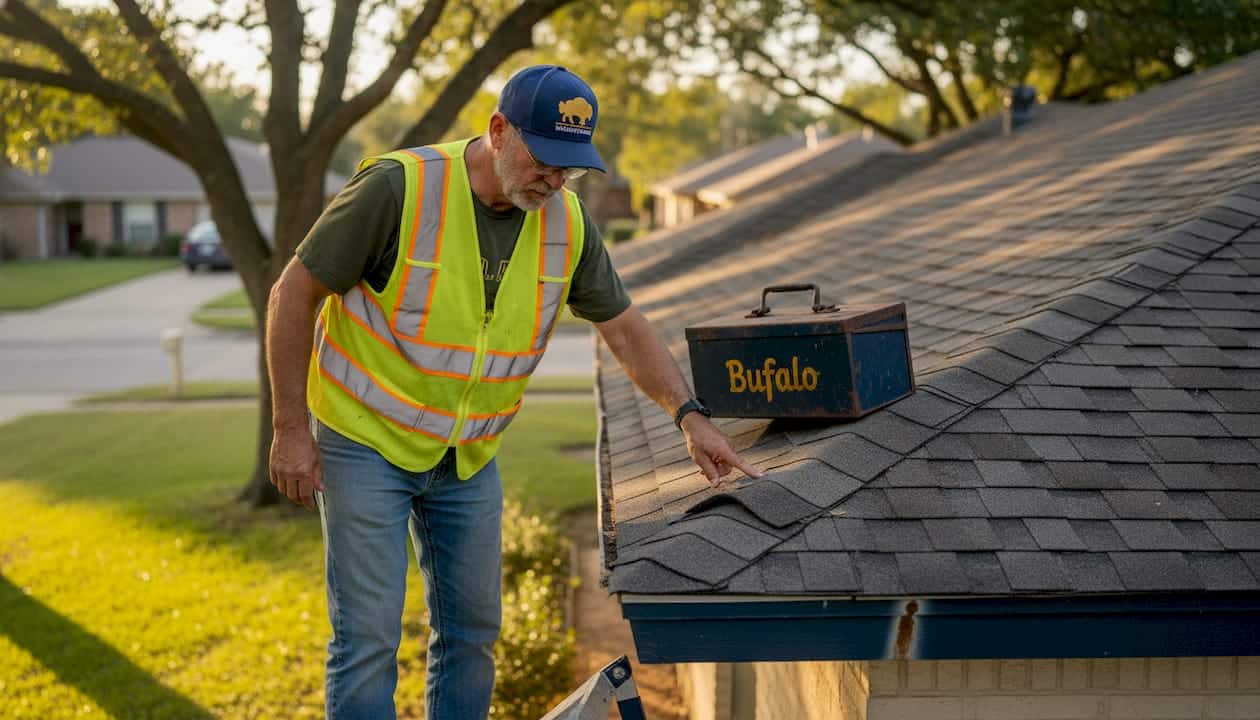
Know when to call a professional. If you spot sagging, widespread missing shingles after a storm, visible mold in the attic, or water staining across multiple ceiling areas, that is not a DIY situation. Those signs point to damage that needs a licensed roofing contractor’s assessment before you risk making things worse.
What you need for safe and effective roof repair
Spotting the problem is only the beginning. Next, make sure you have the right tools and safety prep.
Attempting a roof repair without the correct equipment is dangerous. Texas heat makes roof surfaces extremely slippery, and the pitch of many Kirby homes can be steeper than it looks from the yard. Before you climb up, gather the right gear and materials. Using a roof maintenance checklist before any repair job is one of the best practices for proactive roof care in Texas homes, and it ensures you do not skip a critical step.
Essential tools:
- Extension ladder rated for your weight plus equipment
- Non-slip work boots with rubber soles
- Safety harness and anchor rope for steep pitches
- Roofing hammer or nail gun
- Pry bar for removing damaged shingles
- Utility knife and tin snips for cutting flashing and underlayment
- Caulking gun for sealant application
- Chalk line to keep rows straight
Materials to have on hand:
- Replacement shingles matching your current roof (color and style)
- Roofing underlayment for larger patches
- Roofing nails and galvanized screws
- Roofing sealant and flashing cement
- Pre-cut patch kits for emergency temporary fixes
- Waterproof tarps for temporary storm protection
| Item | Purpose | Temporary or permanent |
|---|---|---|
| Replacement shingles | Cover exposed areas | Permanent |
| Waterproof tarp | Prevent water entry immediately | Temporary |
| Flashing cement | Seal gaps around penetrations | Permanent |
| Roofing patch kit | Quick fix after storm damage | Temporary |
| Roofing sealant | Waterproof seams and edges | Permanent |
Pro Tip: Always buy 10 to 15 percent more shingles than you calculate needing. Cuts, waste, and the occasional cracked piece add up fast, and running short mid-job in summer heat is a serious problem.
Never work on a wet roof or when winds exceed 20 mph. Moisture destroys traction and a gust at the wrong moment can cause a serious fall. If a storm just passed, give the surface at least two hours to dry before stepping on it.
Step-by-step: Repairing common roof issues
Preparation complete. It is time to get hands-on with the most effective repair techniques for Kirby roofs.
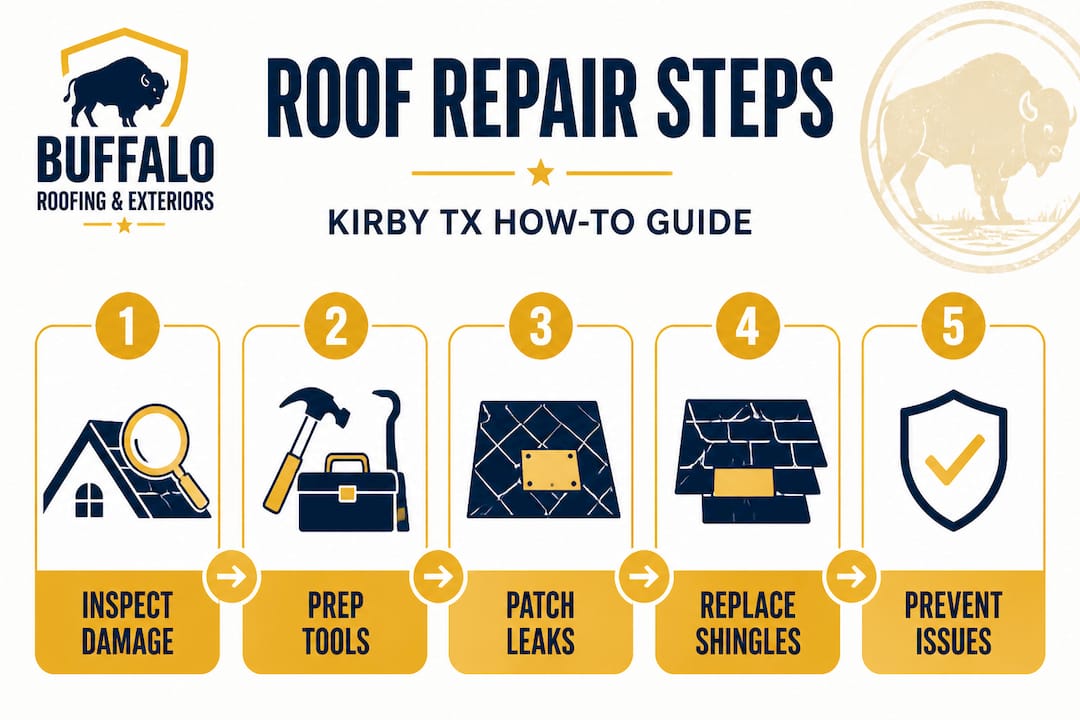
The three most common repairs Kirby homeowners face are patching minor leaks, replacing damaged shingles, and fixing failed flashing. Each one has a specific process, and doing it correctly the first time saves you from repeating the work after the next storm.
How to patch a minor leak:
- Locate the source of the leak from inside the attic first, tracing water stains back toward the highest point of entry.
- Mark the spot with chalk or tape so you can find it from the roof surface.
- Remove any debris, dirt, or loose material from around the leak point.
- Apply roofing sealant generously to the area, pressing it firmly into any cracks or gaps.
- Smooth the sealant with a putty knife and allow it to cure fully before checking for success.
How to replace a damaged shingle:
- Slide a pry bar under the damaged shingle and lift gently to expose the nails.
- Remove the nails and slide the old shingle out. Check the underlayment beneath for moisture damage.
- Slide the new shingle into position so it aligns with adjacent rows.
- Nail it down with four roofing nails, placed just below the adhesive strip.
- Seal the nail heads and overlapping edges with roofing cement for waterproofing.
How to fix damaged flashing:
- Inspect flashing around chimneys, vents, and skylights for rust, lifting, or separation.
- Remove loose or corroded sections with tin snips and a pry bar.
- Cut new flashing to the correct dimensions and bend it to match the existing profile.
- Secure it with roofing nails and seal all edges with flashing cement.
- Apply a bead of sealant along the top edge where the flashing meets the roof surface.
| Repair type | Difficulty | Estimated time | When to call a pro |
|---|---|---|---|
| Minor leak patch | Low | 30 to 60 minutes | If leak recurs after repair |
| Single shingle replacement | Low to medium | 1 to 2 hours | If underlayment is soaked |
| Flashing repair | Medium | 2 to 3 hours | If multiple sections are damaged |
| Structural damage | High | Full day or more | Always |
Finding qualified roofing contractors in Kirby is essential when the damage exceeds what a DIY repair can safely address.
Pro Tip: A temporary tarp is not a permanent fix, but it is the right move immediately after a storm. Secure it with weighted boards, not just bungee cords. A loose tarp in a Texas windstorm causes more damage than the original problem.
If you see sagging roof decking, widespread mold inside the attic, or more than a few square feet of missing shingles after a storm, stop. That is the threshold where professional assessment protects both your safety and your investment.
How to prevent future roof problems in Kirby
Repair done, but the work is not over. Set yourself up for lasting results by preventing problems before they start.
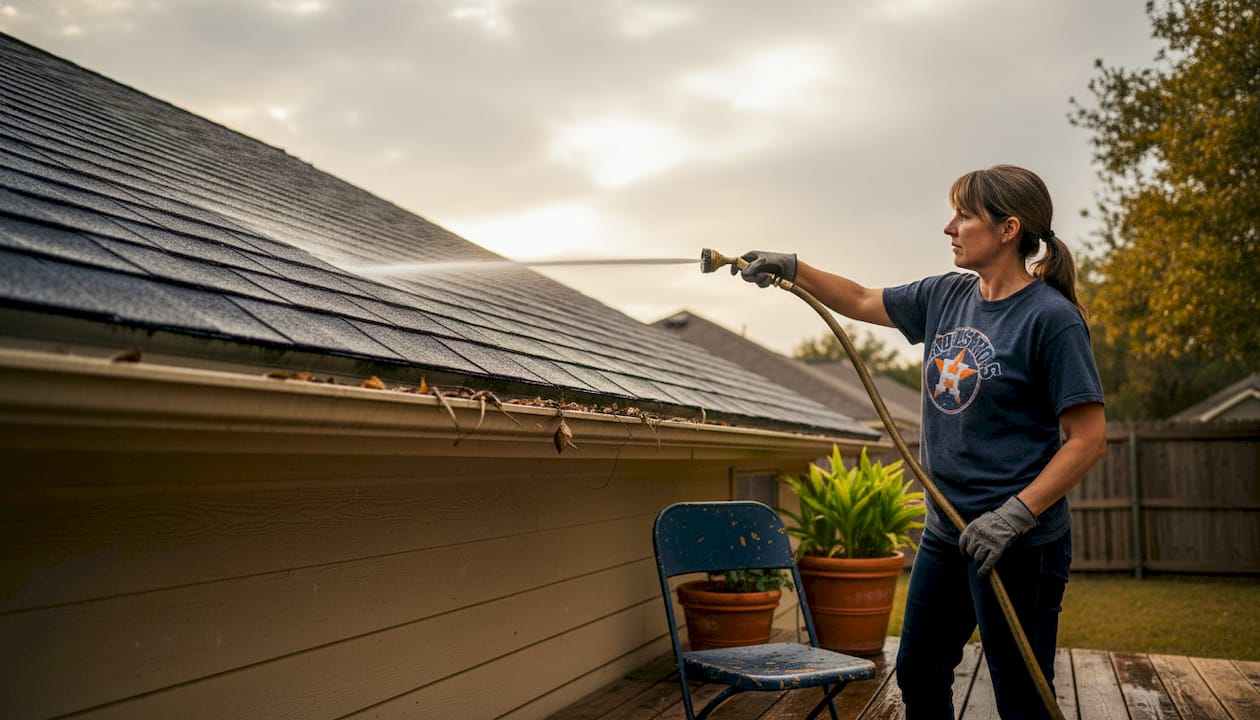
The best repair in the world only lasts as long as your maintenance habits allow. In Kirby, where storm season runs from spring through fall and UV radiation bakes roofs through the summer, prevention is not optional. It is what keeps small repairs from becoming major restoration jobs.
Preventive steps that make a real difference:
- Install impact-resistant shingles rated for Class 4 hail protection when replacing your roof. They cost more upfront but dramatically reduce damage in severe storms.
- Apply weather-resistant roofing materials such as reflective coatings that reduce UV absorption and lower attic temperatures by as much as 20 degrees.
- Clean gutters at least twice a year, spring and fall. Clogged gutters push water under shingles at the eaves, causing rot and leaks from the edge inward.
- Trim tree branches that hang over your roof. A single limb dropping during a storm can puncture shingles, damage flashing, and crack the decking beneath.
- Inspect your attic insulation and ventilation annually. Poor airflow causes moisture buildup, which weakens decking from below without any visible exterior signs.
Understanding the importance of roof maintenance goes beyond just aesthetics. A well-maintained roof adds measurable value to your property and lowers your homeowner’s insurance risk profile over time.
Pro Tip: Schedule a professional roof inspection every spring before storm season begins. That single annual investment catches developing problems when they are still inexpensive to fix, rather than after a severe event forces the issue.
Routine habits extend your roof’s working life significantly. Simple things like rinsing off algae growth with a diluted bleach solution, resealing exposed nail heads every few years, and recaulking flashing joints after temperature swings keep water out and materials intact much longer than neglect allows.
Why quick, quality roof repair is non-negotiable in Kirby
Here is the honest reality that most homeowners do not want to face. Waiting on roof repairs is almost never a money-saving decision. It feels like one. A small leak, a couple of missing shingles, some granule loss in the gutters, none of those seem urgent enough to schedule a contractor and spend money on. But in Kirby’s climate, delay multiplies damage at a rate that catches most people off guard.
Water does not stay where it enters. A pinhole leak during a spring storm becomes a saturated roof deck by summer, and a rotting deck by the time fall storms arrive. What started as a few hundred dollars in shingle replacement turns into thousands in structural repair. Regular roof maintenance is the proven approach that separates homeowners who manage their properties affordably from those who face avoidable restoration expenses.
The conventional wisdom of “wait and see” works in climates with mild weather and long dry seasons. Kirby is not that. Storms here do not follow a polite schedule, and when the next hailstorm hits a roof that already has compromised shingles and weakened flashing, the damage compounds dramatically.
There is another angle worth considering. Quality matters as much as speed. A fast, poor-quality repair gives homeowners a false sense of security, and the failure often happens during the next major weather event, exactly when you need the roof to perform. Investing in proper materials and skilled workmanship the first time builds a roof that earns its keep through multiple storm seasons without constant re-repair. That is what genuine property protection looks like.
Trusted roofing solutions for Kirby homes
If you want peace of mind and lasting repairs, here is how professional help can amplify your results quickly.
Buffalo Roofing & Exteriors serves Kirby homeowners with fast, reliable roof repair and storm damage restoration backed by professional warranties. Whether you are dealing with the aftermath of a major storm or trying to stay ahead of Texas weather with proactive maintenance, our team delivers quality work that lasts.
Start by reviewing our storm damage restoration guide to understand the full recovery process after severe weather. For targeted advice on protecting your property, our storm damage repair tips cover everything from emergency response to choosing the right materials for Texas resilience. Contact us for a free estimate and let our team put lasting protection over your head.
Frequently asked questions
How quickly should I repair roof damage after a Texas storm?
You should repair roof damage as soon as possible, ideally within 24 to 48 hours of identifying it, to prevent water intrusion and escalating costs. Acting fast is one of the core roofing tips recommended for Texas homeowners.
What are the most common roof problems in Kirby, TX?
Common issues include missing shingles, storm-driven leaks, hail bruising on shingle surfaces, and flashing failure around chimneys and vents. The Kirby roofing services page covers area-specific damage patterns in detail.
Should I do roof repairs myself or call a professional?
Minor repairs like sealing a small leak or replacing a single shingle can be DIY if you have the right tools and take safety precautions. For major damage, structural issues, or anything after a severe storm, a local roofing specialist protects your safety and your warranty.
What roofing materials are best for Texas homes?
Impact-resistant shingles rated Class 4 and weather-resistant roofing materials like reflective coatings offer the best protection for Texas heat, hail, and high winds.
How often should my roof be inspected?
Experts recommend at least one professional inspection per year, scheduled in spring before storm season, plus a follow-up check after every major storm. Following a 2026 maintenance checklist helps you stay on schedule and catch issues early.