TL;DR:
- Emergency home repair in coastal Texas focuses on quick stabilization of immediate hazards after storm damage, not full restoration. Proper documentation and understanding when repairs qualify as emergencies are essential for insurance and compliance, especially under TWIA rules. Respond promptly, document thoroughly, and coordinate with qualified contractors to ensure effective, compliant recovery efforts.
After a Gulf Coast storm tears through your neighborhood, the instinct is to fix everything at once. But emergency home repair is not about full restoration. It is about one thing: stopping the bleeding. Emergency home repair is urgent work meant to stabilize a home so life, safety, and habitability threats are addressed as fast as possible. Texas coastal homeowners face some of the most aggressive storm conditions in the country, from Category 4 hurricane winds to flash flooding and golf-ball-sized hail. In this guide, you will learn how to identify what actually counts as an emergency, document it correctly, and take the right steps without tanking your insurance claim.
Table of Contents
- Defining emergency home repair: What it is and what it isn’t
- When is emergency home repair needed? Common triggers in coastal Texas
- Responding to emergency repairs: Step-by-step for Texas storm damage
- Texas coastal rules: Insurance, inspections, and eligibility for emergency repairs
- The uncomfortable truth about emergency repairs in Texas coastal homes
- Connect with trusted Texas coastal home repair experts
- Frequently asked questions
Key Takeaways
| Point | Details |
|---|---|
| Stabilization, not renovation | Emergency home repairs are about quickly resolving safety threats—not cosmetic or permanent restoration. |
| Mitigation actions matter | Tarping, boarding, and drying are urgent steps to prevent further damage before permanent fixes. |
| Texas-specific insurance rules | Homeowners must follow windstorm inspection and certification requirements to maintain coverage after storm repairs. |
| Document everything | Save receipts, photos, and videos for insurance claims and potential reimbursement programs. |
| Eligibility and program limits | Disaster recovery programs have specific damage thresholds and caps for reimbursement—know the details before applying. |
Defining emergency home repair: What it is and what it isn’t
Most homeowners use the phrase “emergency repair” loosely. They apply it to a leaking kitchen faucet, a cracked window, or a slow drain. In reality, the term has a specific and important meaning, especially when insurance money and your family’s safety are involved.
Emergency maintenance is urgent work meant to stabilize a structure so that risks to life, safety, or health are brought under control immediately. The key word is stabilize. You are not trying to restore the home to its original condition during this phase. You are trying to stop the situation from getting worse.
Here is what genuinely qualifies as emergency home repair:
- An exposed roof section letting rain pour into your living space
- A broken structural wall after a tree impact
- A gas leak or fire damage that creates immediate danger
- Electrical hazards caused by flooding or storm debris
- Broken windows or doors that make the home unsecured and vulnerable to weather or intruders
- Collapsed ceiling sections that pose a collapse risk
What does not qualify as an emergency? Cosmetic damage. A cracked fascia board, a few missing shingles that are not causing leaks, or a dented garage door may need eventual repair, but they are not emergencies. Emergency repairs are typically limited to essential systems or critical structural problems that pose immediate danger, not comprehensive renovations.
The practical rule of thumb: If the damage puts your family in danger tonight or will cause the structure to fail further before a permanent repair can be scheduled, it is an emergency. If it can wait two weeks without making things worse, it is not.
This distinction matters because how you label and document the repair affects your insurance claim, your eligibility for assistance programs, and the scope of work contractors can perform on short notice. Our detailed resource on storm damage repair tips walks through this line in more depth so you know where your situation falls.
Understanding this core distinction sets up the next important question: what situations in coastal Texas most commonly trigger the need for true emergency repairs?
When is emergency home repair needed? Common triggers in coastal Texas
Coastal Texas is not like the rest of the state. Corpus Christi, Rockport, Port Aransas, and surrounding communities sit directly in the path of Gulf-generated storms. The combination of wind, storm surge, and rain that comes with even a modest tropical storm can cause damage that demands immediate action.
The most common emergency triggers in this region include:
Hurricane and tropical storm winds: Sustained winds above 74 mph can strip roofing materials, collapse carports, shatter windows, and snap trees onto structures. Even a tropical storm with 50 mph gusts can lift poorly secured roofing and push water into wall cavities.
Flash flooding and storm surge: Water intrusion is the fastest-moving threat. Once water enters your walls or subfloor, mold can begin developing within 24 to 48 hours. Flood damage also compromises electrical systems and can weaken foundation elements.
Hail impact: Large hail can puncture roofing membranes, crack skylights, dent metal flashing, and break windows. In some cases, the damage is not immediately visible but creates pathways for water intrusion that worsen over the next rain cycle.
Tornadoes and wind shear: Coastal Texas sees frequent tornado activity during hurricane season. Even brief touchdowns can remove entire roof sections or push walls off their footings.
Emergency repair scopes in storm contexts commonly include protecting property from further loss, addressing water intrusion, electrical and plumbing hazards, and completing mitigation repairs to stop active damage.
Here is a quick-reference table for common storm events and appropriate emergency responses:
| Storm event | Primary hazard | Immediate emergency action |
|---|---|---|
| Hurricane landfall | Roof failure, flooding | Tarp exposed roof, shut off electricity |
| Tropical storm | Water intrusion, window damage | Board broken windows, extract standing water |
| Severe hail | Roof punctures, skylight damage | Inspect for leaks, temporary patch if needed |
| Flash flood | Subfloor/wall saturation, electrical | Shut off power at breaker, begin water extraction |
| Tornado | Structural wall failure, debris | Evacuate if unsafe, call structural assessment |
Steps to take immediately when you suspect an emergency situation:
- Confirm your family is physically safe and out of immediate danger zones
- Shut off utilities if flooding or electrical damage is present
- Do a visual walk-around from a safe distance before entering damaged areas
- Call your insurance company to report the event, even before repairs start
- Contact a licensed Texas contractor for an emergency assessment
Pro Tip: Do not wait for the storm to fully pass to call your contractor. Many reputable emergency repair services in coastal Texas take calls during weather events and can schedule your site visit immediately after conditions are safe.
For a deeper breakdown of what to do in the first 24 hours after your roof is hit, read our guide on what to do after a storm damages your roof. You can also review our broader coverage of protecting coastal Texas homes from recurring storm threats.
Responding to emergency repairs: Step-by-step for Texas storm damage
Knowing what qualifies as an emergency is one thing. Knowing how to respond in the right order is what protects your home and your insurance claim at the same time.
Step 1: Safety first, always. Walk through your home or stay out of it entirely if there is any doubt about structural integrity. Look for sagging ceilings, standing water near electrical outlets, or the smell of gas. Your safety is not negotiable.
Step 2: Document everything before you touch anything. This step is where most homeowners make expensive mistakes. They start cleaning up or moving debris without capturing photo and video evidence of the original damage. Your insurance adjuster needs to see the damage as it happened, not after you tidied things up.
Make temporary repairs, save receipts, and document damage with photos and video before any mitigation work begins. This is the official guidance for Texas wind and storm insurance situations, and ignoring it can cost you a denied claim.
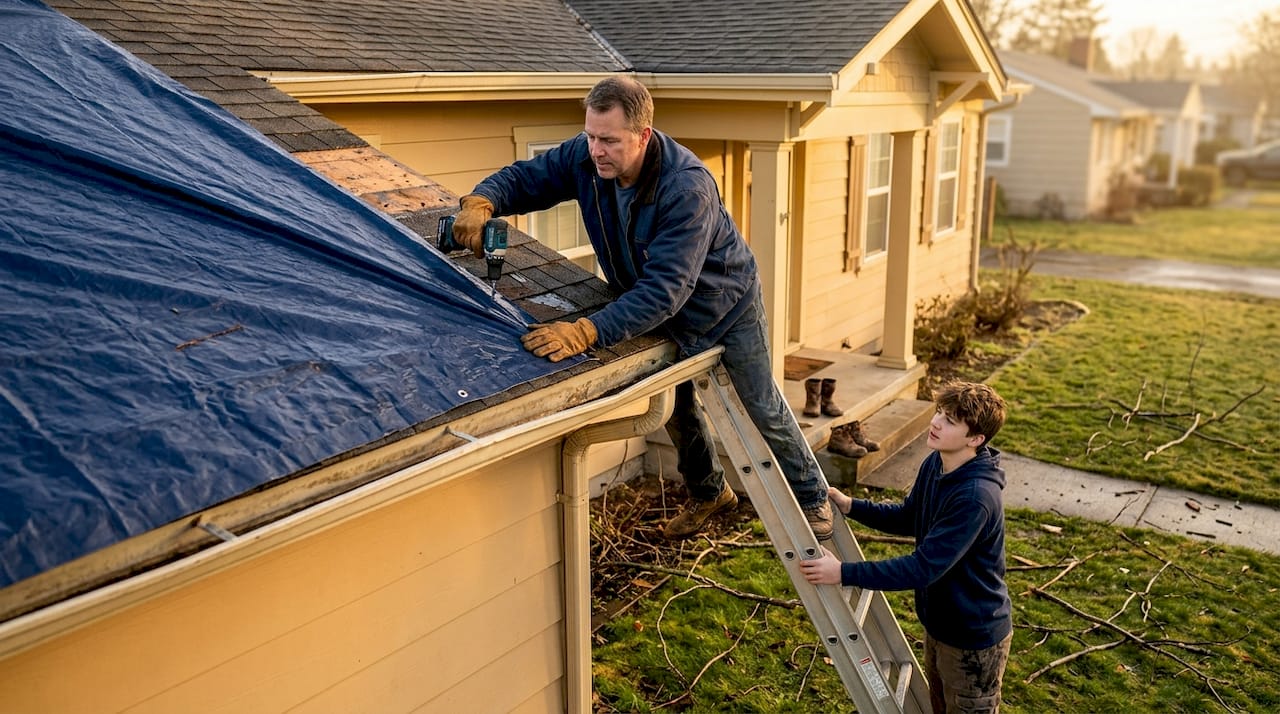
Step 3: Execute mitigation-level temporary repairs. This means tarping a damaged roof section to stop rain from entering, boarding up a broken window to prevent further weather damage, or extracting standing water before mold sets in. These are emergency actions, not permanent fixes.
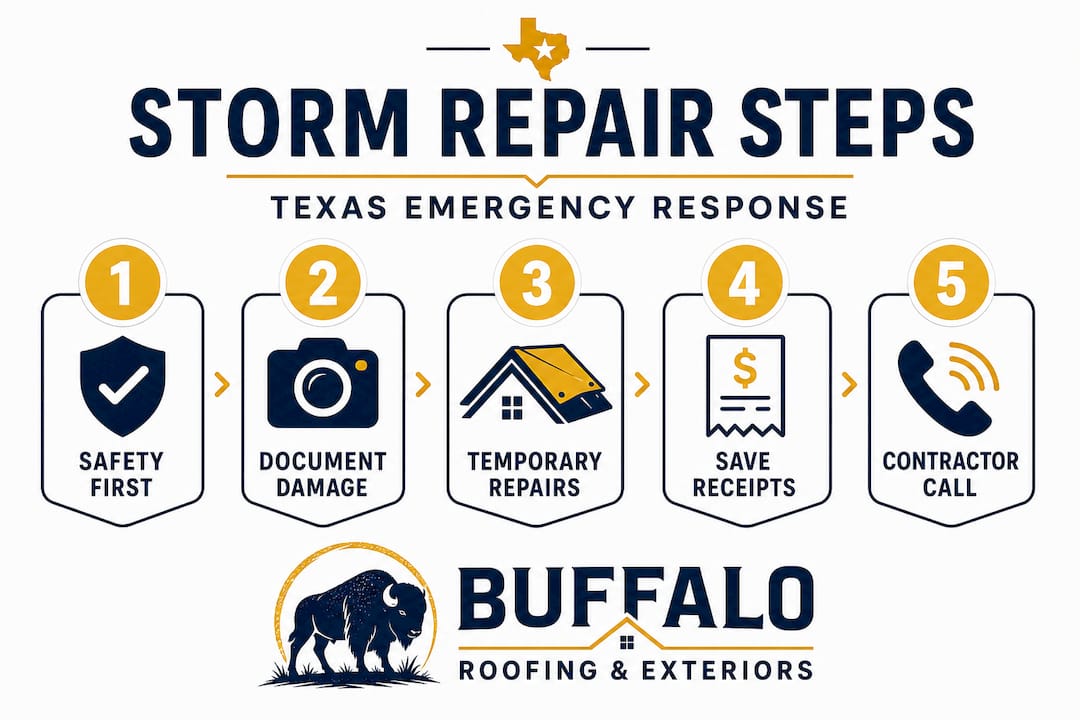
Step 4: Keep every receipt. Every piece of plywood, every tarp, every rental fee for a water extractor. If your policy covers emergency mitigation costs, your adjuster needs a paper trail to reimburse you.
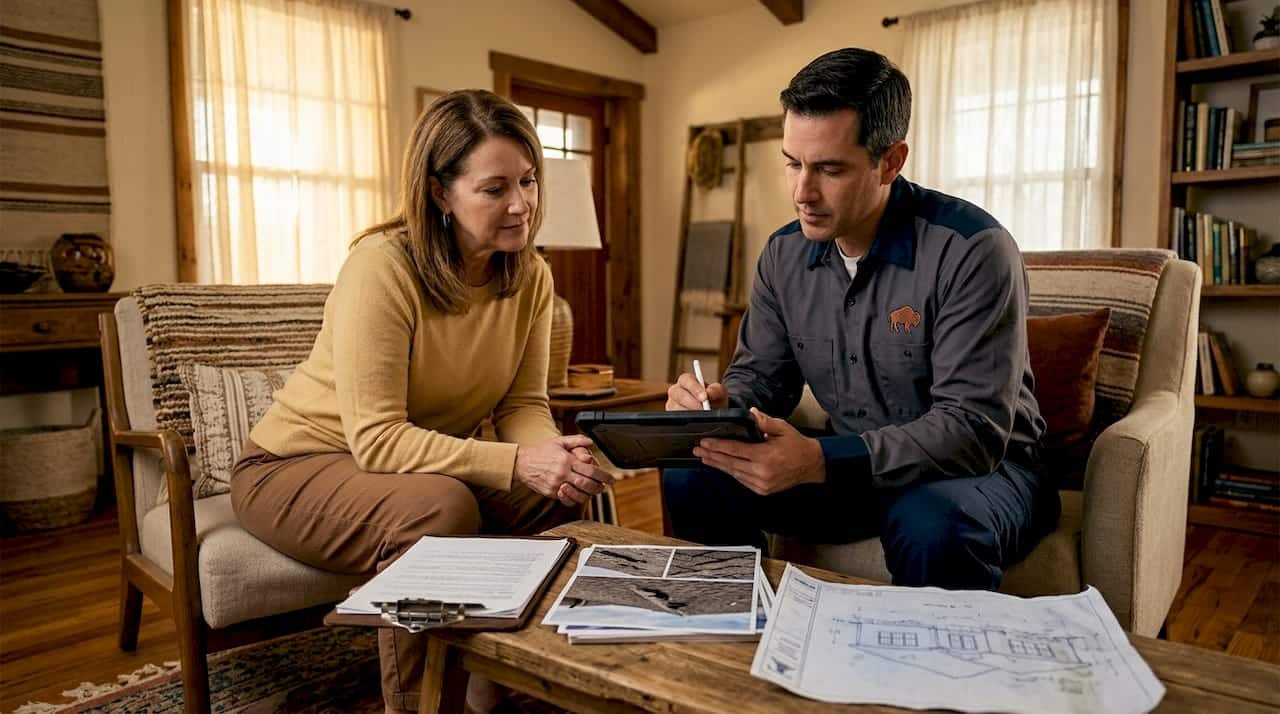
Step 5: Contact a licensed contractor for an emergency assessment. An experienced contractor can identify secondary damage you may have missed, provide a written scope of emergency repairs, and document findings to support your claim. Our emergency roof repair workflow outlines exactly what this process looks like from the contractor’s side.
Step 6: Begin coordinating permanent repair. Once the emergency phase is complete and your adjuster has assessed the damage, work with your contractor to schedule the full restoration scope. Our storm restoration guide covers this phase in detail.
Pro Tip: Write a simple handwritten log after the storm. Note the date and time of impact, what you observed, what you did, and who you called. Adjusters find these logs helpful, and they show you acted responsibly and promptly.
A critical statistic: The Texas Department of Insurance reports that storm-related claims are among the most frequently disputed in the state, often because homeowners cannot demonstrate what damage was pre-existing versus storm-caused. Documentation from the immediate aftermath is your best defense.
Texas coastal rules: Insurance, inspections, and eligibility for emergency repairs
Texas coastal homeowners operate under a specific set of rules that most inland homeowners never encounter. If you have a home in a designated windstorm zone along the Texas coast, you are likely insured through or aware of the Texas Windstorm Insurance Association (TWIA). And TWIA has requirements that directly affect your emergency repair situation.
Texas rules may require official windstorm inspections and compliance certificates (like the WPI-8) for coverage eligibility, especially after roof repairs. If your contractor makes repairs without proper inspection documentation, you could jeopardize your windstorm coverage going forward.
Here is what coastal Texas homeowners need to understand:
- WPI-8 certificate: This is a compliance certificate issued after a Texas Department of Insurance-approved inspector confirms that construction or repair work meets windstorm-resistant building standards. For coastal homeowners, this is not optional paperwork. It is tied directly to your ability to maintain windstorm insurance coverage.
- Contractor qualification matters: Only contractors who build or repair to the required windstorm standards can ensure your repair supports continued coverage. Ask any contractor if they are familiar with WPI-8 requirements before they touch your roof.
- Emergency repairs versus reconstruction: Some assistance programs treat these separately. A temporary tarp may be covered under emergency mitigation, while full roof replacement falls under reconstruction with different caps and eligibility rules.
Here is a comparison of how Texas emergency repair situations differ by program type:
| Program or coverage type | Covers emergency stabilization? | Covers full restoration? | Requires inspection certificate? |
|---|---|---|---|
| TWIA wind/hail policy | Yes, with documentation | Yes, after adjuster review | Yes (WPI-8 for repairs) |
| Federal disaster assistance | Limited mitigation | Sometimes, with eligibility | Depends on program |
| Texas GLO home repair program | Yes, if disaster declared | Yes, within dollar caps | Varies by damage type |
| Homeowner’s insurance (standard) | Usually yes | Yes, less strict inspection | Generally no |
Home repair programs may split emergency stabilization versus reconstruction with eligibility thresholds and caps, so knowing which program applies to your situation before you begin work is essential.
Key things to verify before any work starts:
- Whether your home sits in a designated TWIA windstorm zone
- Whether your contractor is aware of and can comply with WPI-8 inspection requirements
- What your policy’s deductible for wind and hail damage is (it is often a percentage of dwelling value, not a flat amount)
- Whether a state or federal disaster declaration has been issued that opens additional program eligibility
Our step-by-step resource on storm damage repair steps covers how to navigate both the repair process and the insurance documentation requirements specific to this region.
The uncomfortable truth about emergency repairs in Texas coastal homes
Here is something the roofing industry does not talk about enough: the label “emergency repair” is marketing language as much as it is a functional category. What actually matters is not whether a contractor calls something an emergency repair. What matters is whether the work addresses an immediate hazard and whether it is designed to stabilize your home until permanent work can be properly planned and inspected.
Emergency repair is less about the contractor’s marketing label and more about two things: the immediacy of the hazard and whether the work is meant to stabilize and mitigate until permanent repair can be planned, inspected, and documented. When you understand this, you stop shopping for a label and start shopping for the right scope of work.
The second uncomfortable truth: documentation failures cause more denied claims than contractor failures do. Making temporary repairs and saving receipts, and documenting damage before mitigation work begins, is not optional. It is the difference between a paid claim and a dispute that drags on for months.
We have seen homeowners who rushed cleanup efforts after a storm because they wanted to get back to normal. In doing so, they destroyed the evidence their adjuster needed to process the claim. The storm damage happened. The loss was real. But without photos of the original condition, the adjuster had nothing to work with.
The third uncomfortable truth: emergency repair buys you time, not a finished product. Homeowners who treat a tarp or a piece of plywood as a long-term solution often pay twice. The temporary fix holds through one rain event, then fails during the next storm, causing additional damage that complicates a future claim. Plan the permanent repair within the first 30 to 60 days after your emergency mitigation is in place.
You can explore more about the benefits of timely storm repair for coastal Texas homes to understand why speed and permanence are both part of the recovery equation.
Connect with trusted Texas coastal home repair experts
When a storm hits your home along the Texas coast, the decisions you make in the first 48 hours shape your recovery for months. You need a contractor who understands windstorm compliance, can document properly for insurance, and delivers durable repairs that hold up through the next season.
Buffalo Roofing & Exteriors serves homeowners across Corpus Christi, San Antonio, and Victoria with emergency response, full storm damage restoration, and long-term storm proofing for Texas homes. Whether you need immediate stabilization or a complete exterior rebuild after hurricane damage, our team knows the TWIA requirements, the inspection process, and the right scope for your specific situation. Get a free estimate and take the first step toward a safe, secure home. Visit our coastal home repair services page to get started today.
Frequently asked questions
How do I know if my repair qualifies as an emergency?
A repair is an emergency if it addresses an immediate risk to life, safety, or habitability. Emergency repairs are limited to essential systems or structural problems that pose immediate danger, not routine maintenance or cosmetic issues.
What documentation should I gather after storm damage?
Take photos and videos of all damaged areas before touching anything, save every repair receipt, and write a timeline of events. Official guidance calls for documenting damage with photos and video before making mitigation repairs, so your evidence is preserved for the adjuster.
Does my insurance require special inspections for emergency repairs?
For roof repairs in Texas coastal windstorm zones, windstorm inspections and WPI-8 certificates may be required to maintain your coverage eligibility, even after emergency-level repairs.
Can I get reimbursement for temporary repairs after a disaster?
Some programs offer reimbursement for eligible mitigation costs, but program rules include eligibility thresholds and caps that vary by disaster type, location, and program funding availability.
Is emergency home repair the same as full restoration?
No. Emergency repair is stabilization, not renovation. Full restoration is a separate phase that follows after hazards are controlled, the insurance adjuster has assessed your claim, and a permanent repair scope is defined.