TL;DR:
- Coastal Texas roofs degrade faster due to salt, humidity, UV, and storms, reducing lifespan by a decade.
- Regular professional inspections help identify hidden damage, strengthening storm resilience and reducing repair costs.
- Meeting FORTIFIED standards through inspections can lower insurance premiums and improve storm damage resistance.
Your roof was built to last 20 to 30 years. That’s what the manufacturer says, anyway. But if you live along the Texas coast, the reality is far less reassuring. Salt air, relentless humidity, and hurricane-force winds quietly shorten that lifespan by a decade or more, often without leaving a single visible clue. Homeowners who skip regular roof inspections are essentially flying blind, and the financial consequences can be severe. This article breaks down why coastal Texas roofs demand more attention, how inspections protect your home before storms hit, and what practical steps you can take right now to stay ahead of damage that most people never see coming.
Table of Contents
- Why Texas coastal roofs need special attention
- How inspections prevent costly storm and wind damage
- Insurance, savings, and FORTIFIED roof standards
- What to expect during a professional roof inspection
- Our perspective: Most roof damage is silent—here’s how to stay ahead
- Protect your home with proven inspection and roofing solutions
- Frequently asked questions
Key Takeaways
| Point | Details |
|---|---|
| Coastal roofs age faster | Texas coastal conditions cut roof lifespan drastically compared to inland homes. |
| Inspections prevent disaster | Scheduled roof inspections catch storm damage early and can save thousands in repairs. |
| Insurance rewards maintenance | FORTIFIED roof inspections unlock premium discounts and protect policy coverage. |
| Professional inspections matter | Expert assessors spot hidden risks and extend roof life more reliably than DIY checks. |
Why Texas coastal roofs need special attention
Living near the Gulf of Mexico is beautiful, but your roof pays a price for it every single day. Salt particles carried by coastal winds settle into roofing materials and slowly break down the protective granules on asphalt shingles. Humidity accelerates mold and algae growth, which weakens the underlying substrate. Add intense UV exposure and seasonal storm activity, and you have a combination that no standard roofing product was designed to handle indefinitely.
The numbers tell a clear story. Coastal roofs last 5 to 10 years less than roofs in inland areas, meaning a roof rated for 25 years might only give you 15 to 20 in Corpus Christi or Rockport. That gap matters enormously when you’re planning a budget or deciding whether to repair or replace.
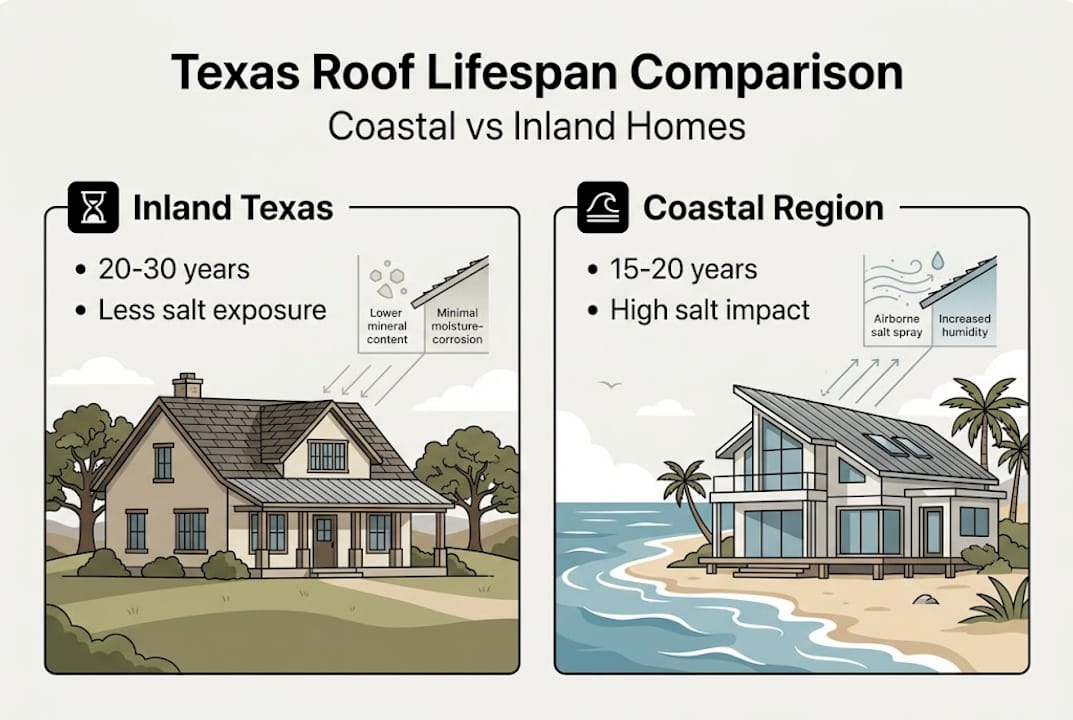
| Roofing factor | Inland Texas | Texas coastal region |
|---|---|---|
| Average lifespan | 20 to 30 years | 15 to 20 years |
| Salt corrosion risk | Low | High |
| Storm frequency | Moderate | High |
| UV degradation | Moderate | Severe |
| Sealant aging speed | Slow | Fast |
Manufacturer warranties are another area where coastal homeowners get caught off guard. Most warranty language assumes average climate conditions. Asphalt shingle durability in hurricane-prone zones like South Texas often falls well short of what the product label promises. Sealants age faster, fasteners corrode, and wind uplift resistance drops years ahead of schedule.
Here are the key factors that accelerate roof aging on the Texas coast:
- Salt air exposure corrodes metal flashing, fasteners, and gutters
- High humidity promotes moss, algae, and mold growth under shingles
- Intense sun causes thermal expansion and contraction that cracks sealants
- Hurricane-force winds loosen shingles and create micro-gaps that invite water
- Storm debris impact causes hidden dents and fractures that aren’t visible from the ground
Pro Tip: A visual scan from the yard tells you almost nothing. Hidden damage beneath the surface, inside the attic, or around flashing points is where the real problems start. Only a professional walking your roof can catch what matters. Our coastal roof lifespan guide explains what to watch for at each stage of your roof’s life, and the importance of routine inspections goes deeper into why frequency matters here more than anywhere else in Texas.
With this reality in mind, let’s examine how regular roof inspections directly link to home protection.
How inspections prevent costly storm and wind damage
Hurricanes and tropical storms are not a matter of if for Texas coastal homeowners. They are a matter of when. The critical variable is whether your roof is ready when one arrives. An aging, under-maintained roof is not just a structural risk. It’s a financial one.
Here’s the part that surprises most homeowners: asphalt shingles lose wind resistance significantly after 10 years, and older roofs are twice as likely to generate insurance claims after a storm. A shingle that handled 90 mph winds perfectly at age five may fail at 70 mph by age 12. That’s not a defect. That’s physics and coastal chemistry working against you.
Regular inspections interrupt that cycle. A trained inspector identifies loose shingles, corroded fasteners, cracked sealants, and micro-leaks before a storm turns them into major failures. Think of it as finding the weak link in a chain before you put weight on it.
| Outcome | Inspected roof | Uninspected roof |
|---|---|---|
| Storm damage likelihood | Significantly lower | Significantly higher |
| Average repair cost after storm | Moderate, targeted | High, widespread |
| Insurance claim complexity | Simpler, documented | Complicated, disputed |
| Time to restore function | Days | Weeks |
| Long-term roof lifespan | Extended | Shortened |
Here’s a practical sequence for getting ahead of storm season:
- Schedule your inspection in March or April, before hurricane season officially begins in June.
- Request a written report that identifies every vulnerability, ranked by urgency.
- Address high-priority items first, especially loose flashing, aging sealants, and corroded fasteners.
- Complete repairs before June 1 so your roof enters storm season at full strength.
- Schedule a follow-up inspection after any named storm, even if no visible damage is apparent.
Understanding filing storm damage claims before you need to is smart planning, and following proven storm damage prevention steps can mean the difference between a quick repair and a full replacement.
Understanding these risks shows why proactive inspection routines are essential.
Insurance, savings, and FORTIFIED roof standards
Beyond immediate repairs, let’s see how inspections impact costs and insurance.
Most homeowners think of a roof inspection as an expense. It’s actually closer to an investment with a measurable return. Nowhere is that more visible than in the FORTIFIED program, a set of construction and maintenance standards developed by the Insurance Institute for Business and Home Safety (IBHS) to help homes better withstand severe weather.
FORTIFIED roofs are built and maintained to specific standards covering deck attachment, sealed roof decks, and enhanced edge protection. When an inspector verifies your roof meets these standards, insurers take notice. FORTIFIED roofs reduce claims by 19 to 37% and can provide insurance discounts of 10 to 35% in Texas. On a coastal home where premiums are already elevated, that’s real money back in your pocket every year.
Here’s what insurers typically reward:
- Sealed roof deck with approved adhesive or tape at all seams
- Enhanced edge metal installed to prevent wind-driven water entry
- Impact-resistant shingles rated for high-wind zones
- Documented inspection history showing regular professional maintenance
- Updated flashing around chimneys, vents, and skylights
- Verified fastener patterns meeting code requirements for coastal wind loads
Pro Tip: Ask your inspector to specifically document any FORTIFIED-compliant features during the visit. A written record with photos is exactly what your insurance agent needs to apply available discounts.
“Small, consistent investments in roof maintenance and inspections deliver far greater returns than waiting for storm damage to force your hand.”
The math is straightforward. A professional inspection costs a fraction of what a single storm repair runs. Pair that with potential premium reductions, and the annual cost of staying current on roof maintenance for Texas homes becomes one of the smartest line items in your home budget. Our 2026 maintenance checklist walks through every step in detail.
What to expect during a professional roof inspection
Knowing the benefits, here’s how the inspection process works and how you can prepare.
A lot of homeowners put off inspections simply because they don’t know what to expect. The process is straightforward, and knowing what happens helps you get more out of it.
A thorough professional inspection covers these areas:
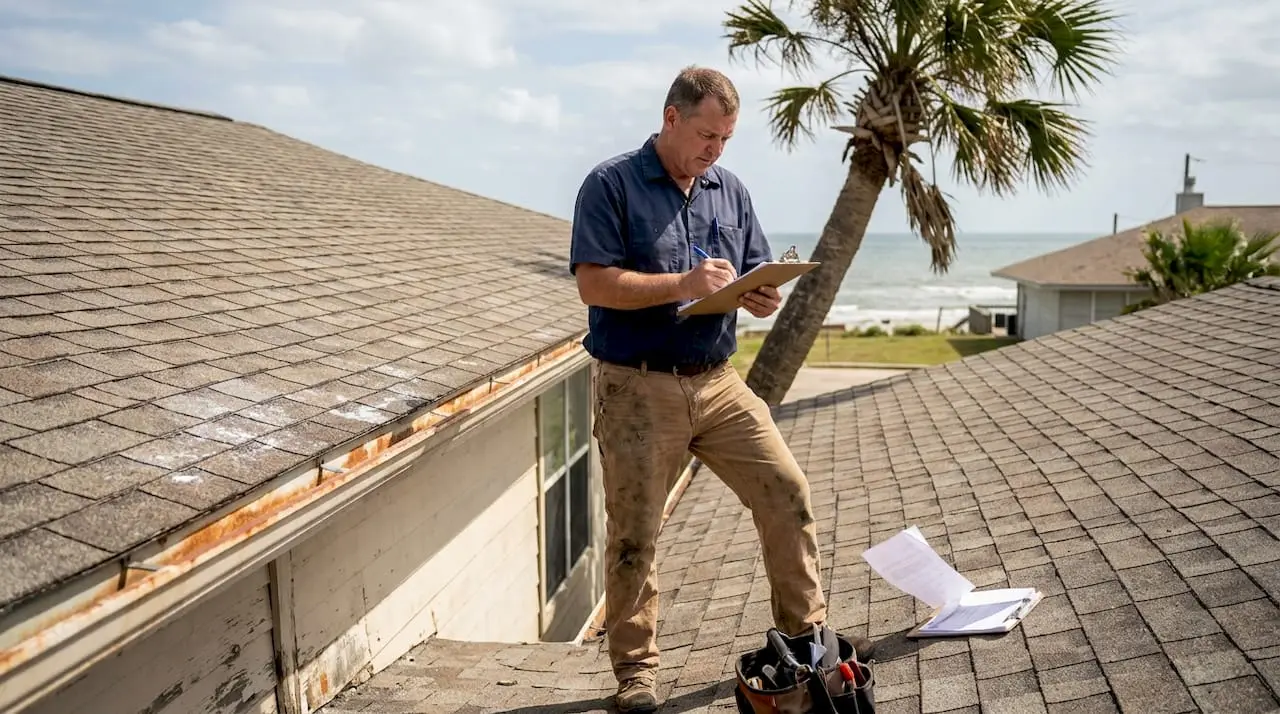
- Surface assessment: The inspector walks the roof checking shingles for cracking, curling, missing granules, and wind lift.
- Flashing review: All metal flashing around chimneys, vents, and valleys is checked for gaps, rust, and separation.
- Sealant condition: Caulking and sealants are evaluated for drying, cracking, or shrinkage.
- Fastener inspection: Exposed nails and screws are checked for corrosion and proper seating.
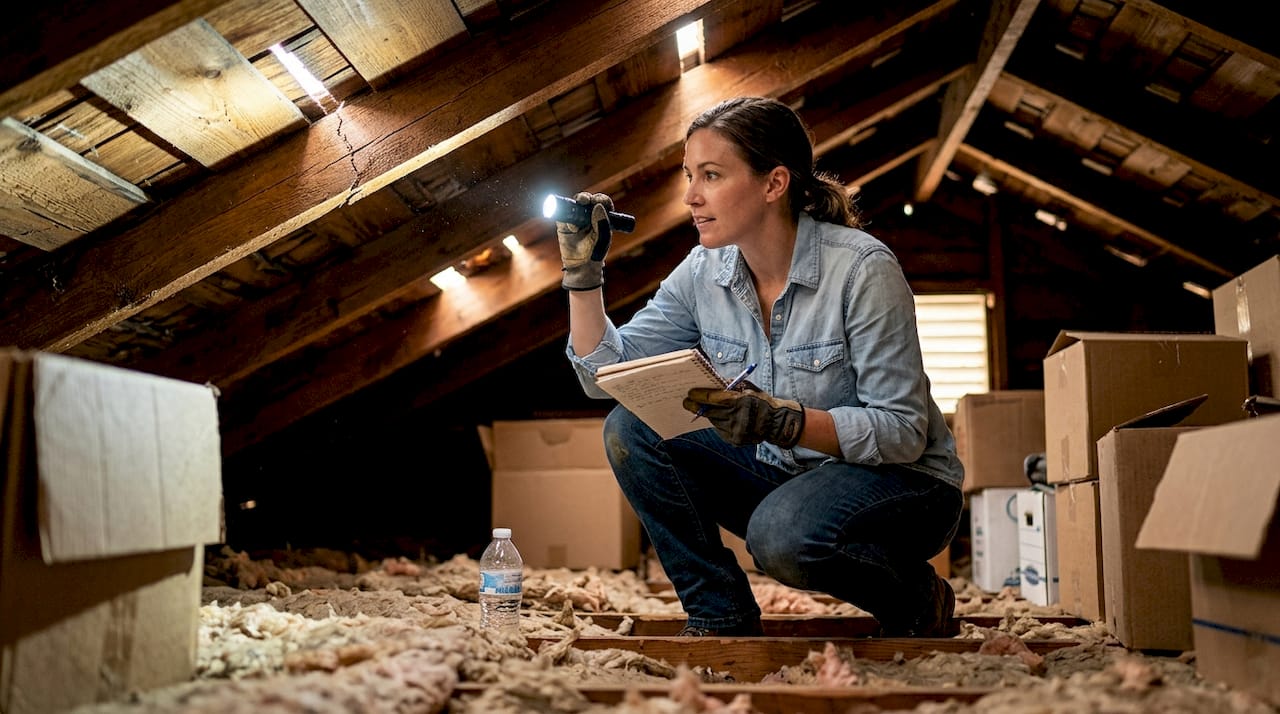
- Attic examination: The inspector checks for daylight penetration, moisture staining, and insulation condition from below.
- Gutter and drainage check: Granule buildup in gutters signals shingle wear; blockages can cause water to back up under the roof edge.
As a homeowner, you can prepare by clearing debris from the roof and gutters beforehand, noting any interior water stains or musty smells, and having your last inspection report ready for comparison. The essential inspection steps resource is a helpful reference to review before the inspector arrives.
For Texas coastal homes, the ideal inspection schedule looks like this:
- Spring (April to May): Pre-season inspection before hurricane season
- Fall (October to November): Post-season check after storm activity winds down
- After any named storm: Regardless of visible damage, schedule a follow-up
Pro Tip: Keep a digital folder with photos and reports from every inspection. If you ever need to file a claim or sell your home, that documentation is critical for roof longevity and proves a consistent maintenance history that buyers and insurers both value.
Our perspective: Most roof damage is silent—here’s how to stay ahead
After years of working on coastal Texas roofs, the pattern we see most often is not dramatic storm failures. It’s quiet, invisible deterioration that compounds over time until one moderate storm turns a manageable repair into a full replacement.
Homeowners tend to operate on a “if it’s not leaking, it’s fine” logic. That thinking is the single most expensive mistake you can make with a coastal roof. By the time water is dripping through your ceiling, the damage has already spread through the decking, insulation, and possibly the framing.
The mental shift that saves money is treating your roof the way you treat your health. You don’t wait for a heart attack to see a doctor. You schedule checkups, catch problems early, and stay ahead of serious consequences. The routine inspection perspective we take at Buffalo Roofing is simple: a roof that gets looked at regularly almost never needs emergency replacement.
“Set and forget” is the real risk on the Texas coast. The environment here is relentless. Salt, heat, and storms don’t take a year off, and neither should your maintenance habits. Two inspections a year and prompt follow-up on findings is not overcautious. It’s the baseline for responsible homeownership in this region.
Protect your home with proven inspection and roofing solutions
If this article has made one thing clear, it’s that waiting costs more than acting. The good news is that getting ahead of roof damage on the Texas coast is entirely manageable with the right support.

At Buffalo Roofing & Exteriors, we understand the specific challenges that Corpus Christi, San Antonio, and Victoria homeowners face every season. From pre-storm inspections to full coastal renovation solutions, we help you protect what matters most. Whether you need a detailed inspection report for your insurer, guidance through the storm recovery guide, or advice on the best roof materials for Texas homes, our team is ready. Contact us today for a free estimate and take the first step toward a roof that’s ready for whatever the Gulf throws at it.
Frequently asked questions
How often should I have my coastal Texas roof inspected?
At minimum, schedule a professional inspection once a year, plus after any major storm. Coastal roofs degrade faster than inland roofs, so twice a year is the smarter standard for South Texas homeowners.
Will insurance rates go down if I maintain my roof regularly?
Yes. Meeting FORTIFIED roof standards through documented inspections can lower your premiums by 10 to 35% in Texas, making regular maintenance one of the best financial moves a coastal homeowner can make.
What damage signs should I watch for between inspections?
Look for loose or missing shingles, water stains on interior ceilings, and granule buildup collecting in your gutters. Any of these signals warrant a professional inspection sooner rather than later.
Do older roofs really perform worse during hurricanes?
Absolutely. Asphalt shingles over 10 years old are twice as likely to suffer storm damage, and their probability of failure in 100 mph winds climbs significantly compared to newer installations.
Is documentation from an inspection really important for claims?
Yes. Inspection reports and timestamped photos create a paper trail that makes insurance claims faster, cleaner, and far less likely to be disputed by your carrier.