Table of Contents
Making the Right Call for Your Roof in Converse, Texas
Deciding on a roof replacement in Converse, Texas is a significant investment in your home’s future, and location-specific expertise makes all the difference. Our local climate brings high winds, hail, and sudden severe storms that demand a windstorm-certified contractor who truly understands these threats. Choosing a team that knows Converse building codes, weather patterns, and insurance requirements ensures your roof will provide lasting protection and durability for your home.
Buffalo Roofing & Exteriors brings over six decades of trusted roofing experience to every project. For homeowners across the greater San Antonio region, we deliver the same high-quality workmanship we’re known for in Roof Replacement San Antonio Tx projects. If you suspect hidden storm damage, our team provides a thorough storm damage roof inspection and can guide you through the roof insurance claim process. We treat every roof replacement in Converse, Texas as a value-focused project–blending fair pricing, strong workmanship warranties, and premium materials–so you never have to compromise on quality or safety.
Call Buffalo Roofing & Exteriors today for a free estimate and to discuss financing options if needed. According to the Texas Department of Insurance, verifying contractor credentials and understanding your policy’s coverage are essential steps before any roof replacement. Our estimates are based on a thorough on-site inspection, and final costs may vary–but your peace of mind starts with that first phone call.
Repair or Replace? Understanding Your Converse Roof’s Needs
Signs a Full Replacement Is Necessary
Once you know the age and general condition of your roof, the next decision is whether to repair or fully replace it. For homeowners considering Roof Replacement Converse Tx, understanding these signs is crucial. Here are the clear indicators that a full replacement is necessary. Asphalt shingle roofs in Converse typically require replacement after 20 years due to thermal cycling and hail impacts. Tile roofs–clay, concrete, Spanish–last 30 years or more but may need replacement sooner after severe hailstorms. Physical signs driven by Texas weather include extensive shingle curling and cracking, granules accumulating in gutters after repeated hailstorms, and daylight visible through roof boards from the attic, indicating deck failure. Sagging roof sections also point to structural damage. When you have leaks in multiple areas rather than one isolated spot, that widespread moisture penetration demands a full replacement. At that point, a new roof installation in Converse restores protection and peace of mind.
When a Targeted Repair Suffices
Several situations call for a targeted repair rather than full replacement. A single leak around a chimney boot or pipe vent is a textbook repair case; only the failed seal or flashing needs attention, and the surrounding roofing remains intact, making it one of the most common and cost-effective fixes. Two to three missing shingles after a named wind event, such as a spring derecho, as long as the surrounding shingles remain intact, are a straightforward fix; these events can strip shingles without compromising the underlayment. For a detailed walkthrough of fixing isolated damage, our step by step roof repair guide provides the exact methods homeowners in Converse can follow. Minor flashing damage around skylights or valleys caught early can be resealed without replacing large sections. A small puncture from debris like a fallen branch is easily patched if the roof deck is undamaged. These targeted interventions preserve the roof’s integrity and extend its service life.
The Importance of a Professional Storm Damage Inspection
Even when a repair seems sufficient, a professional storm damage roof inspection can uncover hidden damage that makes replacement the safer choice. Our windstorm-certified team examines hail impact marks, wind uplift patterns, granule loss in square-foot grids, flashing integrity, soffit/fascia condition, and attic signs like moisture staining and deck rot. Unlike a simple visual check, these detailed findings provide crucial evidence. This documentation directly supports the roof insurance claim process. As the Texas Department of Insurance advises, a professional inspection creates the official record needed to strengthen your claim and preserve the claim window after a named storm. Texas property insurance policies typically provide replacement cost coverage for roofs damaged by named storms, but a prompt inspection is required. Relying on a windstorm-certified contractor such as Buffalo Roofing & Exteriors ensures every inspection meets rigorous standards, giving you the strength, reliability, and trust you need. With a thorough inspection, you’ll have the documentation to move forward with confidence and enjoy Protection and Durability for Your Home.
Navigating Insurance Coverage for Roof Replacement in Texas
When your roof has been damaged by a storm, the insurance claims process can feel overwhelming. Understanding the fundamentals of coverage is the first step to getting your home restored. If you are searching for roof replacement Converse Tx coverage details, the following guide will help you navigate common policy structures and dispute procedures. Our team at Buffalo Roofing & Exteriors brings windstorm-certified expertise to every claim — we help you from the initial inspection through final payment.
RCV vs. ACV: What Texas Homeowners Must Know
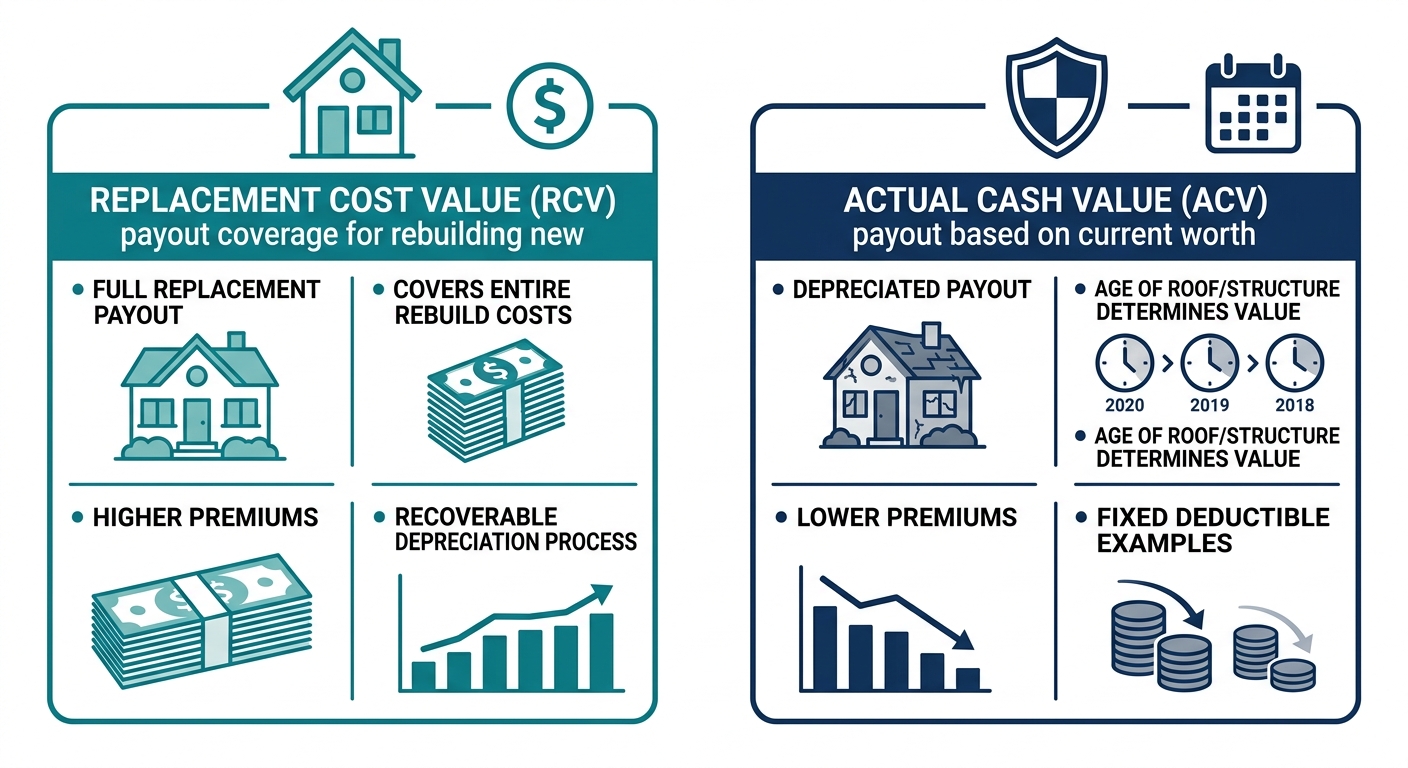
Now let’s look at the two main types of coverage you will encounter. Texas homeowners policies are typically written as either Replacement Cost Value (RCV) or Actual Cash Value (ACV). RCV covers the full cost of a new roof at current market prices, leaving you only to pay your deductible. ACV subtracts depreciation — the reduction in value due to age and wear — meaning you receive less and must cover the difference out of pocket. While Texas law does not require insurers to offer RCV, many standard policies include it; however, older roofs may be switched to ACV or excluded entirely if they show significant wear. The Texas Department of Insurance warns policyholders to review coverage changes at renewal to avoid surprises.
The table below summarizes the key differences:
RCV vs. ACV Coverage at a Glance FeatureRCV (Replacement Cost Value)ACV (Actual Cash Value)
| Payout Basis | Full replacement cost at current market prices | Replacement cost minus depreciation |
| Out-of-Pocket Cost | Deductible only, plus any code-upgrade costs | Deductible plus the depreciated amount |
| Depreciation Recoverable? | Yes — you may receive the withheld depreciation after work is completed | No — depreciation is permanently deducted |
| Best For | Older roofs or homeowners wanting full replacement without a surprise bill | Newer roofs or lower-premium budgets |
These distinctions are grounded in the Texas Insurance Code and common policy language used by carriers. The Texas Office of Public Insurance Counsel underscores that homeowners should confirm whether depreciation is recoverable before filing a claim. For more comprehensive guidance, explore our roof replacement tips Texas.
Does Homeowners Insurance Cover Hail and Windstorm Replacement?
Most standard Texas homeowners policies cover hail and wind damage to roofs, but the deductible structure can significantly affect your out-of-pocket share. For wind/hail claims, insurers typically use a percentage-based deductible — often between 1% and 5% of your dwelling coverage limit — while other perils carry a flat-dollar deductible. This means a windstorm claim may involve a higher upfront cost before insurance pays. In coastal-adjacent areas like Converse, homes may also need windstorm certification to maintain full storm coverage. As a windstorm-certified contractor, Buffalo Roofing can provide the necessary documentation and repairs to ensure your claim is processed smoothly. TDI recommends confirming your policy’s specific wind/hail deductible with your agent, because it is separate from your standard deductible.
What to Do If Your Claim Is Denied or Underpaid
If your claim is denied or the settlement amount feels inadequate, you have options. The roof insurance claim process doesn’t end with the adjuster’s first decision. Follow these steps:
- Request a written explanation of the denial from your insurance company.
- Review your policy language to verify coverage details and exclusions.
- Obtain a second opinion inspection from a qualified roofing contractor — our team can assist with a thorough storm-damage assessment.
- Consider hiring a public adjuster if the dispute persists; they work on your behalf.
- File a formal appeal with the Texas Department of Insurance, citing the Texas Insurance Code.
- Contact the Texas Office of Public Insurance Counsel for mediation; they offer free consumer services to resolve disputes.
We at Buffalo Roofing have extensive experience documenting claim-supporting damage and communicating with adjusters. For a free estimate and financing options, call us today. Remember, all estimates are subject to an on-site inspection; final costs may vary.
We link to third-party sites for your convenience; we are not responsible for their content.
Business owners can refer to our commercial roof replacement Texas guide for commercial policy details. Once you understand your coverage, the next step is choosing the right materials — let’s explore your options.
The Roof Insurance Claim Process: From Damage to Replacement
Once you understand the timeline, the first step is to start your insurance claim properly. Here’s the exact process for securing a roof replacement in Converse, TX, after a storm. A systematic approach helps you present clear evidence and work efficiently with your insurer.
RCV vs ACV comparison for Texas roof insurance claims
Step-by-step roof claim journey from documentation to filing.
Step 1: Document Damage Immediately After the Storm
After the storm passes and conditions are safe, capture thorough evidence before repairs begin. Take wide-angle photos of the entire roof from multiple angles to show overall condition. Then shoot close-ups of any dings, tears, or missing shingles. Don’t overlook interior water stains on ceilings and walls — these demonstrate water penetration. Photograph fallen debris, such as branches or pieces of roofing material, in their original positions. If you find hailstones, place a few in a sealed bag as physical proof. Gather a damaged shingle sample if one is already loose; never pull shingles yourself. Immediately note the date, time, and the weather event that caused the damage. This documentation becomes the foundation of your claim and helps you avoid delays later.
Step 2: Schedule a Professional Storm Damage Inspection
Before you contact your insurer, arrange a licensed contractor’s storm damage roof inspection. An independent report strengthens your claim file with objective evidence. Buffalo Roofing & Exteriors offers a free, written inspection report that includes photographs and detailed findings. Our inspectors document the extent of the storm damage and prepare a report you can submit directly to your insurance company. The report will outline the damage and map out the roof installation workflow required to restore your roof. Having this report ready before the adjuster visits positions you with a professional assessment that supports your claim. We recommend completing this step early so the adjuster sees a comprehensive, contractor-verified record of the loss.
Step 3: File the Claim and Work with the Adjuster
File your claim with the insurance company right away. When the adjuster arrives, they will inspect the roof for consistent damage patterns across the slope — the hallmark of a legitimate storm event. It’s common for the adjuster’s scope and the contractor’s report to differ. If this happens, request a re-inspection and provide your contractor’s report as evidence to support a revised estimate. Buffalo Roofing & Exteriors can attend the adjuster’s inspection to advocate on your behalf and help clarify technical points. This collaborative approach often streamlines the roof insurance claim process and reduces back-and-forth. According to standard insurance claim guidance from the Texas Office of Public Insurance Counsel, thorough documentation and professional involvement are key to a fair settlement. Please note that claim outcomes vary, and you should review your policy for specific coverage details. Once your claim is approved, you can proceed with a Roof Replacement Universal City TX with confidence. With the claim filed and approved, you can move forward with the actual roof replacement.
Choosing a Reputable Contractor and Best Practices for Your Roof Replacement
Now that you understand the costs and insurance process, choosing the right contractor is critical for a successful roof replacement in Converse, TX. Following best practices and verifying credentials will protect your investment and give you confidence throughout the project.
What to Look For in a Converse-Area Roofing Contractor
When planning a roof replacement in Converse, TX, this checklist from the Texas Department of Insurance and our roof replacement tips Texas provide a solid starting point. Before hiring, verify these essentials:
- Valid Texas license (CTC number)
- General liability and workers’ compensation insurance
- Windstorm certification from TDI
- Three recent Converse-area references
- Manufacturer certifications (GAF, CertainTeed)
- Written estimate with line-item breakdown
- Clear differentiation between manufacturer and workmanship warranties
You always have the right to select your contractor, especially during the roof insurance claim process. Insurers cannot pressure you to use a specific company. We extend our expertise to nearby cities, offering our Roof Replacement Universal City Tx services with the same quality and reliability. This checklist ensures you work with a reputable professional who will deliver Protection and Durability for Your Home.
Best Practices for a Smooth Roof Replacement Experience
A smooth roof replacement begins with preparation. Start by scheduling a thorough storm damage roof inspection to uncover any hidden issues. Then, before signing, obtain a detailed scope of work in writing, listing all materials, methods, and the project timeline. We advise against large upfront deposits; instead, structure payments around completed milestones. Confirm that the crew will conduct a thorough clean-up, including magnetic sweeping for nails. Discuss material delivery and staging: protect landscaping and agree on dumpster placement. Set clear expectations for work hours and noise levels. Proactive communication and reviewing the plan together minimize surprises and keep the project on track. Ask your contractor about their process and address any concerns before work begins. By taking these steps, you create a solid foundation for a durable roof replacement that stands up to Texas weather.
Final Documentation and Post-Installation Steps
After installation, collect these documents for your records:
- Final invoice showing all charges
- Manufacturer warranty certificate (register it promptly)
- Workmanship warranty from your contractor
- Lien waivers, if subcontractors were used
- Signed city permit documentation
Keep everything in a dedicated file. Store them where you can quickly find them; a well-organized file saves time and stress. Should you need to file a future insurance claim or sell your home, these records become invaluable. If you ever encounter unfair insurer practices, the Texas Department of Insurance offers a complaint process to safeguard your rights. Properly registered warranties extend your protection, and lien waivers protect you from financial disputes. We provide all necessary paperwork promptly, helping you maintain complete records–an easy way to enjoy peace of mind tomorrow.
All estimates are subject to on-site inspection and final costs may vary.
Your Roadmap to a Protected and Durable Roof in Converse
For Converse homeowners, a strong roof is the first line of defense against Texas weather. Our Roof Replacement Converse Tx guide maps out every stage, starting with a storm damage roof inspection. Catching hidden damage early is vital, and our team will then help you navigate the roof insurance claim process. The Texas Department of Insurance advises that properly documented inspections and windstorm-certified contractors are essential to successful claims.
Material choice is a cornerstone of your Converse roof replacement. We offer windstorm-certified asphalt shingles, metal, and tile designed to meet local codes and provide long-term value. Our licensed crew handles everything from site prep and tear-off through deck inspection and precise installation, finishing with a spotless cleanup.
Your project concludes with a final walkthrough to confirm every detail meets our quality standards. From your free estimate to the last shingle, our priority is delivering Protection and Durability for Your Home. In the sections ahead, we’ll break down each step in greater detail so you know exactly what to expect and why we’re the trusted partner for your roof replacement.
This article was researched and written with the assistance of AI tools.

